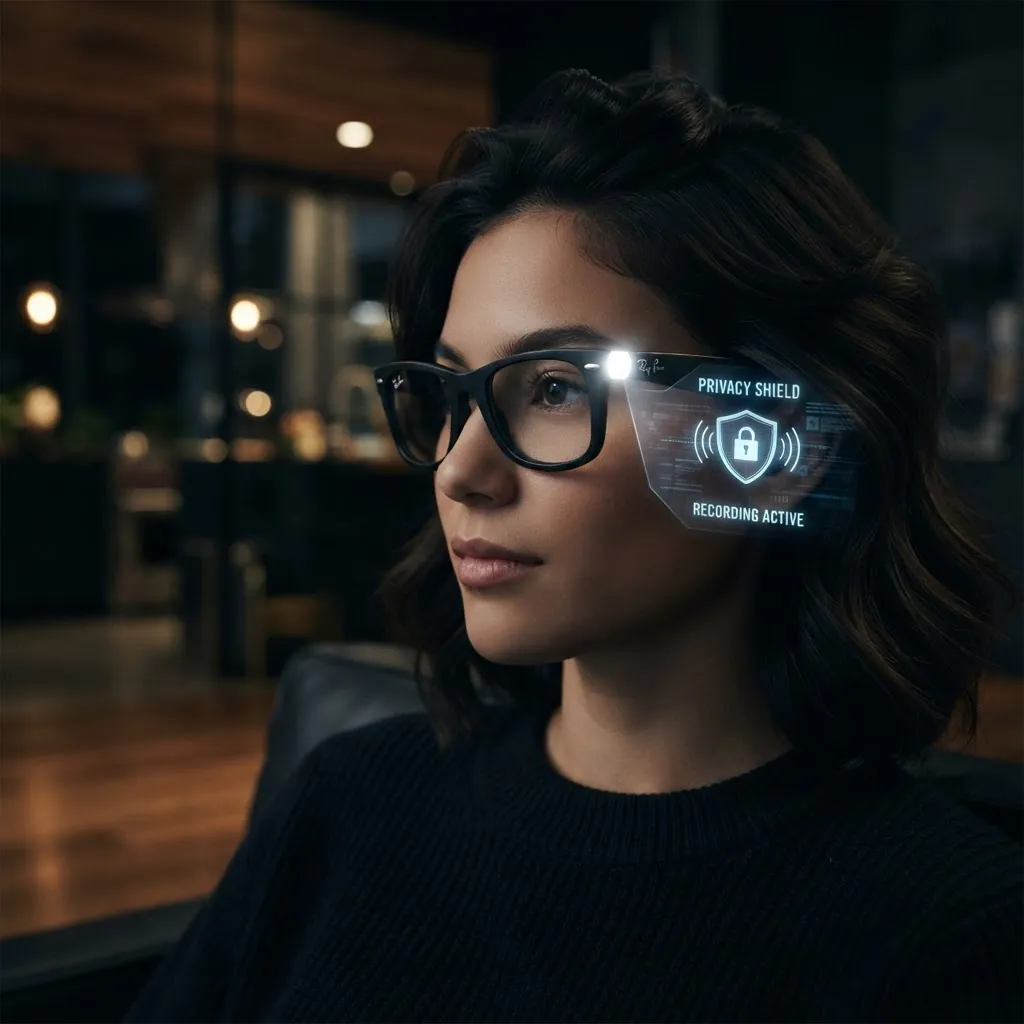
Meta Ray-Ban Smart Glasses Privacy Update 2026 — What Changed
Meta pushed a mandatory camera-killing update to Ray-Ban smart glasses this month after privacy concerns escalated. Courts are banning them, schools are restricting them, and a bombshell report revealed contractors were watching your footage. Here's everything that happened and what it means for smart glasses users.
Table of Contents
⚠️ DISCLAIMER
References to the upcoming Samsung Galaxy Glasses are based on leaks and reports — Samsung has not officially confirmed final specs or features. The Meta Ray-Ban privacy updates discussed here are real and confirmed by Meta.
The Camera-Killing Update
In early July 2026, Meta began rolling out a mandatory software update to second-generation Ray-Ban Meta smart glasses that fundamentally changes how the device handles privacy. The update is simple but significant: if the glasses detect that the white privacy LED has been covered, blocked, or physically tampered with, the camera is automatically disabled.
The camera stays disabled until the LED is visible and functioning again. You can't override it. You can't bypass it. The LED must work, or the camera doesn't.
Why this matters: the white LED on the front of Ray-Ban Meta glasses is the only outward-facing indicator that the camera is recording. Before this update, people could theoretically cover the LED with tape or paint and record without bystanders knowing. It was the biggest privacy loophole in the product, and privacy advocates had been pointing it out since the glasses launched.
Which Glasses Are Affected?
The update applies to second-generation Ray-Ban Meta glasses and the new Meta-branded glasses launched in partnership with EssilorLuxottica. First-generation Ray-Ban Stories are not covered by this update.
This is a good change. But it's also a reactive one — forced by mounting public pressure, court bans, and media scrutiny rather than proactive design. Samsung's unreleased Galaxy Glasses are reportedly designed with a dual-LED privacy system (one inward-facing, one outward-facing) — though this is based on leaks, not official Samsung confirmation.
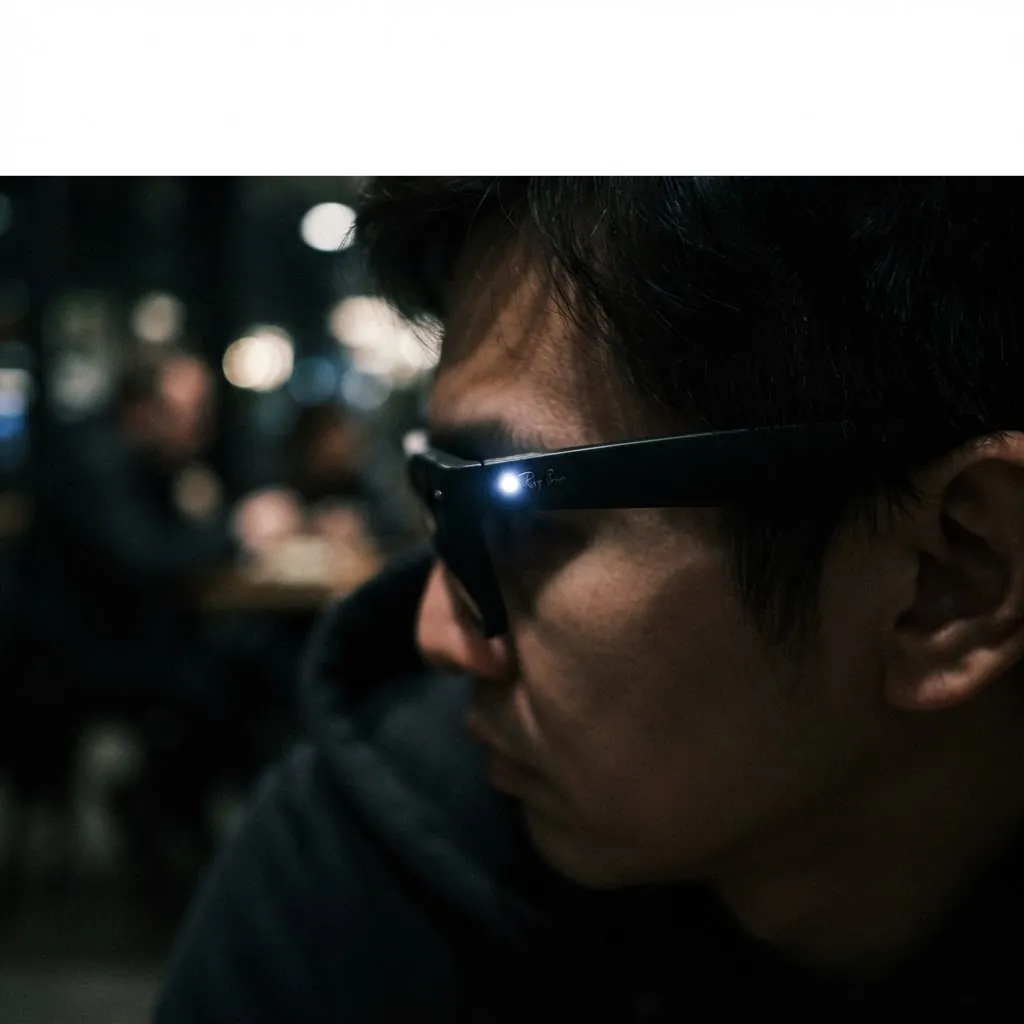
The white LED is the only outward signal that you're recording. Now it can't be bypassed.
Privacy Concern Timeline
The privacy concerns around Meta's smart glasses have been building for months. Here's how we got here:
March 2026
Philadelphia courts ban smart glasses. All smart glasses and recording devices are banned from court buildings starting March 30, 2026. The ban explicitly covers Ray-Ban Meta and Oakley Meta models.
March 2026
EFF publishes warning. The Electronic Frontier Foundation publishes "Think Twice Before Buying or Using Meta's Ray-Bans," outlining civil liberties concerns about always-on camera glasses.
March 2026
Contractor footage scandal. A Fortune investigation reveals that Meta contractors were watching and annotating footage from smart glasses users to train AI models — despite Meta's promises that it wouldn't "spy on you."
June 2026
Meta Glasses launched. Meta and EssilorLuxottica launch the next-generation Meta Glasses, building on the technology and features of Ray-Ban Meta.
July 7, 2026
Camera-disabling update announced. Meta announces the mandatory update that disables the camera if the privacy LED is tampered with.
July 16, 2026
New York courts ban smart glasses. The New York State Unified Court System enacts a ban on all smart glasses in courtrooms effective July 20, 2026.
Courts Are Banning Smart Glasses
The court bans are the most significant institutional response to smart glasses so far. Philadelphia led the way in March 2026, and New York followed in July. The pattern is clear: judges are concerned about covert recording in courtrooms, witness intimidation, and the integrity of legal proceedings.
Superior Court Judge Carolyn Kuhl in California banned smart glasses in her court after a team of people used them to record proceedings. In at least one case, a judge ordered that smart glasses recordings be destroyed.
For smart glasses owners, the practical implication is simple: don't wear them to court. Even if you have no intention of recording, many court buildings now treat all smart glasses as recording devices and will ask you to remove them or leave them outside.
Schools Are Banning Them Too
Schools are increasingly banning Meta smart glasses in classrooms. The concerns are specific and understandable:
- Unauthorized recording of students — particularly minors who can't consent
- Cheating via AI — students using Meta AI to get answers during exams
- Distraction — the glasses can play music, take calls, and run apps during class
Some districts treat smart glasses the same as smartphones — confiscated if seen in class. Others have blanket bans. If you're a student or work in a school, check your local policy before wearing smart glasses on campus.
Smart glasses are in the same place smartphones were in 2007 — exciting, useful, and making institutions very nervous. The bans will get worse before they get better.
The Contractor Footage Scandal
The most damaging privacy story for Meta's smart glasses wasn't about the LED — it was about what happens to your footage after you upload it. In March 2026, a Fortune investigation revealed that Meta was sending smart glasses footage to overseas contractors who were watching and annotating the videos to train Meta's AI models.
This was happening despite Meta's public assurances that it wouldn't use smart glasses data to "spy on you." The distinction Meta drew: the contractors weren't watching in real time, and the footage was anonymized. But for users who recorded private moments in their homes, the idea that a contractor in another country might be watching that footage was a significant breach of trust.
Meta's response was to update its data policy and provide clearer opt-out mechanisms. But the damage to user trust was real, and it contributed to the regulatory pressure that led to the July camera-disabling update.
What This Means for Users
I wear Ray-Ban Meta smart glasses for motorcycle touring and content creation. They're genuinely useful — I can capture moments hands-free while riding, record quick thoughts without pulling out my phone, and the AI assistant is helpful for quick questions. Here's how the privacy changes affect real-world use:
- The LED update is good news. It means nobody can covertly record by covering the light. This protects you and everyone around you. Accept the update — there's no downside.
- Be aware of where you can't wear them. Courts, schools, some restaurants, and some public facilities now restrict smart glasses. When in doubt, ask.
- Review your data settings. Check what Meta is doing with your footage. Opt out of AI training data sharing if you're not comfortable with it.
- The first-gen Ray-Ban Stories don't get the update. If you have the original generation, the LED can still be covered. Consider upgrading or being extra transparent about when you're recording.
- Competitors are learning from Meta's mistakes. Samsung's Galaxy Glasses launching this fall have dual LEDs from the start. Privacy is becoming a competitive feature, not just a compliance checkbox.
Smart glasses are here to stay. The technology is too useful to disappear. But the privacy conversation is just beginning, and how companies handle it will determine which products succeed. Meta's July update is a step in the right direction — even if it took court bans and a media scandal to get there.
Frequently Asked Questions
What did Meta's July 2026 smart glasses privacy update do?
Meta rolled out a mandatory update for second-generation Ray-Ban Meta smart glasses that automatically disables the camera if the device detects that the white privacy LED has been covered, blocked, or tampered with. The camera stays disabled until the LED is visible and functioning again.
Are smart glasses banned in courts?
Yes. Philadelphia courts (March 2026) and the New York State Unified Court System (July 20, 2026) have banned all smart glasses including Ray-Ban Meta and Oakley Meta models. Judges cite concerns about covert recording, privacy, and courtroom security.
Can you cover the LED on Ray-Ban Meta glasses?
As of the July 2026 update, no. If the glasses detect that the white privacy LED has been tampered with or covered, the camera is automatically disabled until the LED is restored. This applies to second-generation Ray-Ban Meta glasses.
Are schools banning smart glasses?
Yes, schools are increasingly banning smart glasses in classrooms due to concerns about unauthorized recording of students, cheating via AI, and distraction. Policies vary by school district.
Which smart glasses have the best privacy features in 2026?
The upcoming Samsung Galaxy Glasses feature a dual-LED privacy system with both inward and outward facing indicators, exceeding Ray-Ban Meta's single outward-facing LED. Meta's July 2026 update also improved privacy by disabling the camera if the LED is tampered with.