
Twenty dollars is the whole question here. XTU's own store listed the S7 Pro Max at US$179.99 and the S7 Pro at US$159.99 when I checked on November 24, 2026, so you're being asked about a tenth more money for the newer camera.
Short answer: the Max buys a bigger sensor, a wider lens and more room in low light. It doesn't buy a different camera. Same body, same screens, same battery, same mount, same 4K 50fps ceiling.
I've shot both, and the gap in the footage shows up where you'd expect it and nowhere else. Ride at dusk or shoot indoors and it's worth the twenty. Sunny midday clips for YouTube, and you probably won't see it.
What the S7 Pro Max actually is, and what it costs
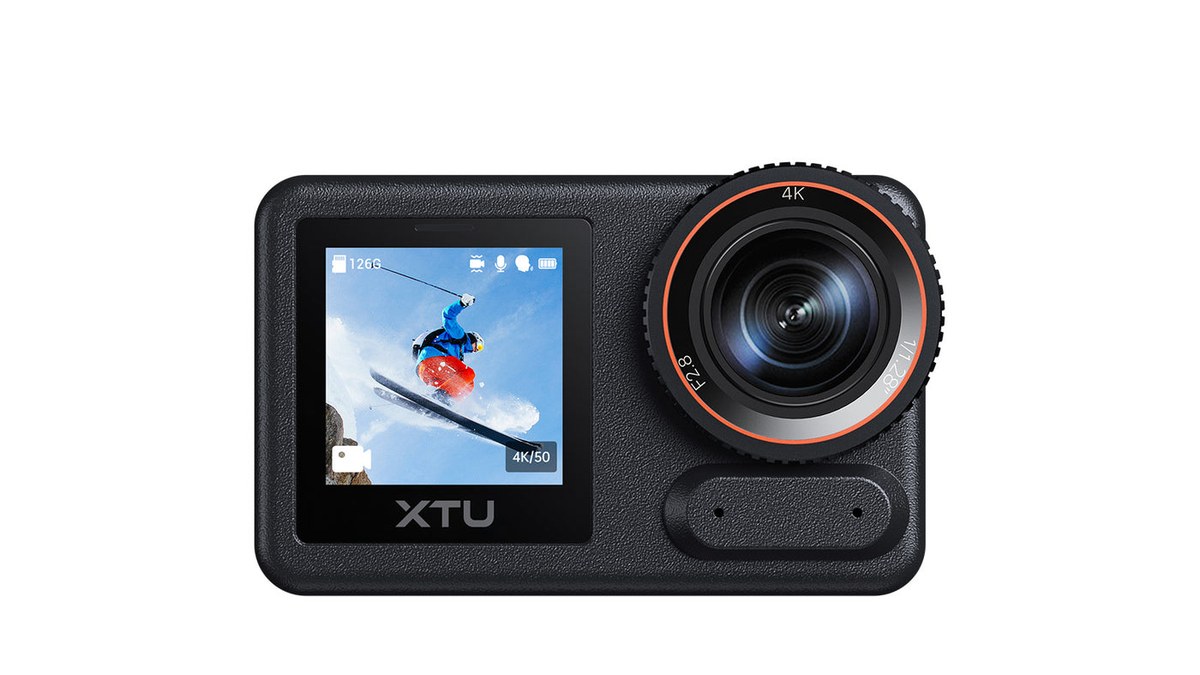
Both are small action cams in the same chassis family, and both shoot 4K at 50fps. That's the part people miss when they see two listings side by side and assume the Max is a whole step up the range.
What you pay, checked on xtucam.com on November 24, 2026, in US dollars:
- S7 Pro 4K Action Camera: $159.99
- S7 Pro Max Action Camera: $179.99
- Max bundles: Protection $199.99, Extended Battery $209.99, Creator $229.99, Ultimate $259.99
That store banner read "XTU Black Friday, 40% OFF All Cameras + Auto Cart Savings Up to $20" on the day I looked, so the list price isn't what a buyer pays right now. Check the page before you order and don't budget from this article.
In the Max box you get the camera, a rechargeable battery, the magnetic quick-release mount, a USB-C cable, the manual and a memory card guide. No card. Neither camera ships with one, and XTU's own FAQ says it plainly: "A memory card is not included. Please insert a Micro-SD card before use."
One bit of history worth knowing. Camera Jabber reported the Max at $139.99 in August 2026, before launch, which made it the cheaper of the two. The store has it twenty dollars above the Pro today. If you saw that launch coverage and thought the Max was the budget pick, that changed.
Sensor and lens: what the bigger sensor changes in real footage
Sensor is the only reason to look at the Max at all, so here's what each one carries, straight from XTU's spec tables.
- S7 Pro Max: 1/1.28in RYYB CMOS, 50MP stills, f/2.8, 158-degree ultra-wide, 4K 50fps HDR, XTU claims 14 stops of dynamic range, X-Log, 6K time-lapse, 4K pre-recording up to 50 seconds.
- S7 Pro: 1/2in Sony IMX586 CMOS, 48MP stills, 152-degree ultra-wide, 4K 50fps, AI Night Vision, X-Log.
Do the arithmetic on the format names and the Max sensor is roughly 1.4 times the area of the Pro sensor. That's my calculation from the 1/1.28in and 1/2in labels, not a figure XTU publishes, so treat it as an estimate.
RYYB is the interesting part. Instead of the usual red-green-green-blue filter grid, it swaps the two green filters for yellow ones, which lets more red and green light through. Huawei did it first in phones and claimed about 40% more light gathering. The cost is that green has to be reconstructed, and that reconstruction has historically pushed a yellow or green cast into the image, which is why these sensors usually ship paired with heavy processing. XTU lists an AI ISP on the Max. Camera Jabber explained the trade-off back in August.
On the lens side the gap is six degrees of field of view, 158 against 152. Both are sold as ultra-wide. In the footage I shot on the same bike mount, then the same walk in the same light, the Max pulls in a little more at the edges. You notice it when you're framing a handlebar or a horizon line, and you stop noticing it about ten seconds into watching the clip.
Where the difference really lands is after the sun drops. Same road, same mount, later in the day, and the Max clip holds colour and shadow detail that the Pro clip has already given up on. That's the 1.4x area doing its job, plus whatever the AI ISP is adding on top.
Both cameras list X-Log, so don't let anyone tell you log shooting is a Max feature. Both also record at 8-bit, which is worth knowing if you plan to push colour hard in an editor. Eight-bit log is thin, and neither of these is a substitute for a bigger camera when the light is genuinely bad.
Super View and stabilisation compared
Stabilisation is where the two cameras are twins, which surprises people who assume the dearer model gets better shake control.
XTU's own S7 Series comparison table gives both the same Super EIS 5.0 with 360-degree horizon correction. The Max spec sheet adds the words "horizon stabilization" alongside the same numbers. That's wording, not a second system, and I'm not going to sell it to you as one. If stabilisation is your deciding factor, the Pro does the same job on paper.
On the bike at speed both hold a line without the rolling shutter wobble that ruins cheap cams on a handlebar. Walking is where the difference would show if there was one, and in my side-by-side walk I couldn't point at a clip and say the Max was smoother. So I'm not going to.
Super View is the one feature I can't explain for you. XTU's product pages and FAQ don't define what it does or whether it crops the frame, and I found no primary source that does. I demonstrated it on camera in my own review, but I haven't run it against the standard mode on both cameras with matched framing, and that test is what would answer it.
Practical advice: shoot your first clips in the normal mode, watch them back on a big screen, and only then decide whether the extra width helps your framing. On a helmet or a chest mount, more width usually just means more of your own arms in the shot.
The SD card problem on both cameras, and the workaround
That missing card is where my testing got annoying. Both units hit the same card fault in the same session, so it isn't the twenty-dollar gap that causes it.
XTU's own documentation treats the two differently, and this is worth knowing before you order. The S7 Pro product FAQ is blunt: "For stable high-resolution recording, use a reliable U3-rated or faster microSD card." The Max page says only that "a suitable high-speed card is recommended" and never names a speed class.
That's backwards from what you'd expect. The camera with the bigger sensor and the 50MP stills is the one with the vaguer card requirement. Buying the Max? Borrow the Pro's rule and get a U3 card. Neither page publishes a bitrate, so there's no way to work out a minimum write speed from the specs, and both take microSD up to 512GB.
What actually happened on my bench is in the video at 14:37, and my workaround starts at 16:15. I won't type an error string or name a card brand here, because getting either wrong sends you out to buy the wrong thing.
Until you watch it, here's the version I'd stand behind: buy a card you can test the day it lands, format it in the camera instead of on your computer, and don't commit to a 512GB card you can't return.
Menus, battery and mounting: where the two differ in daily use
Almost nothing separates these two once they're out of the box. Here are the numbers XTU publishes, and then the bits the table can't tell you.
| Spec | S7 Pro | S7 Pro Max |
|---|---|---|
| Price, USD, checked Nov 24 2026 | $159.99 | $179.99 |
| Sensor | 1/2in Sony IMX586 | 1/1.28in RYYB |
| Stills | 48MP | 50MP |
| Field of view | 152 degrees | 158 degrees |
| Stabilisation | Super EIS 5.0, 360-degree horizon | Super EIS 5.0, 360-degree horizon |
| Top video | 4K 50fps, 1080p 120fps per its FAQ | 4K 50fps, 1080p 60fps per its spec table |
| Battery | 1800mAh, up to 200 min at 1080p30 | 1800mAh, up to 200 min at 1080p30 |
| Screens | 2.29in rear, 1.4in front | 2.29in rear, 1.4in front |
| Waterproof | Case only, to 30m | Case only, to 30m |
| Weight, as published | 134g in one table, 138g in another | 134g in one table, 138g in another |
Menus are the same on both, which is good news if you already run an XTU. Same rear screen at 800x480, same front display, same voice control, so there's nothing to relearn and nothing the Max does that the Pro can't navigate. Mounts carry straight over too.
Battery is identical on paper, and that's where you need to read the small print. Both are rated to 200 minutes, and that number is at 1080p 30fps. Nobody shoots an action cam at 1080p30 anymore. In 4K you'll get less than that from either camera, so plan your day around charging, not around the spec sheet. Both charge over USB-C PD to about 80% in under 50 minutes, 46 on the Max page and 45 on the Pro.
XTU's own numbers don't always agree with each other, and I'd rather show you that than pick a side. The Max spec table lists Wi-Fi 6 at "up to 30Mbps" while the Pro marketing copy says "up to 30MB/s", which is eight times the number. Weight is listed as both 134g and 138g for each camera depending on which table you open. I haven't put either on a scale.
Water resistance is the same story on both: not waterproof without the case, and the case gets you to 30m. If you're shooting on a bike in the rain, that case is not optional, and it's the first thing to buy after the card.
Which one to buy
Buy the Pro if your footage happens in daylight and you already know you want 1080p slow motion. Its FAQ claims 120fps at 1080p where the Max spec table stops at 60fps, it lists a 4x digital zoom the Max page doesn't mention, and it's twenty dollars cheaper. For helmet clips on a bright afternoon, that's the sensible order.
Pay the gap for the Max if you ride at dusk, shoot indoors, or want the 50MP stills and the 6K time-lapse. The wider 158-degree lens is a small bonus. The bigger sensor is the actual purchase, and it's the only thing here you can't add later with an accessory.
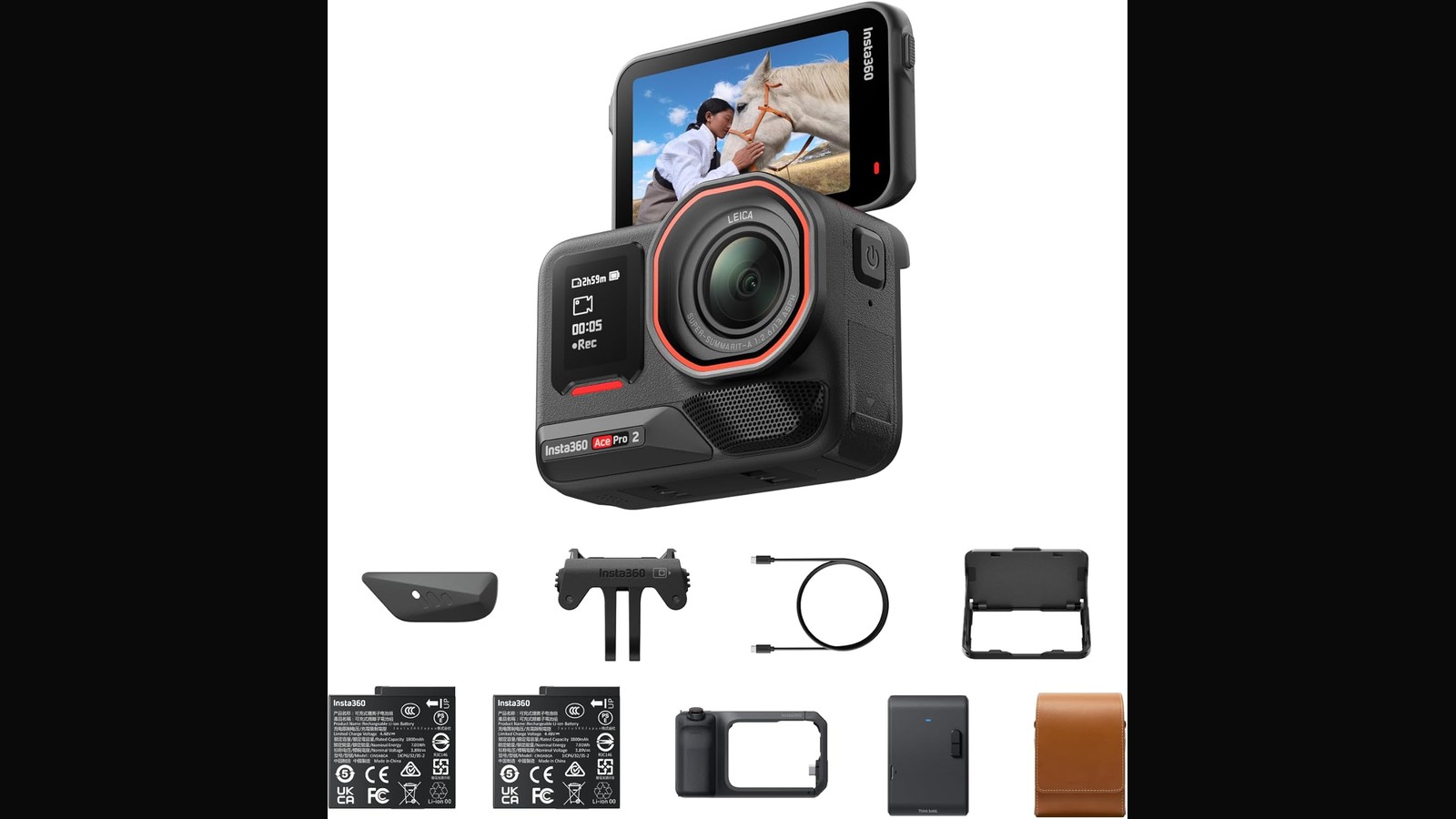
Neither one is the answer if you need 4K at 60fps or genuinely clean footage after dark. A 1/1.28in sensor is good for its size, not magic, and both cameras are 8-bit. If that's your job, look at the Insta360 and GoPro bodies I actually use instead. My action camera roundup covers what each of those costs and where they still lose.
One thing for Canadian buyers. XTU prices everything in US dollars on xtucam.com, and the store links to an Amazon Canada storefront, so check both before you commit.
Skip the bundles unless you want the extras. You still need a card either way, and the case for wet weather.
Frequently Asked Questions
Does the XTU S7 Pro Max record 4K at 60fps?
No. XTU lists 4K at 50fps for both the Max and the Pro, and the Max page's own table only goes past that at 1080p, where it stops at 60fps.
Does the XTU S7 Pro Max come with a memory card?
No. XTU says plainly that a memory card is not included with either camera, and the Pro's FAQ asks for a U3-rated or faster card for stable high-resolution recording.
Is the XTU S7 Pro Max a 1-inch sensor camera?
No. It uses a 1/1.28-inch RYYB sensor, which works out to roughly 1.4x the area of the Pro's 1/2-inch Sony IMX586 but is still well short of a true 1-inch sensor.
Does the S7 Pro Max come with a waterproof case?
No. The box is the camera, battery, magnetic quick-release mount, USB-C cable, manual and a memory card guide, and the housing that gets either model to 30m is a separate buy.
Is the XTU S7 Pro Max worth the extra $20 over the S7 Pro?
Only if low light or the wider 158-degree lens matters to you, because both shoot 4K 50fps with the same Super EIS 5.0 stabilisation, the same 1800mAh battery and the same screens.
Sources
- XTU official store - S7 Pro Max product page (specs, FAQ, bundles, What's in the Box).
- XTU official store - S7 Pro product page (specs, FAQ incl. U3 card requirement, bundles).
- XTU S7 Series comparison table (rendered on both product pages).
- XTU Product FAQs / Help Center (memory card answer). FAQ list renders via JavaScript; answer text verified from the page's indexed content
- Greg Toope, "XTU S7 Pro Max Review: Is the Bigger Sensor Worth It Over the S7 Pro?" (YouTube, 23 Nov 2026). first-hand: chapters, sample footage, the SD card problem and his verdict
Get the Gear
XTU sells both cameras from its own store. Check the current Amazon listing for your region:
Affiliate links — support the site at no extra cost to you.