
Photo: Property of Insta360
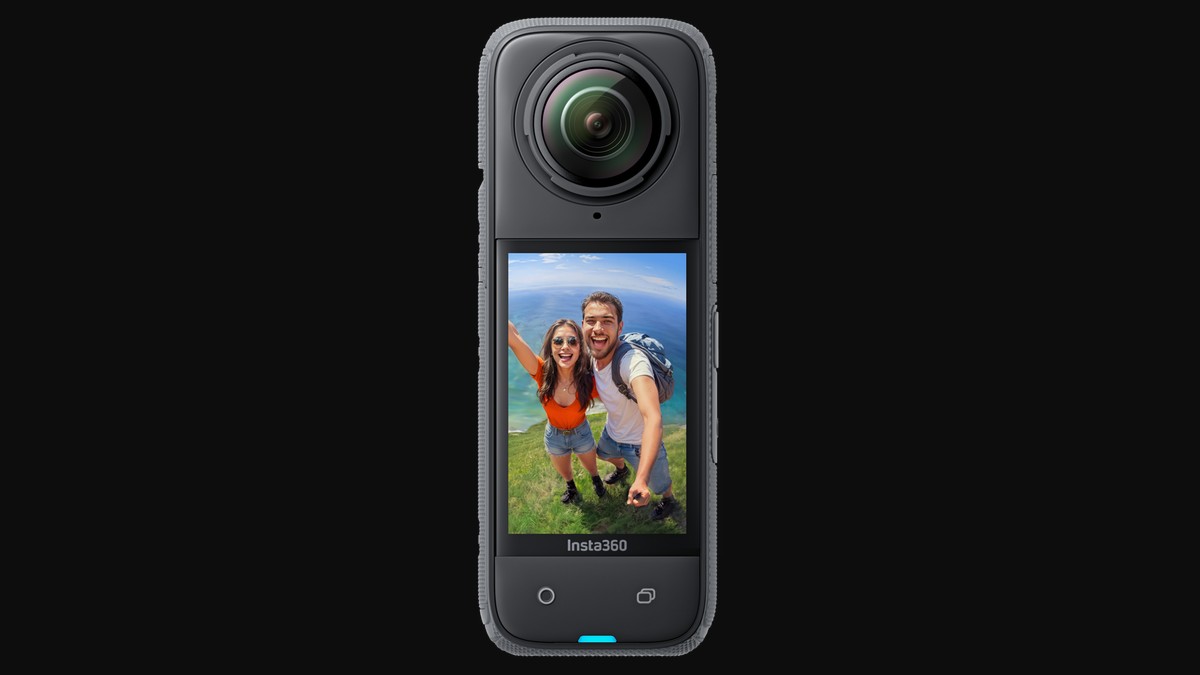
The Insta360 X6 is rated IPX8 and good to 20 metres underwater without any housing. That single line answers the question most riders actually ask before they mount a 360 camera on a bike: can I leave it out in the rain, will spray off a lorry kill it, and what happens if it comes off the mount into a puddle. The short answer is yes, comfortably. The longer answer is about what a depth rating does and does not mean, because the number is not the interesting part. The test conditions behind it are.
The Numbers: 20 Metres Without a Case, 60 With One
Insta360 publishes the waterproofing in two lines on the X6 hardware spec page: a waterproof rating of IPX8, and a waterproof depth of 66ft (20m) for the camera alone, rising to 196.9ft (60m) with the dive case. That is 20 metres without any add-on, which is a genuine change in what the camera is for. You do not need to buy a housing to ride in rain, ford a shallow river or get caught in a downpour on the Cabot Trail.
| Model | Camera only | With dive case | Dust rating |
|---|---|---|---|
| Insta360 X6 | 66ft / 20m | 196.9ft / 60m | IP6X |
| Insta360 X4 Air | 49ft / 15m | 197ft / 60m | IP6X |
| Insta360 X5 | 49ft / 15m | 197ft / 60m | IP6X |
| Insta360 X4 | 33ft / 10m | 164ft / 50m | IP5X |
Read that table as a progression rather than a spec dump. The X4 managed 10 metres bare. The X5 and X4 Air moved to 15. The X6 sits at 20, and it is the only one of the four carrying the full IP6X dust rating alongside it. None of those jumps matter for a diver, who will use the case anyway to reach 60 metres. All of them matter for the person who leaves a camera bolted to a crash bar for a season and expects it to still work in October.
What IPX8 Actually Promises, and What It Does Not
IPX8 is not a fixed depth. That is the part most people get wrong. In the IP rating system, the 8 in IPX8 means "immersion beyond 1 metre", and the manufacturer sets the actual depth and duration it tested to. Insta360 says 20 metres, so 20 metres is the claim. A different brand's IPX8 camera might be rated for 3 metres or 30, and both are honest IPX8 ratings. The number after the letters is meaningless without the depth the company publishes next to it, which is exactly why the spec page lists both.
The second thing IPX8 does not promise is anything about pressure. Immersion ratings assume the camera is placed in water and left there, not that it is hit with a jet. Buyers assume a waterproof camera can be pressure washed. It cannot. A pressure washer delivers far more force than 20 metres of static water, and it aims it at the seals directly, which is how most water-damaged action cameras actually die. Nobody destroys a camera by riding in rain. People destroy them at the end of a ride with a hose.
Third, salt water is a separate problem from depth. The rating covers water ingress. It says nothing about salt crystallising in the seams, in the lens covers or around the mic ports after the water evaporates. A coastal ride in Nova Scotia will put salt spray on the camera for hours, and the camera will survive it as long as it gets rinsed in fresh water afterwards. Skip the rinse for a week and the corrosion is not covered by any rating.
What 20 Metres Means on a Motorcycle
Put the number in bike terms. Rain at highway speed arrives as driven spray, and a 20 metre immersion rating is orders of magnitude more than any rainfall will ever apply. The realistic failure modes on a motorcycle are not water depth at all. They are the camera being knocked off the mount, the lens cover getting scratched, the mount working loose over a day of washboard gravel, and the battery door being opened with wet hands at a fuel stop.
That last one is the one to watch. Waterproofing lives in the seals, and the seals are only as good as the last time you closed the door. Open the USB-C flap at a rainy fuel stop to charge from a power bank, and from that moment the camera is only as waterproof as your ability to reseat a rubber plug in the wet with gloves on. The X6 has 64GB of internal storage, 47GB of it available to the user, and a microSD slot that takes cards up to 1TB at UHS-I V30 or faster. Internal storage is the answer to the fuel-stop problem: you can shoot onto internal memory and never open the door in bad weather.
The camera itself weighs about 196g with a 1/1.1in sensor and an F2.0 lens, and it mounts through a 1/4in thread or the quick release mount. On a bike that weight and those mounting options are the whole argument for a 360 camera over a conventional action cam: it hangs off a crash bar or a mirror stalk on a short arm, it does not need to be aimed, and it does not care which way the weather is coming from.
Dust, Heat and the Other Two Ratings Nobody Reads
IP6X is the highest dust rating in the scheme: dust-tight, meaning no dust gets in at all. On a motorcycle that matters more than the water rating does, because a gravel road in New Brunswick throws more abrasive material at a camera in an hour than a year of rain. Fine dust in a lens mechanism is what makes a folding or rotating camera grind. The X4 shipped at IP5X, which is dust-protected but not dust-tight. The X6 moved to IP6X.
The operating temperature is the rating that should worry Canadian riders most: -4F to 104F, or -20C to 40C. The cold end is generous. The warm end is the real constraint, and it is easy to breach without noticing. A black camera body sitting on a bike in direct July sun with no airflow over it will exceed 40C surface temperature while parked, and that is before it has done any recording. Recording 8K on top of that adds heat from the processor. The fix is not exotic: park in shade, take the camera off when you stop for lunch, and do not leave it in a top box that is sitting in the sun all afternoon.
Salt Water, Pressure Washers and the Rinse Rule
A short routine keeps a waterproof camera waterproof, and it is the same routine whether the camera is on a bike, a kayak or a ski helmet:
- Rinse in fresh water after any salt exposure. Immerse it in a bucket of clean water for a few minutes, work the buttons, then dry it. Do not use the hose at pressure.
- Never pressure wash the camera. Spray the bike, not the camera. Even at a distance, a jet aimed at a lens seam is the fastest way to end a camera's life.
- Dry the seals before closing a door. Grit or a drop of water trapped in the rubber is a leak path. Wipe the gasket with a clean cloth, close it, and check it is flush.
- Check the lens covers for scratches. They are replaceable. A scratched cover turns every shot into a foggy one and most people blame the camera.
- Keep a desiccant pack in the camera bag. It does not fix a leak, but it stops condensation inside the case travelling between rides.
None of that is exotic, and none of it is in the spec sheet because a manufacturer cannot rate your habits. The rating tells you the seal is good. It does not tell you the seal will still be good after a winter of road salt, a summer of gravel dust and one fuel-stop door opening at 8 degrees in the rain.
Who Needs the Dive Case and Who Never Will
If you ride a motorcycle and do not dive, you do not need the dive case for waterproofing. Twenty metres bare covers everything a bike does, with an enormous margin. The dive case exists to reach 60 metres and to protect the lenses while doing it, and if the deepest water the camera ever sees is a roadside puddle, that money is better spent on a second battery or a better mount.
Where the bare rating earns its keep on a bike is the situation nobody plans for. The camera that comes off a mirror stalk at 80km/h, lands on wet pavement, and gets run over by the rain that follows. A 10 metre camera is probably fine in that story too, but the margin is the insurance, and the X6 now has the most of it in this line. Whether that is the reason to buy an X6 over an X5 is a different question, and the honest answer is no: it is one of several small improvements rather than the headline. But if you are choosing between the two for a bike that lives outside in Atlantic Canada weather, it is a real point in the X6's favour.
For the runtime side of the same camera, my breakdown of X6 battery life in every mode covers what you actually get per charge, and the X6 charging time piece covers how long a top-up takes. If you are deciding between the X6 and the X5 on price rather than sealing, the X5 versus X6 comparison is the one to read.
Frequently Asked Questions
Can I use the Insta360 X6 in the rain without a dive case?
Yes. It is IPX8 rated to 20 metres with no case at all, and rain or road spray is nowhere near that. The dive case is for depths down to 60 metres, not for weather.
Is the Insta360 X6 waterproof enough to drop in a river?
The 20 metre rating covers immersion, so a drop into a river is within the manufacturer's stated limit. Recover it, rinse it in fresh water and dry the seals before you close any door again.
Can I pressure wash the Insta360 X6?
No. A pressure washer applies far more force than 20 metres of static water and aims it straight at the seals. Rinse the camera in a bucket of fresh water instead, and keep the jet away from it when you clean the bike.
What temperature can the Insta360 X6 operate in?
Minus 20C to 40C, or -4F to 104F. The cold end is not the problem in Canada. The warm end is, because a black camera parked in summer sun can pass 40C before it starts recording.
Does the Insta360 X6 need a dive case for snorkelling?
No. Snorkelling happens in the top few metres, well inside the 20 metre bare rating. The dive case is only needed if you are going deeper than 20 metres.