
Photo: Pedro Paiva via Pexels
The Insta360 X6 charges from empty to 80 percent in about 24 minutes, and that number is real. It is also conditional in a way the marketing line never mentions: the measurement assumes a 30W adapter that speaks PD3.0 with PPS at 3 amps, the camera switched off, and a battery sitting at 25C (77F). Change any one of those and the 24 minutes stops being a promise. Every figure in this piece comes from Insta360's own hardware specification page for the X6, and it is written for the rider who is deciding what to plug into at a fuel stop in October.
The Numbers, and Their Footnote
Two charging figures matter: about 24 minutes to 80 percent and about 35 minutes to 100 percent. The interesting part is not the durations, it is the sentence attached to them.
| Condition in the official spec | Why it matters on a bike |
|---|---|
| 30W adapter | A 5V/2A bike socket delivers 10W, less than a third of that |
| PD3.0 with PPS at 3A | PPS is a programmable-voltage mode many chargers do not support |
| Camera powered off | Recording while charging draws power from the same cell |
| 77F (25C) | A cold-soaked battery charges far more slowly, or refuses |
Read that table as a shopping list rather than a disclaimer. Each row is something you can control before the trip, and each one costs you minutes if you get it wrong.
What PD3.0 With PPS Actually Means
USB Power Delivery is the negotiation protocol most modern chargers use. PPS, programmable power supply, is an optional part of that spec that lets the charger adjust voltage continuously in small steps instead of jumping between fixed levels. The X6's fast charge depends on that finer control. A charger that advertises PD but not PPS will still charge the camera; it will just do it at a fixed voltage and take longer.
The wattage figure is the easier one to shop for. 30W at the charger is the target, and the cable has to carry it, which rules out the thin charge-only cable that came with an old phone. A cable rated for 3A or better is what the negotiation needs.
The practical test at home: plug the X6 into the charger you plan to carry, from a partly discharged battery, and time ten minutes of it. If it does not add a meaningful slice of charge in that window, that charger is not going to give you 24 minutes on the road either.
The Bike Socket Is Usually the Weak Link
A USB socket wired into a motorcycle accessory circuit is rarely a 30W PD port. Most are 5V at 1A or 2A, which is 5W to 10W, and they hold that voltage rather than negotiating. Charging an X6 from one of those is not useless, but it is a top-up measured in hours, not minutes, and the socket often shares a fused circuit with heated gear or a phone mount.
That matters because the X6's battery capacities are not small. The Xtreme Battery shipped in the box is 2600mAh, and the optional Lite Battery is 1300mAh. Pushing 2600mAh through a 5W socket is a long afternoon. If charging speed is part of the plan, the honest answer is a proper 12V-to-USB-C PD adapter on a fused lead, or charging from a power bank that carries its own PD output.
Charging From a Power Bank
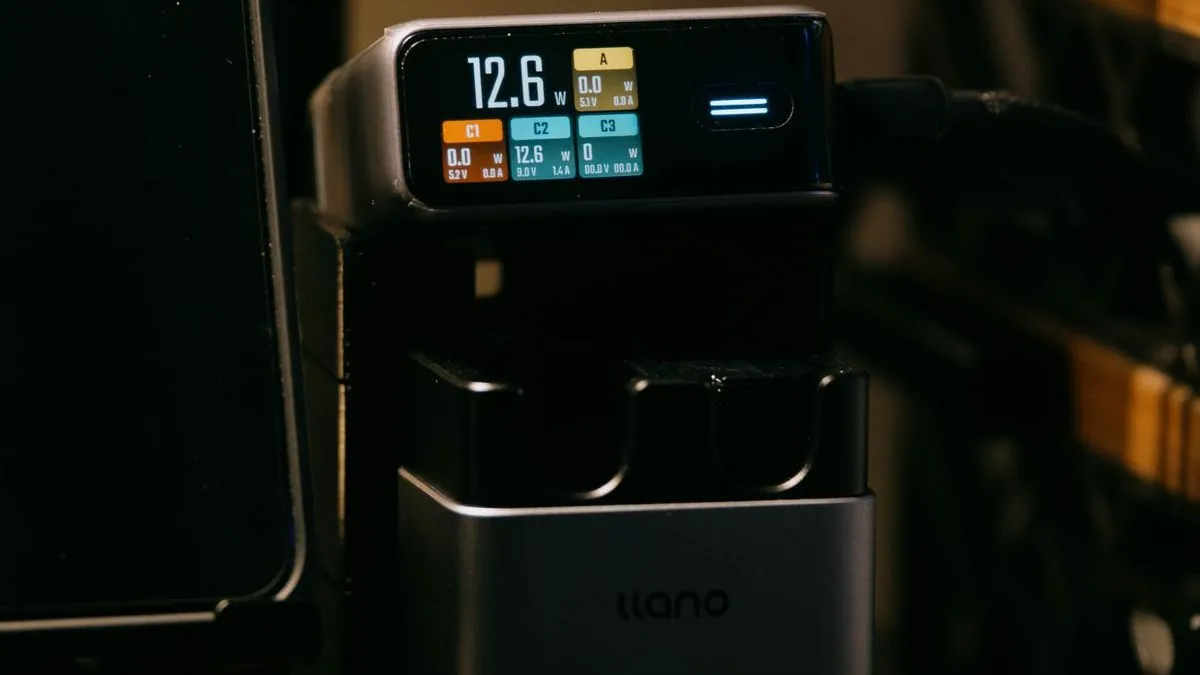
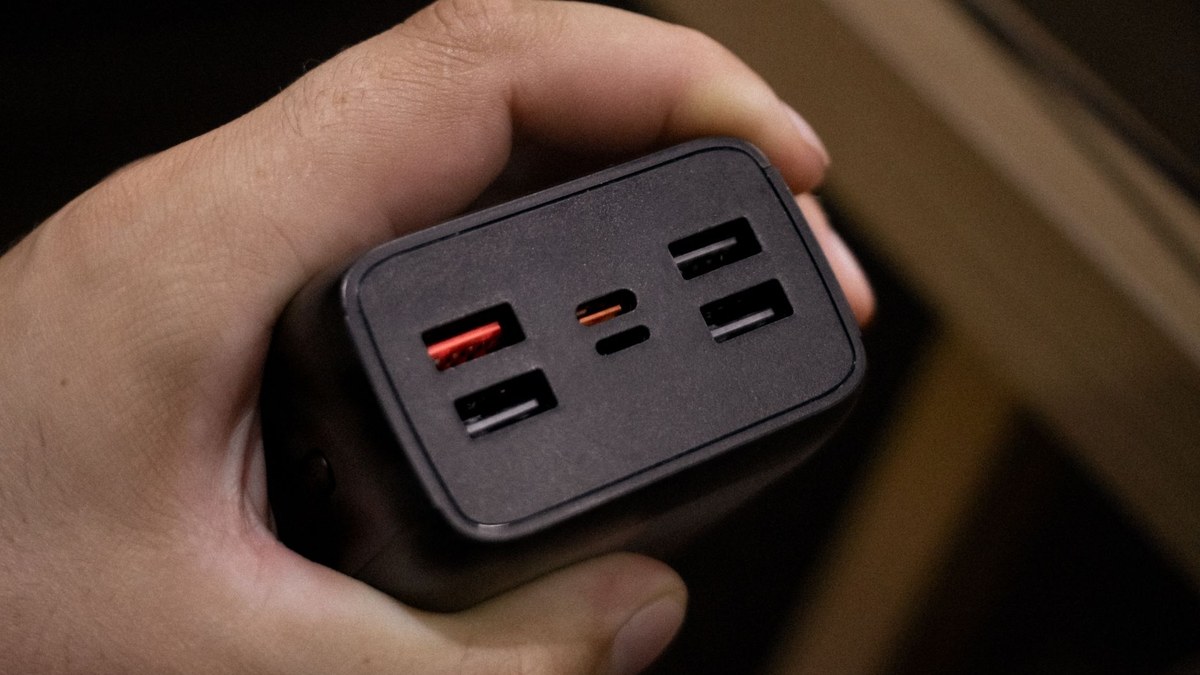
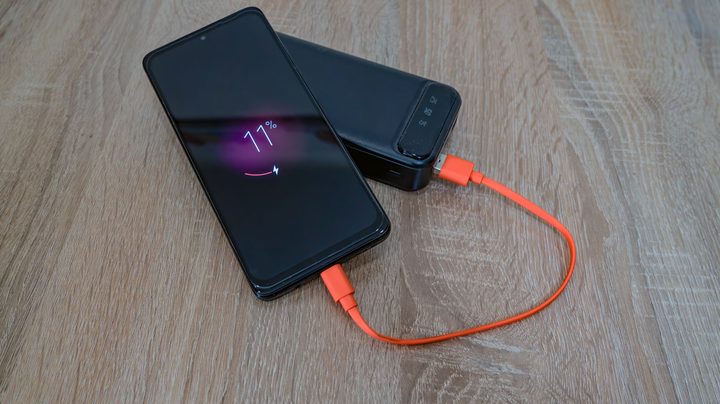
A power bank only helps if its output can negotiate PD at 30W. Plenty of banks advertise a large capacity and then cap output at 15W or 18W, which is better than a bike socket and still short of the spec. Check the output row, not the capacity row.
The other half of that habit is heat. A power bank charging a camera inside a tank bag on a warm day stacks two heat sources in a small space, and the camera will slow its own charge when the cell gets hot. The X6 operating range tops out at 40C (104F), and a sealed bag in sun gets there faster than the air temperature suggests. Charge in the open, or at least not in a closed black bag.
Cold Is the Condition Riders Actually Break
The X6 operates from -20C to 40C (-4F to 104F), which is generous, but operating and charging are different things. A battery that has been sitting on a bike all night at -5C (23F) should not be expected to accept a fast charge the moment you plug it in. Chemistry slows down when it is cold, and the camera manages its own current to protect the cell.
The fix is unglamorous and works on every battery on the bike: bring the camera and its spare batteries inside overnight, and if you are charging from a cold start, let the camera come up to room temperature first. A battery that begins the day at 20C charges like the spec sheet says it will.
Charging While Recording Rarely Works the Way People Hope
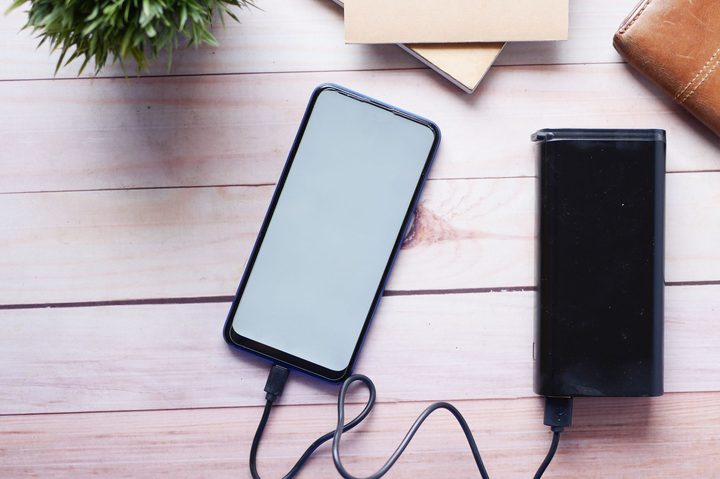
Every fast-charge figure Insta360 publishes assumes the camera is powered off. Recording 8K30 with the screen on draws real current, so a charge cable becomes a race between what the socket supplies and what the camera consumes. On a 10W bike socket the camera can lose ground while plugged in.
For a long riding day, the better pattern is to treat charging as a stop activity. Twenty-four minutes at a coffee shop with the camera off beats two hours plugged in on the bike while recording, both in charge gained and in heat generated.
What the Older Models Tell You
The same spec table lists the earlier cameras, and the comparison is instructive. The X5 reaches 80 percent in about 20 minutes on a 9V/3A supply, and the X4 takes about 38 minutes on 9V/2A. The pattern is that the current rating of the supply, not the camera generation, sets the pace. The X6 asking for PD3.0 PPS at 3A is the same story with a stricter requirement.
If you already own a charger that fast-charged an X5, it will almost certainly charge an X6 well, because 9V/3A and 30W PD overlap. What will not keep up is the cheap dual-port brick in the glovebox.
The USB Port Itself
The X6 uses USB-C, spec'd as USB 3.1 for transfer. That is the same port for data and charging, which means the cable you use to offload footage is also the cable that has to carry 30W. A cable that only handles USB 2.0 data speeds will usually still charge slowly, but it may not negotiate the fast profile, so keep one known-good 3A PD cable in the kit and use it for both.
Frequently Asked Questions
How long does the Insta360 X6 take to charge?
About 24 minutes to 80 percent and about 35 minutes to 100 percent, measured with a 30W adapter supporting PD3.0 PPS at 3A, the camera powered off, and the battery at 25C (77F).
Can I charge the X6 from my motorcycle's USB socket?
Yes, but expect a slow top-up rather than the rated time. Most bike sockets supply 5V at 1A or 2A, which is 5W to 10W against the 30W the spec assumes. A fused 12V-to-USB-C PD adapter gets you closer.
Does the X6 need a special charger?
It needs an adapter that supports PD3.0 with PPS at 3A and delivers 30W, plus a cable rated for 3A. A charger without PPS will still work at a fixed voltage and take longer.
Why does a cold battery charge more slowly?
Battery chemistry slows in the cold and the camera limits current to protect the cell. Bring the camera and spares inside overnight, and let a cold camera reach room temperature before expecting the rated times. The X6 operating range is -20C to 40C (-4F to 104F).
Can I charge the X6 while recording?
You can, but the fast-charge figures assume the camera is off. Recording 8K30 with the screen on draws enough current that a low-power bike socket may barely keep up. Charging at a stop with the camera off is far more efficient.
Do the Xtreme and Lite batteries charge at the same speed?
Both charge through the same port on the same spec, but capacity differs: the Xtreme Battery is 2600mAh and the Lite Battery is 1300mAh. A smaller cell reaches 80 percent sooner in raw time for the same current.
Sources
- Insta360 X6 hardware specifications. Official spec table for charge times, the 30W PD3.0 PPS 3A measurement condition, battery capacities, USB-C port and operating temperature, plus the X5 and X4 charge figures.
Frequently Asked Questions
How long does the Insta360 X6 take to charge?
About 24 minutes to 80 percent and about 35 minutes to 100 percent, measured with a 30W adapter supporting PD3.0 PPS at 3A, the camera powered off, and the battery at 25C (77F).
Can I charge the X6 from my motorcycle's USB socket?
Yes, but expect a slow top-up rather than the rated time. Most bike sockets supply 5V at 1A or 2A, which is 5W to 10W against the 30W the spec assumes.
Does the X6 need a special charger?
It needs an adapter that supports PD3.0 with PPS at 3A and delivers 30W, plus a cable rated for 3A. A charger without PPS will still work, at a fixed voltage and more slowly.
Why does a cold battery charge more slowly?
Battery chemistry slows in the cold and the camera limits current to protect the cell. The X6 operating range is -20C to 40C (-4F to 104F), but charging a cold-soaked battery is always slower.
Sources
- Insta360 X6 hardware specifications. Official spec table for charge times, the 30W PD3.0 PPS 3A measurement condition, battery capacities, USB-C port and operating temperature, plus the X5 and X4 charge figures.