
Photo: Image: Property of DJI
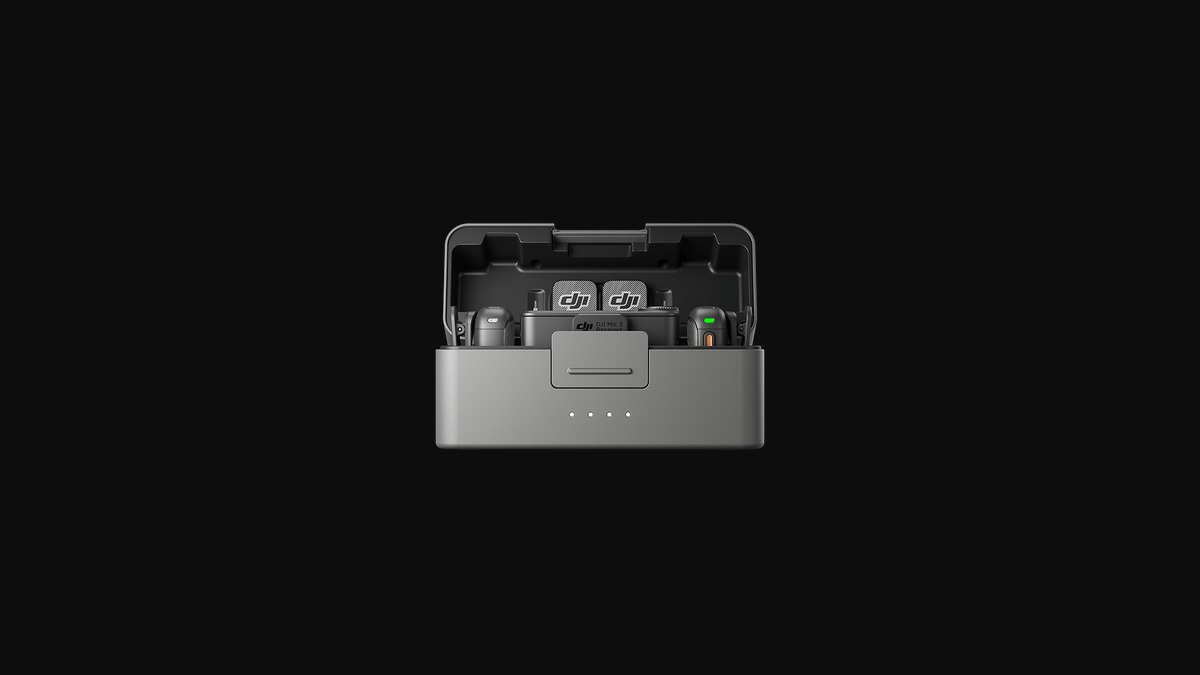
The DJI Mic 3 records internally, which means the transmitter keeps its own copy of the audio even if the camera link drops. That is the feature that saves a shoot when a cable works loose or a rider forgets to arm the camera. The question almost nobody asks before buying is how long that internal recording actually runs before the transmitter is full, and the answer is not one number. DJI publishes four.
They come from the Mic 3 spec table on DJI's own site, and they vary by a factor of nearly three depending on two settings most people never look at: bit depth, and whether dual file recording is switched on.
Four Numbers, Not One
Here is the whole table, exactly as DJI publishes it for the transmitter's internal recording:
| Recording mode | Available internal recording time |
|---|---|
| 24-bit, single file | 57.3 hours |
| 24-bit, dual file | 28.6 hours |
| 32-bit float, single file | 43.0 hours |
| 32-bit float, dual file | 21.5 hours |
The range across those four is 21.5 hours to 57.3 hours. Both are true statements about the same product. The difference is configuration.
Bit depth on the Mic 3 is switchable between 32-bit float and 24-bit, and sampling frequency is fixed at 48 kHz. Dual file recording writes a second, safer copy alongside the main one, so it doubles the space each recorded minute consumes.
What Those Hours Mean on a Real Shoot
Hours of audio is an awkward unit. Translate it into the thing people actually do: shoot days.
A full day of motorcycle filming might be three hours of armed audio across a ride, once you strip out lunch, fuelling and the stretches where you are standing around talking about where to go next. At three hours a day, the 21.5 hour figure in 32-bit float dual file is about seven shoot days before the transmitter is full. The 57.3 hour figure in 24-bit single file is closer to nineteen.
Neither is a reason to panic. Both are a reason to offload. The trap is what happens on a long trip. A two-week ride with the mic armed all day and never offloaded will fill a 32-bit float dual file transmitter before the trip ends. It will not fill a 24-bit single file one. If you are the person who never remembers to plug the case into a laptop, that difference is the whole decision.
There is also a version of this that catches people at the worst moment, which is the one where you assume internal recording is always running. It only records when it is armed. It is not a rolling buffer that captures everything from power-on. Whatever time budget you have, it only starts counting from the moment you start the recording.
What 32-bit Float Actually Costs You
32-bit float is worth the space. It is the format that makes clipping recoverable in post. A loud exhaust note or a shouted line that would be destroyed in 24-bit can be pulled back down in an editor, because the float file stores the extra headroom instead of clipping it off flat.
The cost is exactly one number. Moving from 24-bit single file to 32-bit float single file takes you from 57.3 hours to 43.0 hours, a loss of 14.3 hours. Leaving both float and dual file on takes you to 21.5 hours, a loss of 35.8 hours against the best case.
For most riders the honest recommendation is 32-bit float single file. You get the headroom that protects a loud moment, you keep 43 hours of internal backup, and you do not pay the double cost of the safety track. Dual file earns its place on the kind of shoot where losing one take ruins the day, and on a ride that is not the case.
The Battery Runs Out Long Before the Storage Does
Worth saying plainly, because the storage numbers make it easy to forget: the battery is the real limit on any single session. DJI rates the transmitter at roughly 8 hours of operating time from its 137 mAh cell, and the receiver at about 10 hours from 275 mAh. Those figures are measured with noise cancellation and internal recording off, so running internal recording will shorten them.
In other words, even the shortest recording mode, 32-bit float dual file at 21.5 hours, is nearly three times longer than one transmitter charge. You will recharge the transmitter several times before you fill it. The storage ceiling matters across days of accumulation, not within a single ride.
| Spec | Transmitter | Receiver |
|---|---|---|
| Battery | 137 mAh | 275 mAh |
| Operating time | about 8 hours | about 10 hours |
| Charging time | about 50 minutes | about 50 minutes |
| Operating temperature | minus 10 C to 45 C | minus 10 C to 45 C |
Two other numbers are worth knowing for cold-weather work, since this is Atlantic Canada and the riding season runs into November. Operating temperature is minus 10 C to 45 C, or 14 F to 113 F, for both transmitter and receiver. Charging temperature is narrower, 5 C to 45 C, which means a cold transmitter pulled out of a tank bag should be allowed to warm up before it goes on the charger. Charging a cold lithium cell is how you shorten its life.
Transmission distance is rated at 400 m in the open, but only 80 m in a high-interference environment in DJI's lab test. That is the gap that matters on a street with buildings, or a rally site full of other wireless gear. When the link gets shaky, internal recording is doing the work, and it is doing it in whichever of the four modes you left the transmitter in.
The rest of the transmitter is unremarkable in the good way: 16 g with the magnet, an omnidirectional capsule, and a maximum SPL of 126 dB at 1 percent distortion, comfortably above a motorcycle at speed inside a closed helmet. The charging case holds 1,950 mAh and recharges a 2 TX plus 1 RX set about 2.4 times.
None of this makes the Mic 3 a hard choice. It makes it a product you have to configure on purpose. The default that ships is not the one that gives you 57 hours, and the setting that protects your audio is the one that gives you 21.5. Pick deliberately and the internal recording will not let you down.
FAQ
How long can the DJI Mic 3 record internally?
DJI lists four figures: 57.3 hours in 24-bit single file, 28.6 hours in 24-bit dual file, 43.0 hours in 32-bit float single file, and 21.5 hours in 32-bit float dual file.
Does 32-bit float halve the recording time?
No. Dual file recording halves it. Switching from 24-bit to 32-bit float single file takes 57.3 hours down to 43.0 hours. Turning on dual file as well is what brings it to 21.5 hours.
Will the battery last longer than the internal storage?
No. The transmitter runs about 8 hours on a charge, which is less than half of even the shortest internal recording figure of 21.5 hours. Storage is a multi-day limit, not a single-session one.
Can I charge the DJI Mic 3 transmitter in the cold?
Charging temperature is 5 C to 45 C, even though operating temperature goes down to minus 10 C. Let a cold transmitter warm up before charging it.
Sources
DJI Mic 3 specifications, DJI official product page: dji.com/mic-3/specs