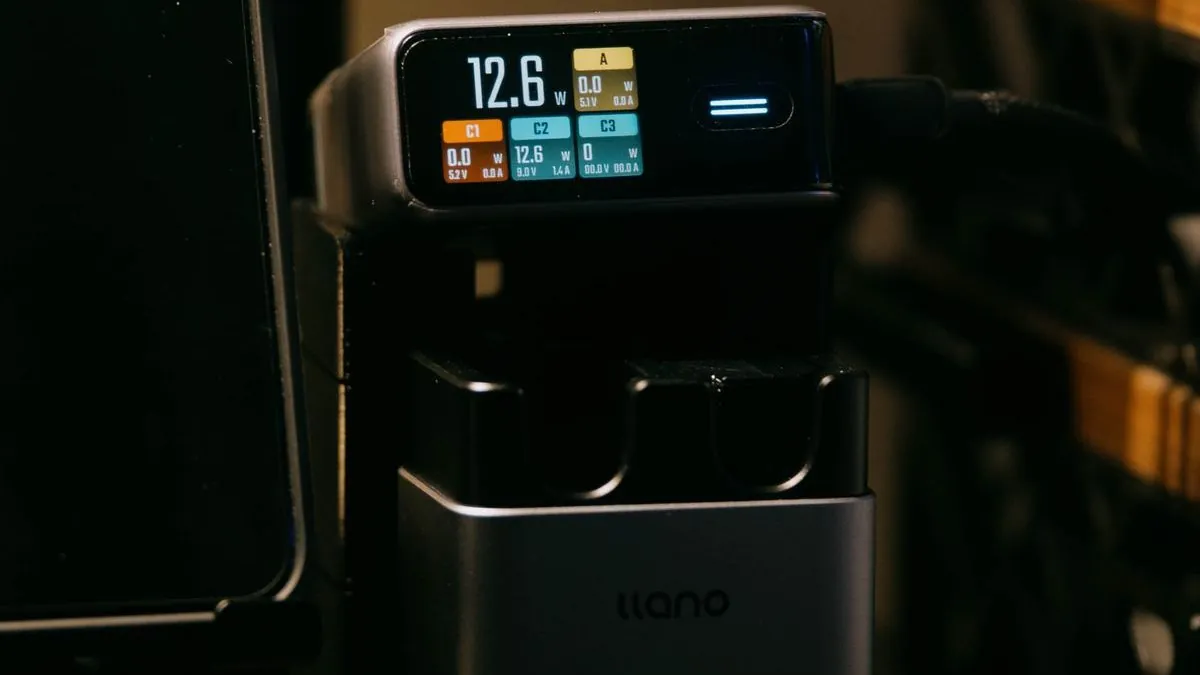
Multi-Port Charging in 2026 — Do You Actually Need 280W?
In This Article
Multi-port chargers are everywhere in 2026, and the wattage numbers are getting bigger. 65W. 140W. 200W. 280W. If you're trying to figure out how much you actually need — and whether a 280W station is overkill or essential — this is the honest breakdown.
After reviewing the AOHI 280W 6-port charging station on the channel, the most common question in the comments was exactly this: do I really need that much power, or is a cheaper lower-wattage option fine for my setup?
Why Wattage Actually Matters
Most multi-port chargers split their total wattage across all active ports. A 65W charger with four ports doesn't give you 65W per port — it gives you 65W to share across everything plugged in. When your laptop needs 45W and your phone needs 20W simultaneously, a 65W total budget is already maxed out. Add a tablet and everything throttles down.
Total wattage is the ceiling of what the whole station can deliver at once. More ports running simultaneously means each one gets less — unless the charger is smart enough to allocate dynamically.
What Your Devices Actually Draw
| Device | Typical Max Charging Draw | Fast Charge? |
|---|---|---|
| MacBook Pro 14" | 67–96W | Yes (USB-C PD) |
| MacBook Air M2/M3 | 30–67W | Yes |
| Windows laptop (mid-range) | 45–65W | Varies |
| iPad Pro | 20–45W | Yes (USB-C PD) |
| iPhone 15/16 | 27W max | Yes (USB-C PD) |
| Android flagship | 25–65W | Yes |
| AirPods / earbuds case | 5W | No |
| Camera battery (USB-C) | 10–18W | No |
| Neewer PS099F V-Mount | 100W PD | Yes (USB-C PD) |
65W vs 140W vs 280W — Which Tier Is Right for You
65W — Phone + Tablet User
If you're charging a phone, tablet, and maybe some earbuds simultaneously with no laptop in the mix, 65W is genuinely sufficient. You'll get full-speed charging on your phone and reasonable speed on your tablet. The moment a laptop enters the equation, 65W starts to feel tight.
140W — Laptop + 2–3 Devices
140W covers a MacBook Air or mid-range Windows laptop at near-full speed while simultaneously fast-charging a phone and tablet. For the majority of home desk setups — one laptop, one phone, one or two other devices — 140W is the sweet spot. It's not overkill, and it's not undersized.
280W — Multi-Laptop or Creator Setup
280W makes sense when you're running a MacBook Pro at full draw (96W) alongside a camera battery, tablet, phone, and something else simultaneously — and you don't want any of them throttling. For a creator desk where a V-Mount battery (100W), laptop (65W+), phone, and camera are all charging at the same time, 280W stops being overkill and starts being the right answer. The AOHI 6-port handles exactly this scenario cleanly.

How AI Power Allocation Changes Things
Newer multi-port chargers — including the AOHI reviewed on the channel — use dynamic AI power allocation. Rather than splitting wattage equally across all ports regardless of what's plugged in, the station detects each device's actual power draw and allocates accordingly. Your laptop gets the lion's share when it's the hungriest device; your phone drops to trickle when it's nearly full.
This matters because it means a 280W station with smart allocation performs significantly better than a 280W station with fixed-port splitting. The total budget goes further because nothing is wasting headroom on a device that doesn't need it.
Without smart allocation, a 6-port 280W charger might give you 46W per port as a fixed split — which would actually charge a MacBook Pro slower than a single 67W brick. With smart allocation, the same station reads the MacBook as the priority and routes 140W to it alone when nothing else demands power.
The Honest Verdict
For most people: 140W is the right answer. It handles a laptop plus three or four other devices without throttling, covers the vast majority of home and travel setups, and doesn't require spending on headroom you'll rarely use.
Go to 280W if you're a creator charging camera gear and a high-draw laptop at the same time, or if you regularly have 5–6 devices drawing meaningful power simultaneously. The AOHI 280W handles that scenario well — but it's a specific use case, not a universal need.
Don't let the marketing push you to 280W if your heaviest device is a MacBook Air and a phone. A good 140W charger with smart allocation will serve you better for less money.
Affiliate disclosure: Links on this page are Amazon.ca affiliate links using tag greg015-20. Purchasing through these links supports the channel at no extra cost to you.
Frequently Asked Questions
Do you actually need a 280W multi-port charging station?
For most users, no — a 65–100W station covers a laptop, phone, and tablet simultaneously. 280W stations are overkill unless you're charging multiple laptops or power-hungry devices simultaneously.
What is the best multi-port charger for a home office?
The AOHI 6-Port 280W station is one of the most capable options available, but for most home offices a Baseus or Anker 100W 4-port GaN charger covers all bases at a lower cost.
Are GaN chargers worth the price?
Yes — GaN (Gallium Nitride) chargers are smaller, run cooler, and are more efficient than traditional silicon chargers. The premium is worth it, especially for travel-focused setups.
Buy on Amazon
Affiliate Disclosure: As an Amazon Associate I earn from qualifying purchases. If you buy through these links, I may earn a small commission at no extra cost to you.