Photo via Pexels
⏱ 9 min read
Photo via Pexels
There's a reason riders say "you never see a motorcycle parked outside a therapist's office." It's a bit of a joke, but there's real truth buried in it. Riding does something to your mental state that's hard to explain to someone who hasn't experienced it — and increasingly, the science is catching up to what riders have known for decades.
This isn't a feel-good fluff piece. I want to dig into the actual mechanisms — what happens in your brain when you ride, why solo riding and group riding deliver different but equally valuable mental health benefits, and why the motorcycle community quietly serves as one of the most effective support networks you'll find anywhere.
In 2019, researchers at UCLA partnered with Harley-Davidson to study the neurological effects of motorcycle riding. The findings were significant: riding increased sensory focus by 28% compared to driving a car, and reduced cortisol (the stress hormone) markers in participants. The mental engagement required to ride — scanning intersections, reading the road surface, anticipating traffic — activates the prefrontal cortex in a way that passive activities simply don't.
Riding requires what neuroscientists call "active meditation" — full-body sensory engagement that forces the brain into a present-focused state. This is the same mechanism targeted by mindfulness-based therapies, but achieved through movement rather than stillness. The result is a measurable reduction in ambient anxiety and rumination.
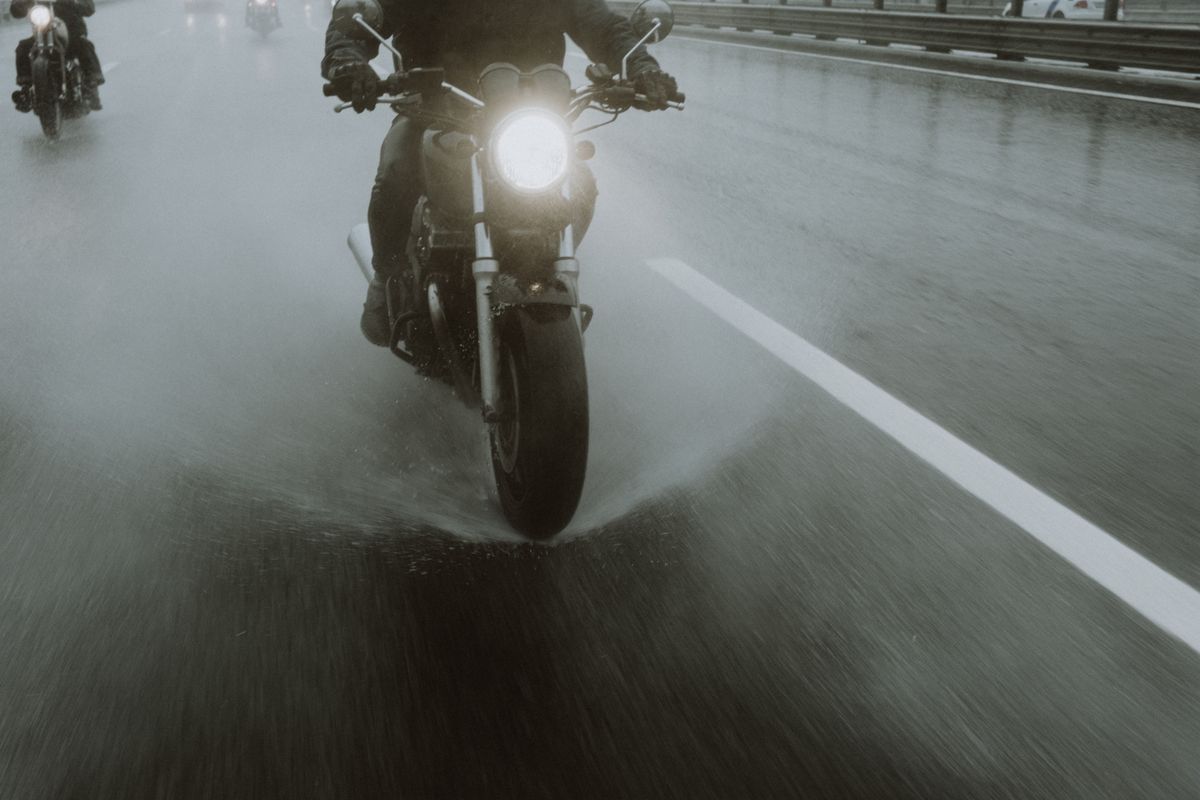
Put simply: you cannot doom-scroll your worries when you're at 110 km/h on the Trans-Canada. The brain doesn't have the bandwidth. Every neuron is occupied with the road, the wind, the feedback through the handlebars. That enforced presence — that's the therapy.
Dopamine and adrenaline also play a role. The moderate arousal state produced by riding (not panic-level, but alert and engaged) produces a post-ride sense of calm and accomplishment that's well-documented among endurance athletes and riders alike. It's the same reason a good ride leaves you tired in the best possible way.
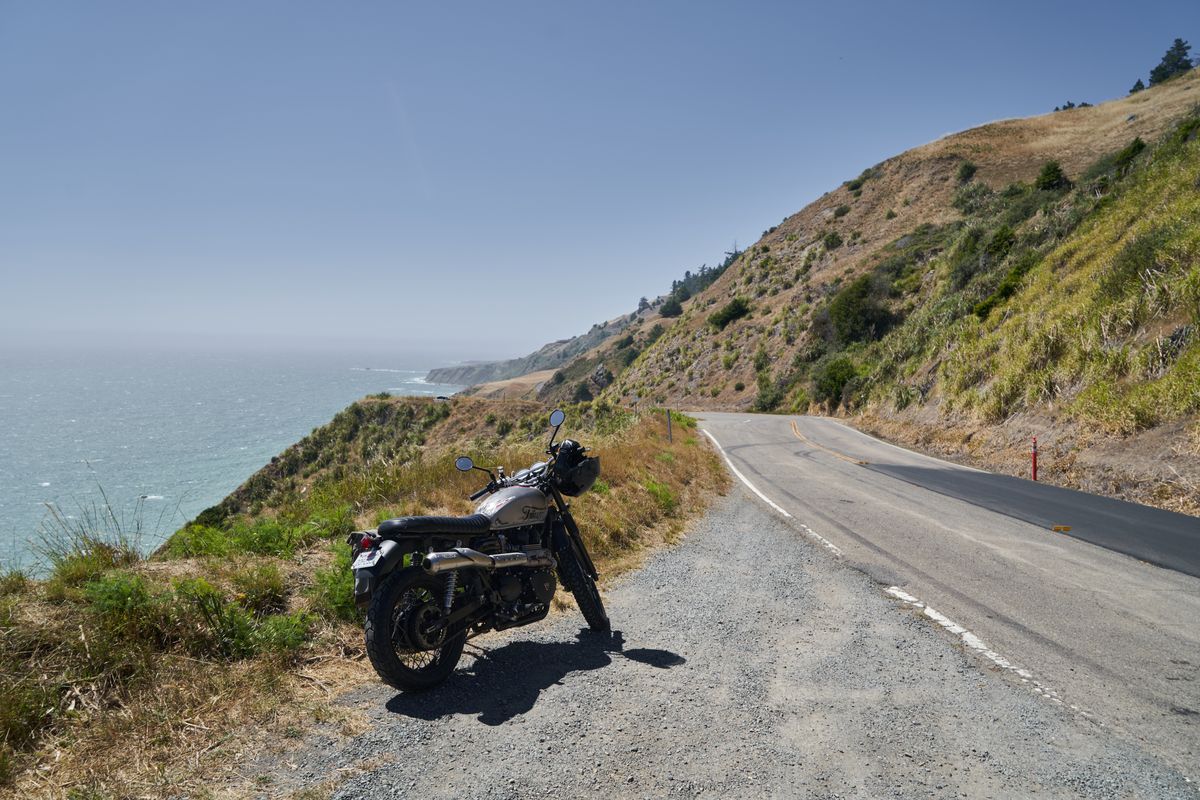
Solo riding is its own category entirely. When there's no one else to keep pace with, no route to agree on, no stops to coordinate — you're left alone with the road and your own thoughts. For a lot of riders, that's exactly the point.
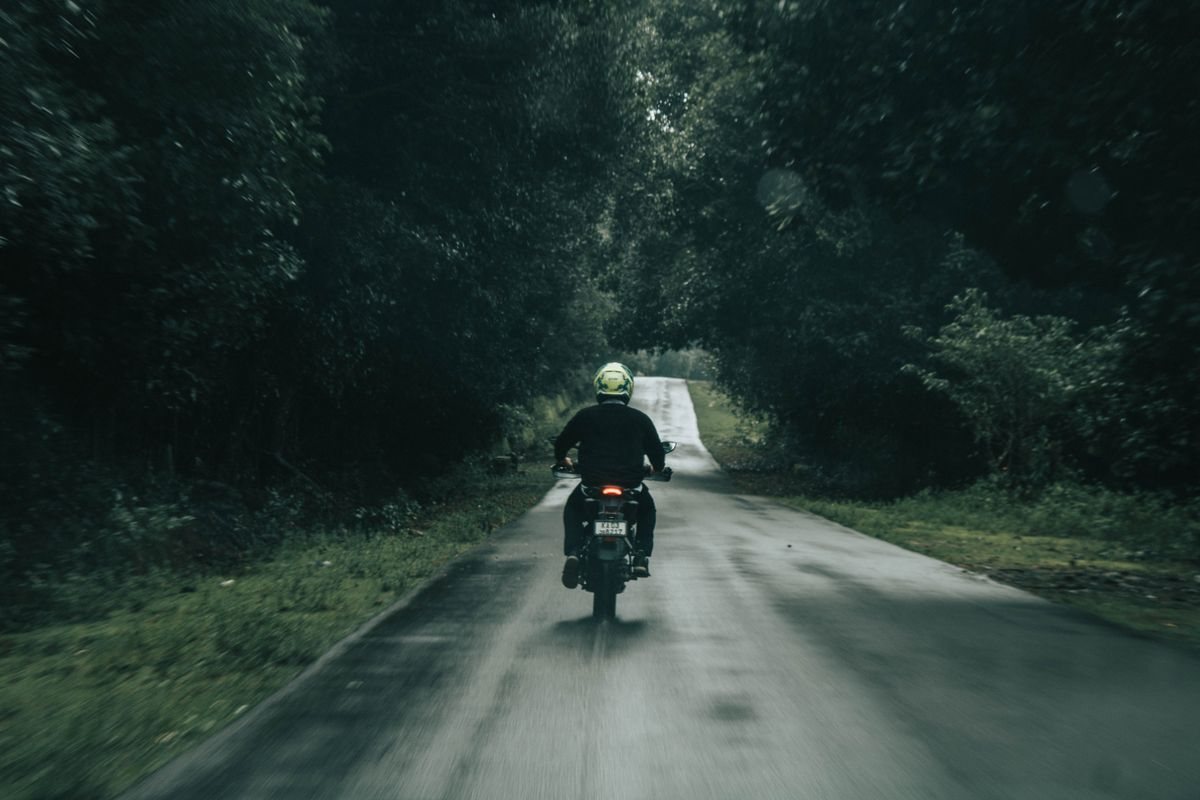
Solo riding demands complete present-moment awareness. You can't replay yesterday's argument or rehearse tomorrow's meeting while managing a corner at speed. The mental noise goes quiet — not because you've suppressed it, but because the ride has genuinely occupied your full attention. This is one of the most effective natural anxiety-reduction mechanisms available to anyone.
A solo ride is one of the few places in modern life where you are entirely in charge. No notifications. No obligations. No one needing anything from you. You decide when to stop, where to go, how fast to push. That sense of autonomy — genuinely uncommon in daily life — has a powerful restorative effect on mental energy and self-efficacy.
Paradoxically, while riding occupies your reactive mind, it can free your deeper thinking. Many riders report that their best problem-solving happens on long solo rides — ideas surface, decisions become clear, perspective shifts. It's not silence exactly; it's a different quality of thought that's hard to access in an office or in front of a screen.
Photo via Pexels
"The road doesn't care what you did last week. It only cares what you're doing right now. That's the whole lesson."
Long solo tours — a 600 km day, a multi-province trip — build genuine confidence. You planned it, you executed it, you handled whatever came up. That's a different kind of mental health than talking about your feelings. It's competence-based self-worth, built through doing hard things.
Group riding works on entirely different psychological levers — and the benefits are just as real, even if they feel less introspective. For more, check out modern safety technology.
Humans are tribal by nature. We are wired to belong to groups, to share identity, to feel seen by others who get it. The motorcycle community delivers this in a powerful way. There's a shorthand between riders — the nod, the wave, the shared understanding of why you do this — that creates genuine connection fast. For people who struggle to find their people, riding groups often become a core social anchor.
Riding through bad weather together, navigating a tricky mountain road as a group, making it to the destination — these shared experiences create bonding that's hard to replicate in social settings that don't involve challenge. The research on this is consistent: groups that face and overcome challenges together report significantly stronger social bonds and mutual trust.
There's something about sitting around after a ride — helmets off, gear loosened, coffee in hand — that produces more honest conversation than almost any other social setting. Maybe it's the shared adrenaline comedown. Maybe it's that riders tend to be direct people. Whatever the reason, the conversations that happen after group rides are frequently the ones people remember for years.
For people going through difficult periods — depression, grief, burnout — having a group ride on the calendar is a low-pressure reason to get out of the house. You don't have to explain why you've been quiet. You just show up, gear up, and ride. The group provides structure without demands. That's genuinely therapeutic for people who need momentum more than they need a conversation.
There's a distinction worth making here. Escapism is avoidance — using an activity to run from problems rather than deal with them. Riding, at its best, isn't that. It's stress regulation.
When your nervous system is dysregulated — flooded with cortisol, locked in fight-or-flight, unable to think clearly — you don't solve problems effectively. You need to discharge that arousal first. Riding does exactly that. The physical engagement, the sensory input, the movement through space — it regulates the nervous system in a way that sitting at a desk trying to "calm down" simply doesn't.
Somatic (body-based) therapies are among the fastest-growing areas of mental health treatment, precisely because the body carries stress that the mind can't simply think its way out of. Riding is an intuitive somatic practice — it processes stress through movement, sensation, and physical engagement. You come back from a ride more capable of dealing with whatever was bothering you, not less.
The key is intentionality. Riding angry, distracted, or impaired is dangerous for obvious reasons. Riding as a deliberate reset — a conscious decision to regulate your state before returning to a problem — is a different thing entirely and a legitimate mental health tool.
Photo via Pexels
The motorcycle community has an unwritten culture of looking out for its own that most outsiders don't see. Breakdowns bring strangers to your side within minutes. Group rides self-police for safety — the more experienced riders take the front and rear positions instinctively. Charity rides raise millions for causes. Veterans' motorcycle organizations provide peer support that reaches people who won't access traditional mental health services.
This isn't accidental. Riding is inherently vulnerable — you're exposed, you're relying on your gear and your skills, and everyone on the road knows that. That shared vulnerability creates empathy. Riders tend to help riders, full stop.
"The wave between riders isn't just courtesy. It's a quiet acknowledgment — I see you, I know what you're doing out here, stay safe."
For people who are socially isolated, who have difficulty forming connections, or who have simply fallen out of community — the motorcycle world provides an entry point that's remarkably accessible. You don't need to be extroverted. You don't need to have much in common beyond the bike. The shared identity does the rest.
Riders who have gone through loss — death of a loved one, a relationship ending, a career collapse — often describe getting back on the bike as a turning point. Not a cure, but a step. Something to do with the body while the mind processes. A way to feel alive and in control when everything else feels out of control.
Burnout is similar. The modern epidemic of chronic workplace exhaustion responds well to activities that use different parts of the brain — and riding uses almost none of the same cognitive resources as knowledge work. An hour on the bike after a brutal week at work doesn't just feel different. Neurologically, it is different. You're using your body, your spatial reasoning, your sensory awareness — everything your office refuses to engage.
This isn't anecdotal. Occupational therapy and burnout recovery programs increasingly recognize the value of physical, skill-based activities that produce a flow state. Riding — demanding enough to require full presence, rewarding enough to produce satisfaction — fits that profile well.
It would be dishonest to leave this without saying clearly: riding is a tool, not a substitute for professional mental health support when that's what's needed. If you're dealing with clinical depression, trauma, suicidal thoughts, or severe anxiety — please talk to someone. A doctor, a therapist, a crisis line. The bike will still be there.
What riding offers is maintenance and resilience — it helps healthy people stay grounded and helps struggling people find footing. It's not a replacement for therapy any more than running is. But as a complement to living well, as a practice of presence and community and physical engagement? It's one of the best tools there is.
If you're in Canada and need support: Crisis Services Canada — 1-833-456-4566 (24/7). You're not alone.
Research suggests motorcycle riding activates the prefrontal cortex and increases alertness and focus, similar to meditation. Many riders report reduced stress and improved mood after rides — the focus required creates a natural mindfulness state.
Riding requires full attention, which pushes out everyday stress and rumination. The combination of sensory input, physical engagement, and freedom of movement creates a genuine mental reset that riders describe as therapeutic.
Even a short 30–45 minute ride is enough for most riders to feel the mental benefit. Longer tours amplify the effect, but you don't need a multi-day trip to experience the stress relief riding provides.