When Should You Replace Your Motorcycle Helmet? The Honest Answer
Snell and SHOEI both recommend replacing your helmet after five years. Here are the real rules, the myths, and the conditions that mean replace it today.
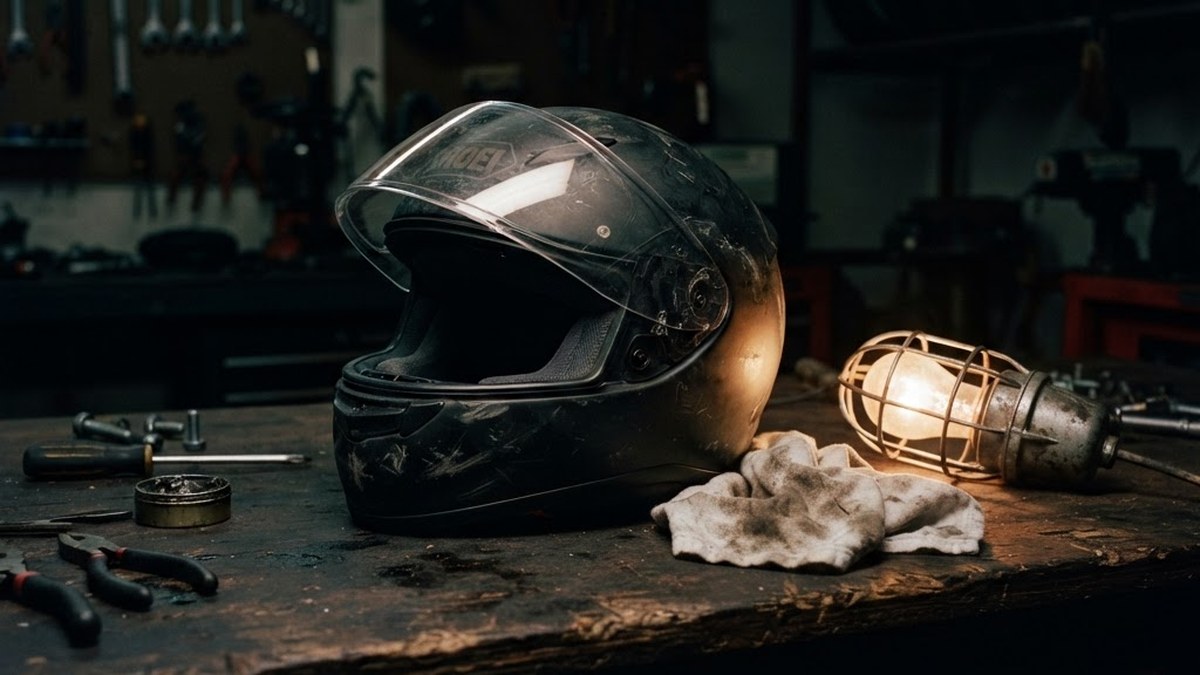
AI-generated illustration
In this article
The short answer
Five years of use is the industry consensus, and it comes from the safety people, not the marketing people. The Snell Foundation's position, written into its own protective headgear standard, is that motorcycle helmets should be replaced "after five (5) years of first use, or less if the manufacturer so recommends." SHOEI, one of the biggest helmet makers in the world, recommends replacement five years after first retail purchase, or earlier based on condition.
Note the phrasing: five years of use, not five years sitting in a box. The clock starts when a helmet enters service, not when it was molded.
Why five years
The protective part of a helmet is the EPS liner, the expanded polystyrene foam that absorbs impact energy. EPS does not last forever. It ages, it degrades with heat and solvents, and it takes invisible damage from years of being worn, taken off, and generally lived in. Glues, paints, and liner materials break down over time too. None of that is visible from the outside, which is exactly why the replacement guidance is calendar-based rather than inspection-based.
Conditions that mean replace it today
SHOEI's own maintenance guidance lists the triggers that call for immediate replacement, and any one of them is enough:
- The helmet took an impact. Any impact, including a drop onto concrete. EPS foam that has compressed once does not un-compress.
- The retention system is loose or deteriorating. If the helmet turns on your head with the strap fastened, it is done.
- The EPS liner is separating from the shell, shows wear, or is breaking up.
- The liner was exposed to heat or a solvent and has melted, deformed, or shows indentations.
A helmet that has been crashed in should be replaced even if it looks fine. The shell is cosmetic; the foam is the safety equipment.
The myths
"It looks fine, so it is fine"
The damage that matters is inside a black foam liner you cannot see into. A pristine shell tells you nothing about EPS condition.
"Only crashes count"
Drops count. Parking-lot tip-overs count. SHOEI explicitly excludes drop damage from its warranty because a dropped helmet is a used-up helmet as far as impact performance goes.
"I barely ride, so it lasts longer"
Less riding does buy you a bit more time, but the materials still age. The five-year guidance is about use plus time, and heavy commuters should treat five years as a ceiling, not a target.
Buying advice
When you buy, check the manufacture date sticker inside the shell, usually a month and year on a round sticker. Anything that sat in a warehouse for years is already partway through its life. And never buy a used helmet: the one thing you cannot verify is its impact history, and that is the only thing that matters.
Frequently asked questions
How often should you replace a motorcycle helmet?
The Snell Foundation recommends replacement after five years of first use; SHOEI recommends five years after first retail purchase.
Does dropping a helmet mean replacing it?
If the drop involved a real impact to the liner, yes. EPS foam compresses on first impact and does not recover.
Should you buy a used helmet?
No. You cannot verify its impact history, and the impact liner is the part you are paying for.