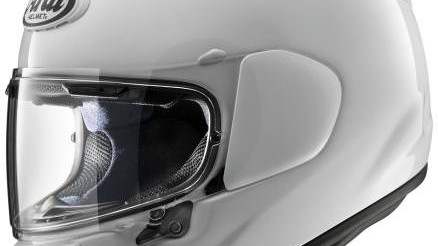
Image: Property of Arai Helmet
In Canada, the answer is settled: every province and territory requires motorcycle helmets for all riders and passengers. But south of the border, the debate is heating up again. DC lawmakers recently moved to scrap the city's mandatory helmet law, calling motorcycles a "symbol of freedom." Safety experts pushed back hard. So what does the data actually say?
As someone who has ridden over 200,000 km (124,000 mi) across 28 states and 4 provinces, I have a strong opinion on this. But let us look at the numbers first.
In Canada, there is no debate. All 10 provinces and 3 territories require motorcycle helmets for both riders and passengers, regardless of age, experience level, or training. There are no exceptions for adult riders anywhere in the country.
Canadian helmet standards accept three certification systems:
Any helmet sold legally in Canada must display certification from at least one of these standards. This is not a suggestion; it is law, and law enforcement actively enforces it.
The statistics on helmet effectiveness are clear and consistent across multiple studies:
According to the National Safety Council, motorcycle helmets are estimated to be 37% effective in preventing fatal injuries to operators and 41% effective for passengers. The Insurance Institute for Highway Safety (IIHS) found that in 2023, 51% of motorcyclists killed in crashes were not wearing helmets, and those fatalities were overwhelmingly concentrated in states without universal helmet laws.
A landmark IIHS study found that universal helmet laws reduce motorcyclist fatalities by approximately 27%. Even more striking: the IIHS calculated that over 22,000 motorcyclist lives could have been saved between 1976 and 2022 if all US states had adopted all-rider helmet laws.
The helmet use rate tells the story: in states with universal helmet laws, 94% of motorcyclists observed were wearing helmets. In states without such laws, helmet use dropped to 72%.
As of August 2026, the US helmet law landscape is fragmented:
The recent DC proposal to scrap the helmet law has reignited the freedom-vs-safety debate. Proponents argue that adults should make their own choices. Safety experts point to the data: when helmet laws are repealed, helmet use drops, and fatalities rise. This pattern has been documented every time a state has repealed its universal helmet law.
If you are shopping for a helmet, understanding the certification standards helps you make an informed choice:
| Standard | Region | Key Details |
|---|---|---|
| ECE 22.06 | Europe | Current European standard. Most rigorous testing protocol. Accepted in Canada. |
| DOT FMVSS 218 | USA | US federal standard. Self-certified by manufacturers. Minimum baseline. |
| Snell M2025 | USA (voluntary) | Independent, more rigorous than DOT. Premium helmet brands like Arai and Shoei often certify to Snell. |
| CSA | Canada | Canadian domestic standard. Accepted alongside DOT and ECE. |
The hierarchy is generally: ECE 22.06 and Snell M2025 are the most rigorous. DOT is the minimum baseline in the US. All three are legally accepted in Canada. If you want the best protection, look for a helmet that carries both ECE 22.06 and Snell certification. Premium brands like Arai, Shoei, and AGV typically meet multiple standards.
I have ridden over 200,000 km (124,000 mi) on my Indian Pursuit, through 28 states and across Canada. I have been down once, and the helmet did its job. I am not going to pretend this is a nuanced personal choice for me. I wear a full-face helmet every time I get on the bike, and I would do it even if it were not legally required.
The freedom argument misses the point. Freedom to ride means nothing if you do not survive the ride. The data is not ambiguous: helmets save lives, and helmet laws increase helmet use. The 22,000 lives that the IIHS calculated could have been saved are not a statistic. They are riders who would have gone home to their families.
In Canada, we do not have this debate. And honestly, that is one of the things I appreciate about riding here. The standard is clear, the law is consistent, and the culture expects it. When I cross into US states without helmet laws and see riders in t-shirts on baggers with no helmet, it does not look like freedom to me. It looks like a preventable tragedy waiting to happen.
Are motorcycle helmets mandatory in Canada?
Yes. All Canadian provinces and territories require motorcycle helmets for both riders and passengers, regardless of age or experience level. Helmets must meet CSA, DOT, or ECE certification standards.
How effective are motorcycle helmets at preventing fatalities?
According to the National Safety Council, motorcycle helmets are estimated to be 37% effective in preventing fatal injuries to operators and 41% effective for passengers. States with universal helmet laws see significantly lower fatality rates.
Which US states do not require motorcycle helmets?
As of August 2026, 3 US states have no helmet requirement for adult riders: Illinois, Iowa, and New Hampshire. 28 states require helmets only for riders under a certain age, and 19 states plus DC require helmets for all riders.
As an Amazon Associate I earn from qualifying purchases. If you buy through the links above, I may earn a small commission at no extra cost to you.