How Often Should You Lube a Motorcycle Chain? The Real Rules
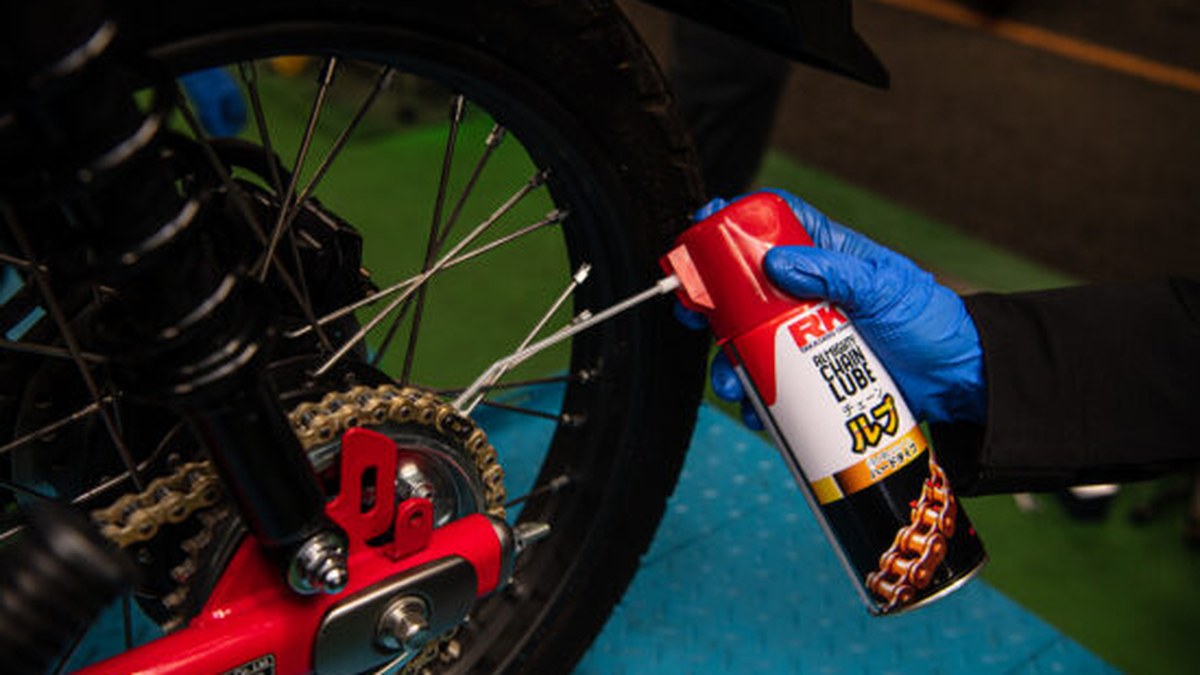
Image: Property of RK Japan
In this article
The short answer
Chain care is not complicated, and the manufacturers publish numbers you can actually follow. RK's guidance for sealed street chains is to clean and lubricate every 300 miles, which is about 500 kilometres, or any time the chain gets dirty. For non-sealed chains they cut that to 200 miles (300 km). D.I.D simply says lubricate every other use with an O-ring or X-ring safe lubricant. Neither company is asking for a weekly science project: they are asking for a routine.
What the manufacturers actually say
Here is the practical translation for Canadian riding. On a paved touring schedule, lubing every 500 km (300 mi) lines up with roughly every other fuel stop on a long trip. Add an extra application after any ride in rain, because water strips lubricant and promotes the surface rust that starts pitting rollers. If your riding is mostly short city trips in stop-and-go traffic, treat the interval as a maximum, not a target, and check the chain more often.
Cleaning matters as much as lubricating. A gritty chain wears out sprockets, and spraying lube onto road grit turns it into grinding paste. Clean with a dedicated chain cleaner and a soft brush, wipe it down, let it dry, then apply lubricant along the inside of the chain run so centrifugal force pushes it into the rollers as you ride.
Stretch, wear and when to replace
D.I.D publishes the simplest wear rule in the business: replace a sealed chain at one percent stretch, and a non-sealed chain at two percent. On a 112-link chain, one percent is barely 25 mm of total elongation, which is exactly why eyeballing it does not work. Measure a set number of links, compare against the specification in your owner's manual, and use the adjuster marks as a rough guide only.
Replace a chain if you find kinked links that will not straighten by hand, rollers that feel rough or move stiffly, seized links, or visible rust damage. If the chain is worn past spec, replace the sprockets with it. A new chain on hooked sprockets wears out in a fraction of the time it should, which turns a 150-dollar job into a repeat visit.
A 10-minute routine that works
Every 500 km (300 mi): inspect the chain while cold, check slack against your manual's spec, clean and re-lube. Every ride in the rain: wipe and re-lube. Every 1,000 km: inspect the front sprocket area and check for tight spots by rolling the rear wheel and watching the chain tension change around the loop. A chain that tightens and loosens as the wheel turns is on its way out, no matter how good it looks.
One safety note that matters more than any interval: check slack with the bike off and the transmission in neutral, and never reach toward the sprocket with the engine running. Most chain injuries happen during maintenance, not riding.
Chain versus belt: my honest take
My Indian Pursuit runs a belt, and after 200,000+ km on everything from chain-driven standards to this bagger, I understand why touring riders pay for belt or shaft drive: the routine above simply disappears, and the drivetrain lasts far longer with no lube in your panniers. But a chain is lighter, cheaper to replace and easier to change gearing with, and on a chain-driven bike the 10-minute routine above is the whole price of reliability. The riders who have chain problems are almost never the ones who lube too little. They are the ones who never look.
Frequently asked questions
How often should I lube a motorcycle chain?
RK recommends cleaning and lubricating a sealed street chain every 300 miles (about 500 km), or whenever the chain gets dirty, and more often after riding in rain. D.I.D's own guidance is to lubricate every other use with an O-ring and X-ring safe lubricant.
When does a chain need replacing?
D.I.D publishes a simple wear limit: sealed chains should be replaced at one percent stretch, while non-sealed chains go at two percent. Measure over a set number of links against the specification in your owner's manual rather than trusting the adjuster marks alone.
Is a belt or shaft drive easier?
Belts and shafts need less frequent attention, which is why big touring bikes like my Indian Pursuit use a belt. Chains remain the lightest and cheapest option, and the maintenance routine is what keeps them reliable.