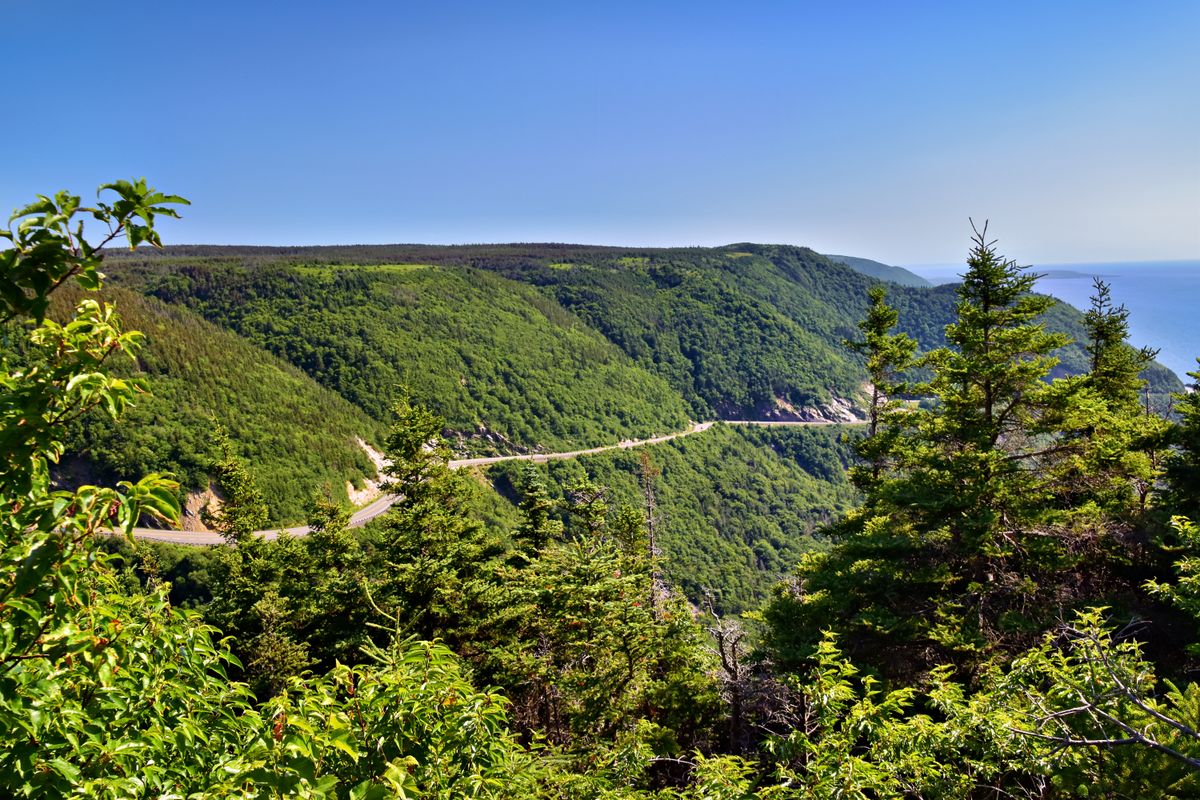
We Rode the Cabot Trail: Full Trip Recap June 2026
We're back. Three days, 1,128 km, one mountain loop, a group of riders we'd never met before, and Monique's first real test as a passenger on the Indian Pursuit. Here's everything that happened — the good, the hard parts, and whether the Cabot Trail actually lives up to the reputation.
In This Article
- Day 1: Dieppe to Baddeck (415 km)
- Day 2: The Cabot Trail Loop (298 km)
- Day 3: Baddeck to Dieppe (415 km)
- How Monique Did as a Passenger
- Riding With Strangers — How the Group Worked Out
- How the Indian Pursuit Handled It
- Camera Setup: What We Captured
- Honest Verdict: Is the Cabot Trail Worth It?
- Gear We Used
Day 1: Dieppe to Baddeck (415 km)
We left Dieppe early and met the group at 9 AM in Amherst, NS. There were a handful of bikes — a good mix of touring and sport-touring rigs. Nobody knew each other well, which made the first hour or so a bit of a calibration — figuring out pace, stop preferences, and how the group communicated.
The Trans-Canada through Nova Scotia isn't glamorous riding, but it moves fast. We made solid time from Amherst to Truro, stopped for fuel and food, then pushed through to Baddeck. The last 90 km along the Bras d'Or Lakes as you approach Baddeck is genuinely beautiful — wide open water, rolling hills, and almost no traffic on a weekday.
We checked into the Cabot Trail Motel in Baddeck. Comfortable, clean, and right in town. Good call on the booking — the area fills up fast in June.
Day 2: The Cabot Trail Loop (298 km)
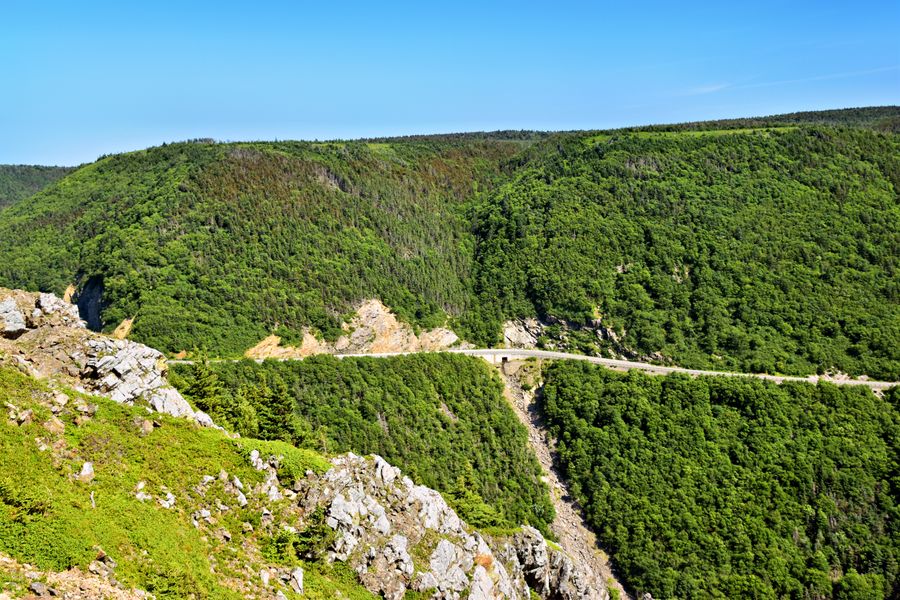
This is the day. We left Baddeck clockwise — which is the right call. You want the ocean cliffs on your right and the mountain drops on your passenger's side for the better views. The weather cooperated.
The north section between Chéticamp and Pleasant Bay is where the trail earns its reputation. The elevation changes are serious — you're climbing and descending constantly, with ocean overlooks that make you want to stop at every pull-off. We stopped at several. No shame in that.
The descent into Pleasant Bay is the shot everyone takes. The road literally winds down the mountain in a way that doesn't feel real until you're on it. Clockwise means you ride it down rather than up — the views are better, and it's easier on a loaded two-up bike.
We stopped in Ingonish for lunch, then looped back south through the eastern side of the trail — gentler terrain, more coastal, still beautiful but a different vibe. Total loop time was about 7 hours including stops.
Day 3: Baddeck to Dieppe (415 km)
The return day. You're tired, the bikes are loaded, and the Trans-Canada feels long. We left after a proper breakfast in Baddeck and made good time through to Amherst where the group split. From there it's a straight shot home to Dieppe.
Nothing dramatic on Day 3 — that's what a good trip looks like. If Day 3 is boring, Days 1 and 2 were worth it.
How Monique Did as a Passenger
This was the part I was watching most closely. Monique has been on the Pursuit for short rides but nothing at this scale — 298 km of mountain road on Day 2 is a real test for any passenger.
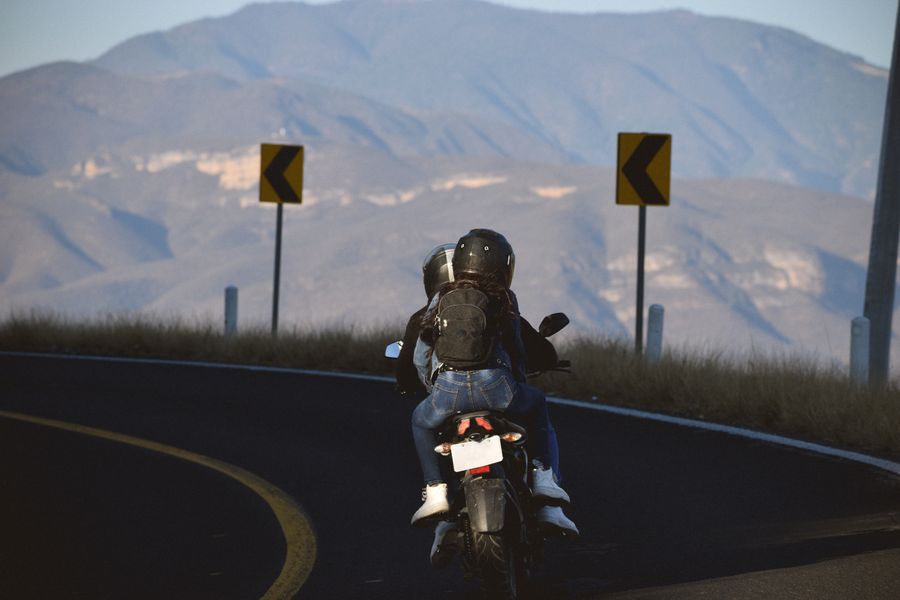
She did great. The stop schedule we planned (roughly every 60–90 minutes) worked well. The mountain sections on Day 2 were the most demanding — the lean angles and constant direction changes are a different physical experience than flat highway riding. But the Pursuit's passenger setup is genuinely comfortable, and the mid-rise handlebars I installed earlier this year gave me better control through the tighter corners.
Key takeaway: don't skip the stops. A tired or uncomfortable passenger affects how you ride. Build the stops in and stick to them.
Riding With Strangers — How the Group Worked Out
We found this group through a local motorcycle Facebook group. Going in, I wasn't sure how it would go — riding with people you don't know is a different dynamic than riding with friends.
It worked out well. Everyone was experienced, the pace was reasonable, and nobody had an agenda. The natural stops created good opportunities to actually talk. By Day 2 it didn't feel like strangers anymore.
If you're on the fence about joining a group ride with people you don't know — do it. Atlantic Canada motorcycle groups tend to be solid people.
How the Indian Pursuit Handled It
I'm about 1,000 km into the Stage 1 exhaust and air cleaner setup now, and this was the first real extended test at highway speeds with a passenger. The PowerPlus 108 pulled confidently on every climb — loaded two-up touring is exactly what this engine is built for.
Fuel economy came in around 6.2 L/100km over the three days, which is right in line with what I expect for two-up touring on varying terrain. With the 22L tank that's roughly 350 km per fill — we fuelled up at Amherst on Day 1, Chéticamp on Day 2, and Truro on Day 3. No anxiety.
The Quad Lock held up perfectly for navigation. The mid-rise handlebars made a real difference on the Cabot Trail mountain sections — better leverage and a more natural wrist angle through the longer twisties. That upgrade was worth every cent.
Camera Setup: What We Captured
We came loaded for this one — 2 Insta360 Ace Pro 2 cameras and 2 Insta360 X5 cameras between us. Plenty of storage redundancy and multiple angles covered at all times. For a trip like this where you only get one shot at the mountain sections, having backups matters.
We also brought three drones: the DJI Mini 3, the new Antigravity A1, and the Hover Air Pro for quick grab-and-go shots. The plan was to get aerial footage at the key overlooks on the Cabot Trail.
The problem? A big chunk of the Cabot Trail runs through Cape Breton Highlands National Park — and Parks Canada airspace means no drone flying. Most of the best visual locations were off limits. We got a few shots outside park boundaries but nowhere near what we'd hoped for. Next trip we'll plan the drone windows more carefully around the non-park sections.
The video will be honest about that. Lots of helmet and handlebar POV footage, not as much aerial as we wanted. That's the reality of riding through protected land.
Honest Verdict: Is the Cabot Trail Worth It?
Yes. Unambiguously. It's one of those rides that actually delivers on what you've heard about it.
The north section on Day 2 is genuinely world-class motorcycle road. The rest of the trip — the travel days, the group dynamics, staying in Baddeck — is all good, but that mountain loop is the reason you go.
Would I do it again? Already thinking about a fall run. The colours on that mountain section in October would be something.