Upgrading Your Indian Pursuit: Handlebars & Exhaust
Two of the most common Indian Pursuit mods are mid-rise handlebars and a Stage 1 exhaust. I did both on my 2024 Pursuit Dark Horse Icon. Here is what each mod actually does, what it costs in Canada, and whether it is worth it.
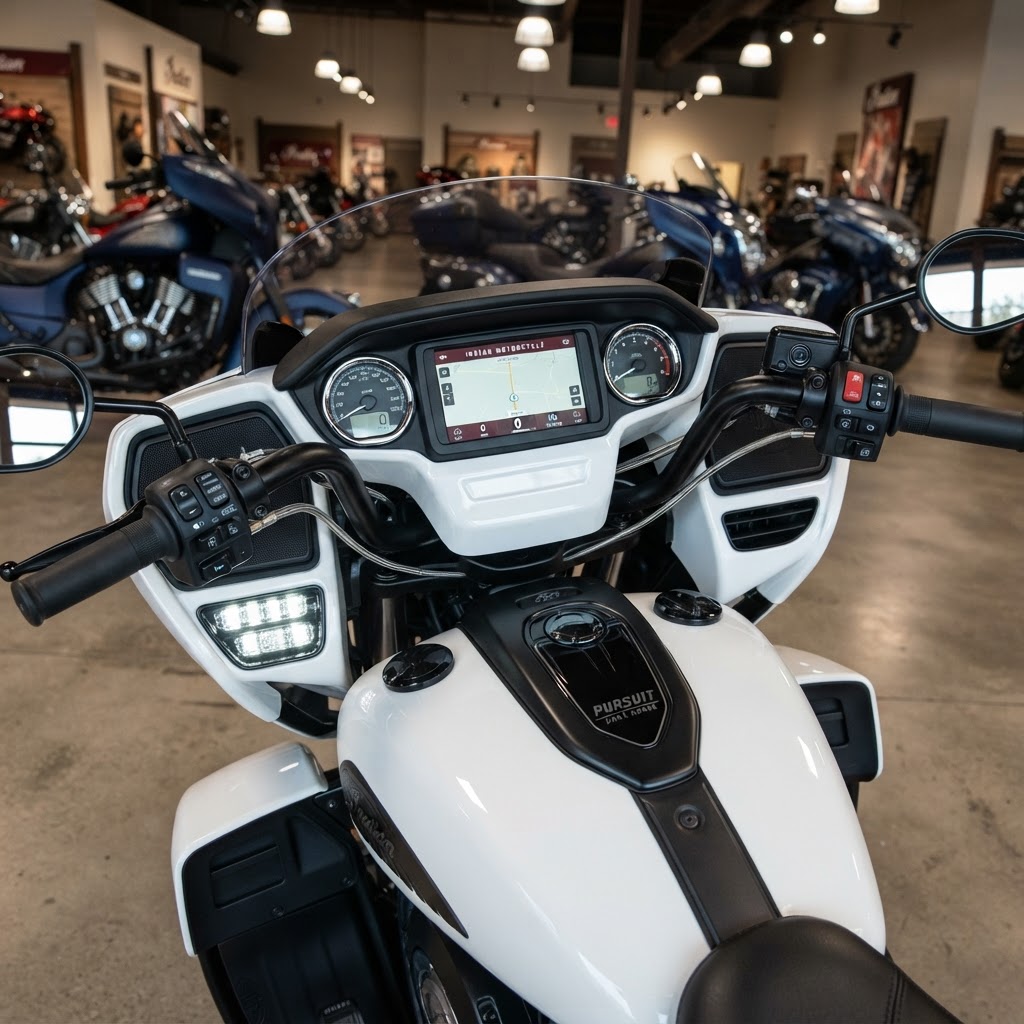
Table of Contents
Why I changed the handlebars
The stock bars on the Indian Pursuit Dark Horse are low and wide. For short rides around town, they are fine. For 6+ hour touring days across Atlantic Canada, they put too much weight on my wrists and shoulders. After a 400 km (249 mi) day, my wrists were sore and my shoulders were tight. The riding position leaned me forward slightly, which is great for aggressive riding but uncomfortable for long-distance touring.
I looked at several options — ape hangers, mini-apes, pullback bars, and mid-rise bars. Mid-rise handlebars (about 8 cm / 3 inches higher than stock with a slight pullback) struck the right balance. They bring the grips up and back, putting me in a more upright position that takes weight off my wrists and distributes it through my core and legs. The change sounds small, but after a full day of riding, it is the difference between getting off the bike stiff and getting off comfortable.
Mid-rise handlebars: the riding position difference
Here is what changes when you go from stock bars to mid-rise:
- Wrist pressure: Significantly reduced. The more upright position means your weight goes through your seat and footpegs, not your hands. On long rides, this is the single biggest comfort improvement.
- Shoulder tension: Reduced. Stock bars require you to reach forward, which engages your shoulders. Mid-rise bars bring the grips closer, letting your shoulders relax.
- Control feel: The higher bar position changes the steering geometry slightly. The bike feels lighter at low speeds and in parking lots because you have more leverage. At highway speeds, the steering is slightly less precise but more relaxed — which is what you want for touring.
- Wind protection: A more upright position puts your head higher, which can affect wind buffeting depending on your windshield. I did not notice a significant change with the Pursuit's fairing.
- Cable routing: Higher bars may require longer control cables. The Indian mid-rise bars I installed came with extended cables. Check this before buying aftermarket bars — if cables are too short, you will need to buy extensions or replace them.
Stage 1 exhaust: sound and performance
The stock exhaust on the Indian Pursuit is quiet — almost too quiet for a 108ci V-twin. It is EPA-compliant and does not offend the neighbours, but it also does not give you the visceral feel that a big American V-twin should have. The Stage 1 exhaust changes both the sound and the performance.
Sound: The Stage 1 exhaust opens up the exhaust note. At idle, you get a deeper, more aggressive rumble. Under acceleration, the V-twin character comes alive. At highway cruising speed (100-120 km/h / 62-75 mph), the exhaust is noticeable but not intrusive — you can still hear your intercom and music. It is not obnoxiously loud; it is the sound the engine should have had from the factory.
Performance: The Stage 1 exhaust on its own adds a modest power increase — approximately 3-5 horsepower. The bigger benefit is throttle response. The bike feels more eager off the line and smoother through the rev range. The exhaust breathes better, which means the engine does not feel restricted.
Fuel mapping: When you install a Stage 1 exhaust, you need to remap the ECU. Indian offers a Stage 1 calibration that adjusts the fuel mapping to match the increased airflow. Without the remap, the bike will run lean and may pop on deceleration. The Stage 1 calibration is included with the Indian Stage 1 exhaust kit.
Stage 1 air cleaner: the third piece
The Stage 1 air cleaner is the third component of the Stage 1 package. The stock air intake is restrictive for emissions compliance. The Stage 1 air cleaner flows more air, which complements the freer exhaust. Together, the Stage 1 exhaust, air cleaner, and ECU calibration create a balanced system — more air in, more air out, correct fuel mapping.
I installed all three components as a set. The combined result is approximately 5-8 horsepower and improved throttle response. Is it a massive performance gain? No. But the bike feels more alive and responsive, and the sound matches the bike's character.
Installation and costs in Canada
| Component | Part | Cost (CAD) | Install time |
|---|---|---|---|
| Mid-rise handlebars | Indian mid-rise bar kit (includes cables) | $350-$450 | 2-3 hours |
| Stage 1 exhaust | Indian Stage 1 slip-on exhaust | $800-$1,200 | 1-2 hours |
| Stage 1 air cleaner | Indian Stage 1 air cleaner kit | $200-$300 | 30-45 min |
| ECU remap | Stage 1 calibration (included with exhaust kit) | Included | 30 min |
| Total (parts only) | $1,350-$1,950 | 4-6 hours |
If you have a dealer install everything, add $300-$500 for labor. I did the installation myself with basic hand tools and a torque wrench. The exhaust and air cleaner are straightforward; the handlebar swap is more involved because you need to reroute and connect extended cables.
Prices are approximate as of August 2026. Check with your local Canadian Indian dealer for current pricing and availability.
The combined result
After both mods, here is how the bike changed:
- Comfort: Dramatically improved for long-distance riding. After a 500 km (311 mi) day, my wrists and shoulders feel fine. This was the primary goal and it worked.
- Sound: The Pursuit now sounds like a 108ci V-twin should. Deep, muscular, but not obnoxious. The 6-speaker 600W audio system is still audible at highway speeds.
- Throttle response: Smoother and more eager. The bike pulls more cleanly from low RPM and feels less restricted.
- Fuel economy: Negligible change. I see approximately 5.8 L/100km (40.6 mpg US) loaded solo touring, which is roughly the same as stock. The Stage 1 calibration keeps the fuel mapping correct.
What I would do differently
If I were starting over, I would do the handlebars first and ride with them for a few weeks before deciding on the exhaust. The handlebars are the mod that actually changes how the bike feels for long-distance riding. The exhaust is more of a personality upgrade — it makes the bike sound and feel more like what it should be, but it does not change the riding experience the way the bars do.
I would also consider aftermarket options. The Indian OEM Stage 1 exhaust is good but there are aftermarket slip-ons (Vance & Hines, Rinehart, Bassani) that offer different sound profiles and sometimes better flow. The trade-off is warranty — OEM parts keep your warranty intact, while aftermarket may void it.
Frequently Asked Questions
Yes. The Stage 1 exhaust increases airflow, which requires a richer fuel map. Without the remap, the engine runs lean, pops on deceleration, and may run hotter. The Indian Stage 1 calibration is included with the exhaust kit.
Indian OEM Stage 1 parts installed by an authorized dealer do not void the warranty. Aftermarket exhausts may affect warranty coverage for engine-related components. Check with your dealer before installing aftermarket parts.
If you ride long distances (200+ km / 124+ mi per day), absolutely. The comfort improvement is the single biggest change you can make to the Pursuit for touring. For short city rides, the stock bars are fine.
The air cleaner and exhaust are straightforward DIY jobs with basic tools. The handlebar swap is more involved because of cable routing. If you are comfortable with basic mechanics, all three are doable in an afternoon. Otherwise, budget for dealer installation.
Information checked August 27, 2026. Prices are approximate and may vary by dealer. Verify current pricing with your local Canadian Indian Motorcycle dealer.