Toyota Woven City After One Year: What Is Actually Being Tested?
Toyota's Woven City has reached its first anniversary as an operating test course, and the company's September 25, 2026 update gives a more useful progress snapshot than the original futuristic-city imagery. The headline is not that a complete smart city has arrived. Toyota says roughly 30 proof-of-concept projects are underway, about 160 people in around 80 households are participating, and seven new organizations have joined as “Inventors.” Those are meaningful signs of activity, but they are early-stage trial numbers, not proof that the systems are ready for mass deployment.
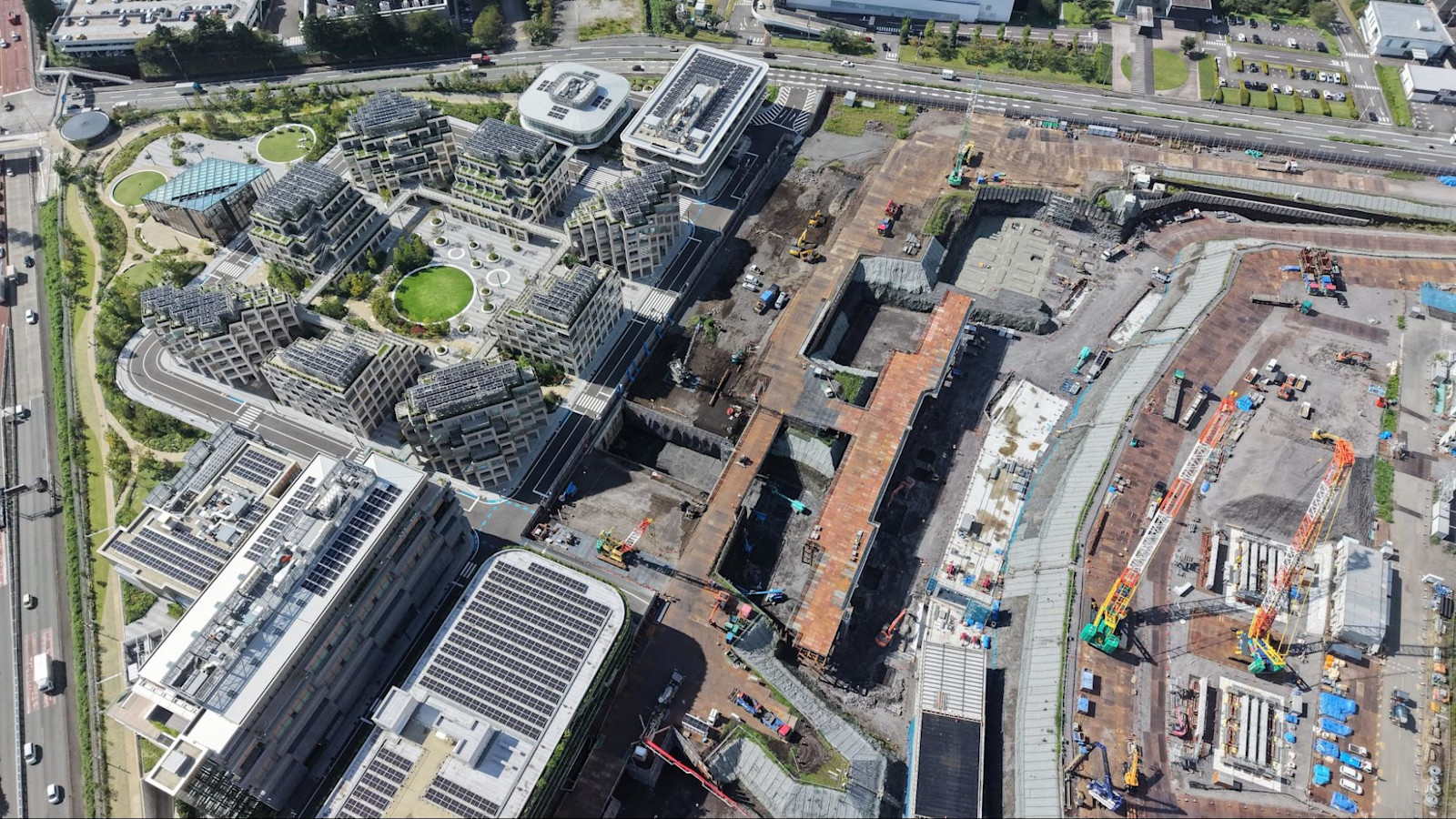
Table of Contents
What changed in the first year?
Woven City is a Toyota and Woven by Toyota project in Susono, Shizuoka Prefecture, Japan. The companies describe it as a living laboratory and a test course for mobility. Its first phase officially launched on September 25, 2025. One year later, Toyota reports that approximately 30 resident-centered proof-of-concept projects are underway. Around 160 people across about 80 households are participating as “Weavers,” the term Toyota uses for residents who take part in trials and provide feedback.
The distinction between residents and a conventional test user matters. Toyota's stated development model is to have Inventors run trials, collect feedback from Weavers, and refine products and services through repeated improvement. That approach could expose practical problems that a lab-only demonstration misses: whether people will actually use a service, where it creates friction, and what needs to change before it could work outside a controlled site.
But the city is still a bounded experiment. The update does not say that the projects have been adopted across Japan, nor does it publish comparable outcome data for all 30 trials. The best way to read the anniversary announcement is as an account of what's being tested and who has joined, rather than a scorecard proving that smart-city technology has already improved daily life at scale.
The trials worth watching
Toyota's examples span safety, home assistance, data analysis, energy and mobility. The Integrated ANZEN System, developed by Woven by Toyota, is being tested in Woven City. Under a partnership with Shizuoka Prefecture, the company says it plans during fiscal 2026 to expand testing beyond the city by installing devices in prefectural government vehicles and collecting data. That planned expansion is important because an experiment that works only inside one purpose-built district may not transfer neatly to ordinary roads and fleets.
The AI Robot Association is testing household robots with residents. Toyota says robots had been introduced in 11 households by September 24, with more than 1,000 tasks tested. The announcement describes day-to-day assistance such as tidying and carrying items. That task count shows active trials, but by itself it does not reveal how often a robot completed a task independently, how much human intervention was required, or whether residents found the service useful enough to keep using.
UCC Japan, which operates a coffee lounge in Woven City, has developed a method for visualizing more than 300 behavioral data points from participants. Its next stated step is to study whether different kinds of coffee affect concentration. This is a good example of why a living lab can be interesting beyond self-driving cars: the city is being used to investigate services and human routines too. It also raises questions that a press release does not answer, including what data is collected, how it is interpreted, and what consent and privacy protections apply. Readers should look for detailed protocols and published results as the trials mature.
What the AI Vision Engine does
One of the update's most notable technical claims concerns Woven by Toyota's AI Vision Engine. Toyota says the current system is used in the Integrated ANZEN System and UCC Japan's proof-of-concept project. The planned version 2.0, targeted for release by the end of 2026, is intended to describe real-world events in natural language, reason about why events occurred, and detect specific behavior by people and mobility technologies in visual data.
That description points toward a system that analyzes visual scenes rather than just identifying a fixed list of objects. In a mobility setting, understanding a sequence or interaction could be more useful than knowing only that a person, vehicle or road feature appeared in a frame. However, Toyota's announcement is a company description of intended capabilities, not independent validation of how accurately the system will interpret complex scenes in everyday conditions.
Toyota also says version 2.0 has achieved “world-leading” scores on more than 10 benchmarks, including those measuring reasoning. The company identifies an internal testing environment and says its approach follows methodologies from benchmarks such as MVBench, CaST-Bench and GroundingME. That qualification matters: benchmark scores are meaningful only when readers can see the exact model version, test setup, comparison set and results. The announcement does not provide a table of those scores or independent evaluations, so the superlative should be treated as Toyota's claim pending more detail.
What the numbers do and do not tell us
Thirty projects, 160 participants and more than 1,000 robot tasks help show that this has moved beyond a rendering or a one-day showcase. They are activity measures. They are not yet outcome measures. A stronger public evidence base would include results such as safety incidents avoided, task completion rates, participant retention, reliability across weather and lighting, energy use, costs, accessibility, and the extent to which an experiment can be reproduced in a normal community.
There is also a scale question. Toyota says Phase 1 covers approximately 47,000 square metres and is expected to accommodate about 300 residents. Phase 2 construction began in September 2026; the company lists its area at approximately 52,000 square metres, a planned capacity of 600, and completion by the end of November 2028. Toyota says the full site is ultimately planned to accommodate around 2,000 people. Capacity is not the same as occupancy, and a growing site does not automatically mean that any particular service is ready for broad use.
For consumers, the practical question is therefore not simply “Is Woven City the future?” It is which tested systems emerge with clear evidence of usefulness, safety, privacy protections, maintainability and a route to deployment beyond the Toyota ecosystem. Those details will matter more than the futuristic label.
What happens next?
Toyota says general visitor reservations for Phase 1 open on September 25, 2026, with visits for the general public in Japan beginning October 1. The company also says Phase 2 site preparation is complete and construction is underway, with completion scheduled for the end of November 2028. Separately, it expects around 25 households to move in around March 2027 through a resident recruitment program that attracted more than 1,000 applications from Shizuoka Prefecture.
For anyone following the project, the next useful milestone is not just another building update. It is publication of the methods and results: what each proof of concept measured, what changed after resident feedback, and which ideas work outside the purpose-built environment. Toyota's plan to extend the ANZEN System trials to prefectural vehicles is one concrete test of that transition.
The practical takeaway
Woven City is a real, active experiment, but it is still an experiment. Toyota's first-anniversary update documents a growing community, dozens of projects and an ambitious AI vision system. It does not yet demonstrate that the technologies are reliable, privacy-preserving or ready for widespread use. The story is worth watching precisely because the next phase should begin to show whether resident feedback and controlled trials can produce systems that solve ordinary problems outside the test city.
Reporting note: Project counts, dates, capacities and capability descriptions above are attributed to Woven by Toyota's company update published September 25, 2026. Interpretive comments are analysis, not claims of firsthand experience.
Sources
- Woven by Toyota, “Toyota Woven City Marks First Year of Real-World Testing and Community Growth,” September 25, 2026: official announcement.