Vietnam's First Quantum Computer: The Quandela and Quanova Plan
Quandela and Quanova will deploy Vietnam's first quantum computer at Quang Trung University, backed by Nam A Bank. What it means for quantum's global spread.
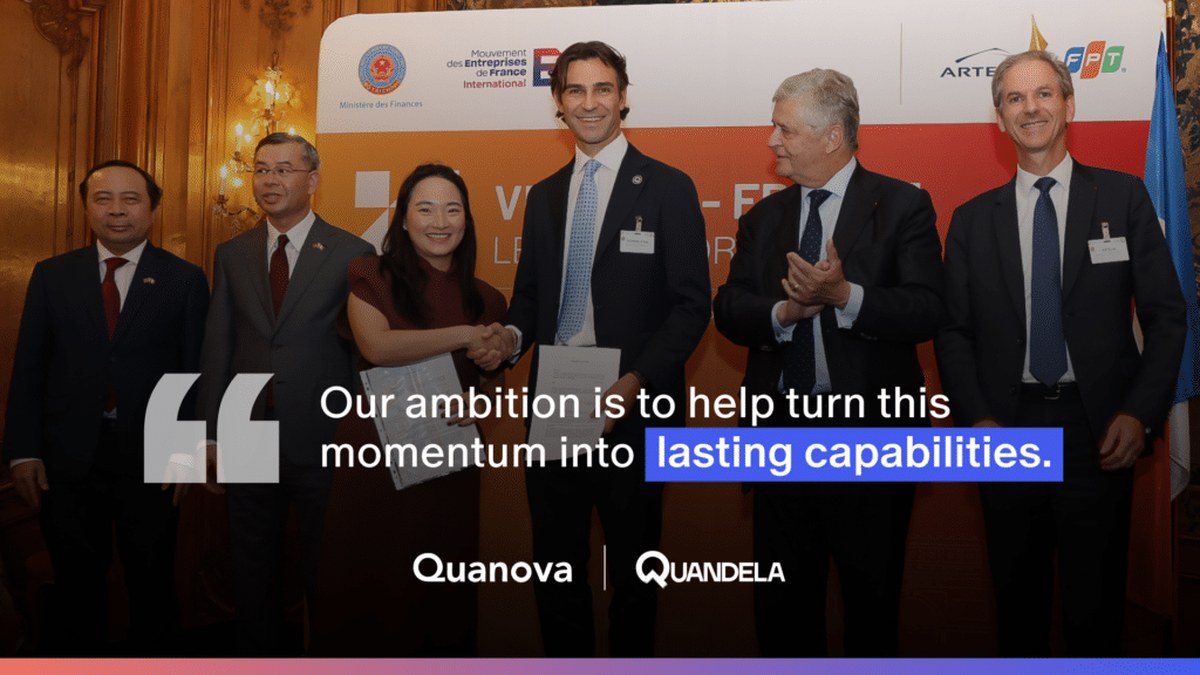
Image: Property of Quandela
In this article
The announcement
French quantum hardware company Quandela and Vietnamese partner Quanova have announced a plan to deploy Vietnam's first quantum computer at Quang Trung University, with backing from Nam A Bank. The announcement was made at an event on October 21, 2026, and reported by The Quantum Insider on October 23. For a country better known in tech circles for manufacturing and software services, a domestic quantum computer is a genuinely notable step.
Who Quandela is
Quandela is a European quantum computing company that builds photonic quantum computers, machines that use particles of light rather than electrically controlled atoms or superconducting circuits to perform computation. Photonic approaches are attractive for room-temperature operation in parts of the system and for natural compatibility with communications infrastructure. Quandela has been one of the visible players in Europe's push to build domestic quantum hardware rather than importing it.
What the partnership includes
Importantly, the announcement is not just a machine on a pallet. The partnership as reported includes education and research components: training programs, academic collaboration and building local quantum expertise at Quang Trung University alongside the hardware itself. That detail matters because the countries that get real value from early quantum computers are the ones that grow the people to use them, not just the buildings that house them.
Why a bank is involved
Nam A Bank's backing is the detail that makes this more than a university science project. Financial institutions are among the most commercially interested parties in quantum computing, both for the optimization problems it may eventually solve and for the cryptographic questions it raises. A regional bank funding a national-first quantum deployment is a signal that Vietnam's private sector sees quantum as a strategic investment rather than a laboratory curiosity.
Why this matters for tech watchers
Quantum news usually comes from the same handful of countries, so a national-first deployment in Vietnam is a reminder that the quantum map is widening. For Canada, the parallel is worth noting: Canadian researchers and companies have been part of quantum computing's development for decades, and the technology's global spread is exactly what a mature ecosystem looks like. For our purposes, the practical consumer takeaway is small today, but the trend line is the story: quantum hardware is becoming something more countries expect to own.
What to watch next
The milestones that will turn this announcement into reality are an installed machine, trained local researchers publishing work, and follow-on deployments. Announcements are the easy part of quantum computing; uptime, useful algorithms and sustained funding are the hard parts. Watch for delivery confirmation from Quandela and the first research output from Quang Trung University, which will say more about the program's reality than any launch event.
The deployment follows a pattern now familiar across Asia: a university hosts the hardware, a domestic partner handles operations and curriculum, and a bank or state entity underwrites the cost. Vietnam’s version pairs the machine at Quang Trung University with research access and an education component backed by Nam A Bank, which matters because quantum workforces, not just quantum hardware, are the real bottleneck. For a country announcing its first machine, the education story is arguably the bigger news than the qubit count.
For context, photonic machines like Quandela’s encode information in light rather than in superconducting circuits chilled near absolute zero, which typically makes them easier to site in ordinary buildings. That practical detail is one reason photonic vendors keep winning university deployments: no cryogenic plumbing means a university lab space can realistically host a machine.
Frequently Asked Questions
What was announced?
Quandela and Quanova announced a plan to deploy Vietnam's first quantum computer at Quang Trung University, with Nam A Bank backing. The announcement was made October 21, 2026 and includes education and research components, not just hardware.
What kind of quantum computer is it?
A photonic quantum computer from Quandela, which uses light rather than superconducting circuits or trapped atoms. Photonic systems are known for compatibility with communications technology and parts of the system operating without extreme cryogenic cooling.
Why does this matter?
Quantum hardware deployments have so far been concentrated in a few countries. A national-first deployment in Vietnam, with education and research components attached, signals the technology spreading into new economies, with a bank as a strategic investor.
Will it affect consumers?
Not directly or soon. Early quantum computers are research tools, not consumer products. The relevance is the trend line: quantum computing is becoming globally distributed infrastructure rather than a two-country race.
Who is paying for it?
Nam A Bank is the named backer, alongside the university partnership structure between Quang Trung University, Quanova and Quandela. Financial institutions are among the most commercially motivated investors in quantum technology.