Photo: Daniel Smyth / Pexels
Creality K3 vs Bambu Lab H3C 2026: Four Nozzles or Nine Tools
Multi-colour printing has one obvious tax: the purge tower. Creality's answer costs US$849 and stacks four nozzles on a single head. Bambu Lab's answer is nine tools in a changer. They are not the same bet.
In This Article
Why colour changes waste filament
A single-nozzle printer has to flush the old colour out of the hotend before it can print the new one. That flushed plastic goes into the purge tower, and on a small multi-colour print the tower can weigh more than the model. Every multi-colour machine at this price is really an argument about how to make that tower smaller.
There are two credible ways to do it, and this week both are on sale at once. Creality opened US pre-orders for the K3 at US$849 with a four-nozzle system aimed squarely at purge waste, according to 3D Printing Industry. Bambu Lab launched the H3C on November 3, 2026 and markets it as nine tools in one printer.
What the Creality K3 does
Four nozzles share one head. Rather than swapping a whole tool assembly, the K3 parks colour in separate nozzles so switching means moving the head, not flushing a melt zone. Fewer swaps through the same nozzle is the entire premise, and it is why Creality is pricing this well below the tool-changer class.
That design choice has a trade-off worth understanding before you order. Four nozzles on one carriage is less mass to move than four separate tool assemblies, and switching should be faster than a full changer cycle. What it does not give you is nine independent materials, or the ability to dedicate one nozzle to a soft filament and another to an abrasive one without sharing a feed path.
What the Bambu Lab H3C does
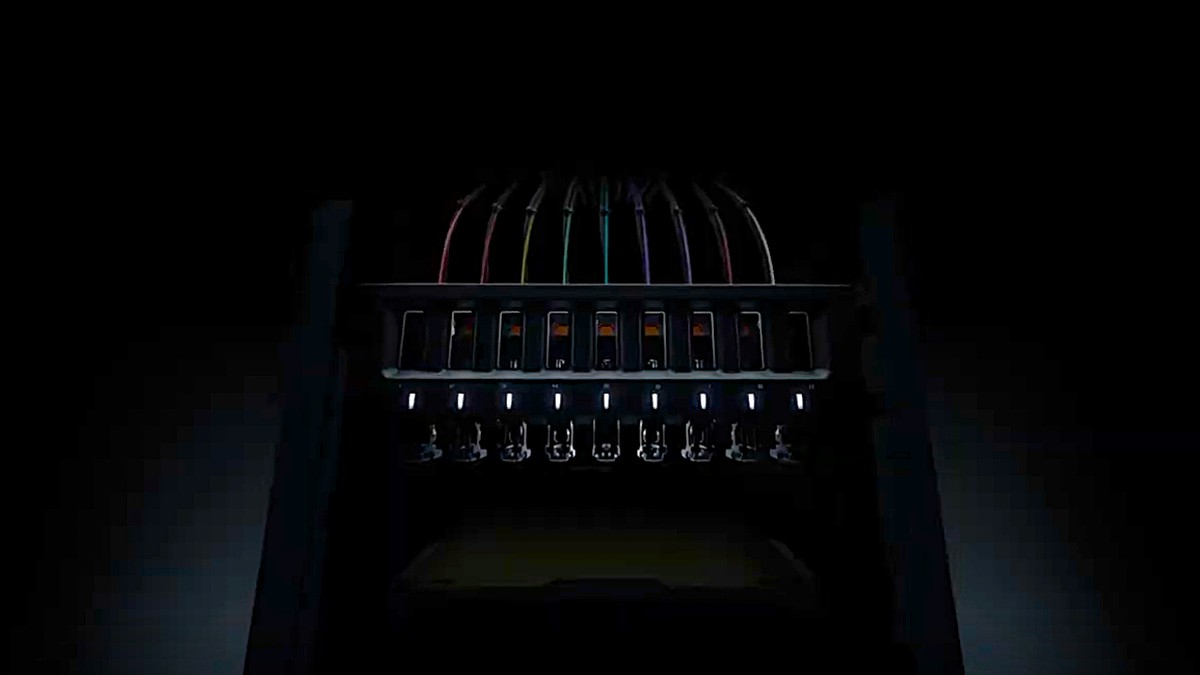
The H3C goes the other way: nine tools in one printer, with the AMS 3H combining automated feeding and integrated filament storage. On paper that is more than double the material slots of the K3, and it lets a print use colours and material types the K3 physically cannot hold at once.
Bambu's materials push is the more interesting part. FlexFeed is quoted at printing soft TPU 75A up to three times faster, which matters because flexible filament has always been the slowest thing you can put in a consumer printer. Bambu also says 0.2 mm and 0.4 mm mixed nozzle size printing is coming to the H2D, H2C and X2D, so the software side is being widened across the existing range rather than left to the new machine alone.
Bambu Lab Black Friday 2026 pricing is live as of November 3, 2026. Configurations and regional pricing differ, so check the current listing for your own machine spec rather than assuming a headline number.
The two approaches side by side
Colour capacity. K3 gives you four nozzles. H3C gives you nine tools. If your prints routinely need five or more colours, the Creality machine cannot do the job at all, and no amount of purge tuning fixes that.
Waste per swap. The K3's four-nozzle head should cut waste mainly by reducing how often any single melt zone has to be flushed. A changer reduces waste by never sharing a melt zone in the first place. Both are legitimate, and both beat a single-nozzle printer running a purge tower.
Soft filament. Bambu is explicitly claiming a speed advantage on TPU 75A through FlexFeed. Creality has not made an equivalent claim in what has been published for the K3, so treat soft-filament performance on the K3 as unknown until independent testing exists.
Price position. US$849 is the only firm number in this comparison. The H3C is a different class of machine and should be expected to cost more than that, but check the live listing for your region before you budget.
Ecosystem. Bambu's advantage is not just hardware. Mixed nozzle sizes arriving on the H2D, H2C and X2D means the company is investing in software and profiles across an installed base, which is the part that usually decides whether a multi-colour machine is pleasant or infuriating in month six.
Which one to buy
If the honest description of your printing is tabletop miniatures, signage, or parts where two to four colours is the realistic ceiling, the K3 at US$849 is the value play. Four nozzles covers most household multi-colour work, and the money you save buys a lot of filament.
If you are printing prosthetics, jigs, or anything that mixes rigid and flexible material in one job, the H3C is the machine that does the work at all. Nine tools and a claimed TPU speed advantage are not luxuries in that use case, they are the feature.
What I would not do is buy either one this week purely because a sale is on. Both are first-in-class designs from companies that iterate quickly, and the first firmware cycles after launch are where multi-colour systems earn or lose their reputation. If your current printer still does what you need, waiting for independent multi-colour waste measurements is the cheaper decision.
Frequently Asked Questions
What is the Creality K3?
A multi-colour 3D printer that opened US pre-orders at US$849, built around a four-nozzle system designed to cut the filament wasted on colour changes.
What is the Bambu Lab H3C?
A multi-tool printer launched November 3, 2026, marketed as nine tools in one machine, paired with the AMS 3H for automated feeding and integrated filament storage.
Which wastes less filament, four nozzles or nine tools?
Both cut purge waste compared with a single nozzle. A tool changer avoids sharing a melt zone at all, while four nozzles on one head reduce how often a shared nozzle must be flushed. Independent waste measurements will settle the real difference.
Can the Creality K3 print five colours?
Not in one job as described. Four nozzles means four simultaneous materials, which is the hard limit of the design regardless of slicer settings.
Does the Bambu Lab H3C print soft TPU faster?
Bambu claims its FlexFeed extruder prints TPU 75A up to three times faster. That is a manufacturer claim and has not been independently verified here.
Is Bambu Lab running Black Friday pricing in 2026?
Yes, Bambu Lab Black Friday 2026 pricing was live as of November 3, 2026. Configurations and regional pricing vary, so check the current listing before ordering.