Bambu Lab H3C Tool Changer: Nine Toolheads Land November 3, 2026
Bambu Lab's H3C tool changer goes on sale November 3 with nine toolheads on an overhead rack. What is confirmed, what is leaked, and what is unknown.
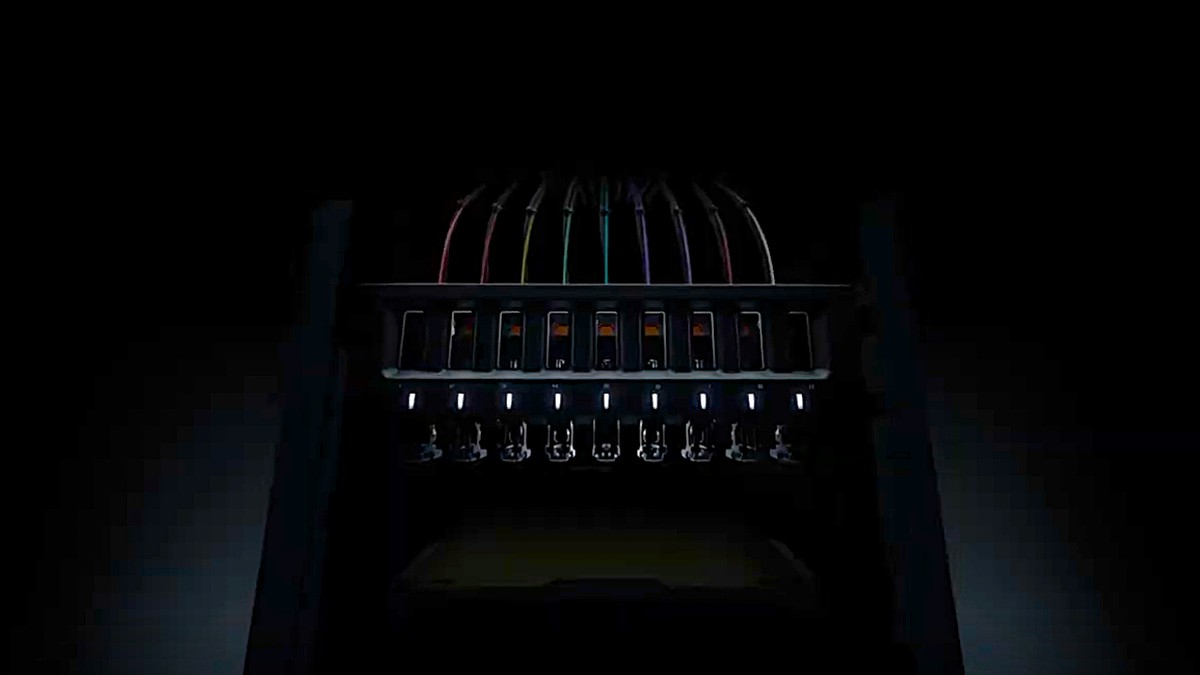
Image: Property of Bambu Lab
In this article
What Bambu has confirmed
Bambu Lab's H3C 3D printer goes on sale November 3, 2026. That date is confirmed, not rumored: the company published it and released an 11-second teaser video showing the machine's tool rack dropping into position. The H3C carries nine toolheads stored on a rack above the build chamber, fed by nine Bowden paths that arc over the top of the printer.
Everything else is thinner than the internet currently claims. Bambu has not published pricing, build volume, print speed, chamber temperature or the full specification sheet. The company has said complete details arrive with the November 3 launch, which is a normal pattern for this manufacturer and also the reason a lot of confident-sounding H3C coverage right now is guesswork dressed as reporting.
The H3C belongs to Bambu's H line of flagship machines, alongside the H2S, H2D and H2C. That lineage is the most useful thing we have, because the H2C is the closest existing machine and its published specifications give a realistic baseline for what the H3C will be. The H2C is a seven-tool induction-heated nozzle swapper with a motorized Vortex rack that parks unused tools, and a build volume of 330 by 320 by 325 millimetres. If the H3C follows the same chassis family, expect a similarly large working envelope. That is inference from the product line, not an announced figure, and it should be read that way.
Why tool changers matter
If you have not used a multi-material printer, the difference between an AMS and a tool changer is not obvious, and it is the whole reason this machine exists.
Bambu's AMS is a filament management system. It feeds different spools into a single hotend, which means every colour change requires purging the old filament out of the nozzle before the new one arrives. That purge is waste. On a print with many colour changes it becomes a lot of waste, and it also takes time. On a small detailed model with dozens of swaps, the purge can exceed the material actually in the part.
A tool changer sidesteps this entirely. Each material lives in its own toolhead with its own nozzle. Changing colour means parking one tool and picking up another, with no purge and no cross-contamination. The practical results are less wasted filament, faster multi-colour prints, and the ability to use materials that do not tolerate being purged through the same nozzle, such as a high-temperature engineering filament followed by a low-temperature support material.
Nine toolheads is a serious number. It means up to nine distinct materials or colours in a single print without a single purge. For anyone printing functional parts, jigs, or multi-material assemblies, that is a different category of machine from a single-nozzle printer with a spool changer.
The trade-off is mechanical complexity. Nine toolheads are nine things that can clog, nine nozzles that need calibrating, and nine points of failure. Tool changers have historically been the domain of professional machines for exactly this reason. Bambu's bet is that its automation and calibration routines can make a nine-tool machine as hands-off as its single-nozzle printers. That bet is what November 3 is really about, and no teaser video can settle it.
The rack moved upstairs
The single most consequential detail in the teaser is where the rack sits. On the H3C, idle tools are stored above the build plate rather than in front of it.
That sounds cosmetic and is not. Tool changers that park tools in front of the chamber force you to look through a rack of nozzles and filament paths to watch your first layer. Anyone who has spent a print squinting past hardware to check adhesion knows how much that matters, because the first layer is where most failed prints are decided. On the H3C the tool rack drops down to grab a tool and then clears the view, so the build chamber stays visible while printing.
It also affects height. A machine with an overhead rack is taller than an equivalent bed-slinger, which matters if you are fitting this into a workshop with shelving above the bench. The H2C's 330 by 320 by 325 millimetre build volume already makes it a large machine, and an overhead rack adds vertical clearance on top of that. Measure your space before you assume it fits.
What it will cost
No price has been announced. Community guesses circulating in owner groups land somewhere between 2,900 and 3,400 US dollars, and those are guesses, explicitly framed as guesses by the people making them. Do not plan a purchase around them.
What can be said with confidence is the shape of the pricing. Bambu's H2C, a seven-tool machine, sits well above the company's consumer models. A nine-tool flagship will not be cheaper than the seven-tool machine it out-specs. This is not a printer aimed at someone buying their first machine, and it is not priced like one.
Canadian buyers should also expect the usual gap. Bambu prices its North American store in US dollars, and Canadian purchasers pay the exchange rate plus any applicable duty and tax on arrival. A machine at the top of that speculated range lands comfortably into five figures in Canadian dollars once it is on your bench. If that number is uncomfortable, this is not the machine for you, and the P2S or A2L will print most of the same things more slowly.
Should you wait or buy now?
The honest answer depends on one question: do you actually print with multiple materials, or do you just like the idea of it?
If you print multi-colour models regularly, and you are currently throwing away a meaningful fraction of every spool on purge, the H3C is aimed directly at you and the waste argument alone may justify it over a few years. That is a business case, not a hobby purchase, and it is worth doing the arithmetic on your own filament spend before you decide.
If you print mostly single-colour functional parts and occasionally add a second colour for a label or a logo, a tool changer is overkill. The purge waste on a handful of swaps per print is trivial, and you would be paying flagship money for capability you use twice a month.
If you are mid-project on a working machine, do not wait. The November 3 launch will not deliver a printer to your bench in November, and first-batch flagship machines routinely need a few firmware cycles before the calibration routines mature. Buying the mature mid-range machine now and revisiting the H3C in six months is usually the better sequence, not the timid one.
What to watch on November 3
Skip the headline number and look for five things in the launch materials: the confirmed build volume, whether the chamber is heated and to what temperature, the maximum nozzle temperature per tool, the price of the base configuration versus a fully loaded one, and whether all nine tools are included or some are an add-on.
That last one matters most. A nine-tool machine advertised at a headline price that ships with four tools installed is a different product than one that ships complete, and the gap between those two readings is where buyers get surprised. Read the configuration table, not the press release.
Then wait for independent testing. The teaser proves the rack moves. It does not prove first-layer reliability, tool-change accuracy over a thousand swaps, or whether the calibration holds after a nozzle clogs and is replaced. Those are the questions that decide whether a flagship machine is good, and they get answered by owners, not by launch videos.
Frequently Asked Questions
When does the Bambu Lab H3C go on sale?
November 3, 2026. Bambu Lab confirmed the date and released an 11-second teaser video showing the machine's overhead tool rack moving into position.
How many tools does the H3C have?
Nine toolheads, stored on a rack above the build chamber and fed by nine Bowden paths that arc over the top of the printer. An earlier AI-generated leak showing ten spools is incorrect.
How much will the Bambu Lab H3C cost?
No price has been announced. Community estimates of roughly 2,900 to 3,400 US dollars are unofficial guesses. Full pricing is expected with the November 3 launch.
What is the difference between a tool changer and the AMS?
The AMS feeds multiple spools into one hotend, so every colour change requires purging the old filament, which wastes material and time. A tool changer gives each material its own toolhead and nozzle, so it swaps tools with no purge.
What is the H3C build volume?
Bambu has not published it. The closest machine in the same H-line, the H2C, has a 330 by 320 by 325 millimetre build volume, so a similarly large envelope is likely but not confirmed.