Are Smart Displays Worth It in 2026? What Still Makes Sense
Smart displays promise a control panel for your home, but most people use two features. Who genuinely benefits, and when a speaker alone is the smarter buy.
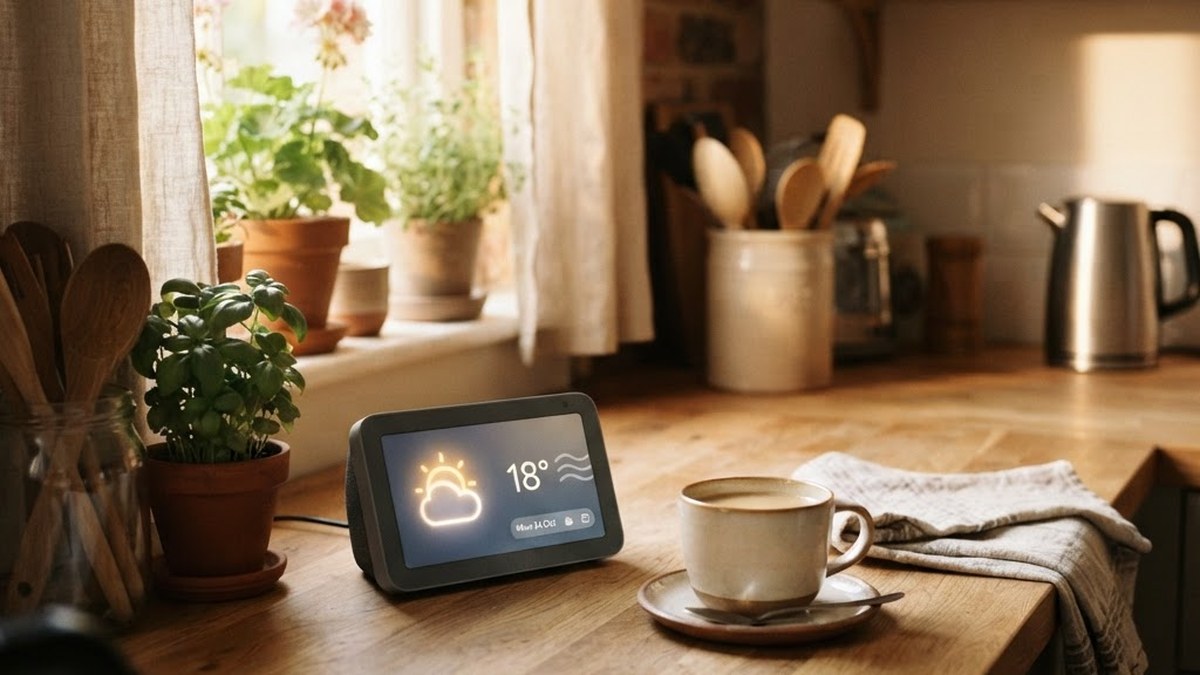
Illustration: AI-generated image
In this article
The honest question
Smart displays had a moment: a screen on your counter that shows the weather, runs your timers, streams the recipe and controls your lights. A few years in, the category has settled into something more modest, and the honest question for a 2026 buyer is not which one to buy but whether the screen earns its place at all. After years of the market sorting itself out, the answer is genuinely interesting: for some households a display is indispensable, and for most a simple smart speaker does the same job for less.
What people actually use them for
Usage data and common experience agree on the pattern: timers in the kitchen, weather at a glance, video calling from the counter, and controlling a handful of devices without pulling out a phone. That is the real workload of a category marketed as a home command centre. If those four use cases match your routine, the display earns its counter space. If your smart home control happens from your phone or your voice, the screen is furniture with a power cord.
The case for buying one in 2026
Three situations justify the purchase. A busy kitchen, where timers, unit conversions and recipe videos are worth real money in daily convenience. Households with video calls to grandparents or travelling family, where a countertop screen beats handing a phone across the room. And smart homes with cameras or video doorbells, where seeing who is at the door from the display is a genuine everyday function. In those three contexts, the category works exactly as advertised.
The case against
The list is longer. Screens add cost, they add an always-on camera and microphone to a private space, they age worse than speakers because software support for screen features gets retired faster, and they occupy the exact counter space most kitchens cannot spare. They also duplicate your phone, which is nearly always within reach. Privacy-conscious households in particular should weigh whether a display's convenience justifies another networked camera in the home.
The smarter alternative for most people
A plain smart speaker delivers 80 percent of the practical value: timers by voice, weather by voice, music, and smart home control. If the voice-first routine works for you, banking the price difference or putting it toward better smart home devices is the stronger play. The display is an upgrade you add when you have identified the specific screen need, not a default purchase for a smart home.
The verdict
Buy a smart display if your routine genuinely includes one of the three use cases: kitchen timer-and-recipe duty, regular video calls, or camera viewing. Everyone else should buy a speaker and spend the difference elsewhere. The category is not a failure, it is simply a niche, and 2026's mature version of the question is whether you live in that niche, not whether the technology is impressive.
A note on placement, because it decides more than the spec sheet does. The households that get real value almost always put the display where the screen is naturally in view during a standing activity: the kitchen counter, the entry table, the workbench. The households that regret the purchase put it on a shelf the way you place a speaker, where a screen you must walk to is just a worse phone. Buy for the location first, the features second, and the model last.
Finally, the budget answer for the undecided: start with a speaker. If, after a month, you find yourself wishing you could see the timer, the doorbell or the caller, that discovered need is worth paying for, and you will know exactly which room needs the screen. If you never miss the screen, you banked the difference and learned the answer for the cost of nothing. That is the cheapest experiment in smart home buying, and it is the one I would recommend to most households starting from scratch in 2026.
Frequently Asked Questions
Are smart displays worth buying in 2026?
Only if you will genuinely use the screen: kitchen timers and recipes, countertop video calls, or viewing camera and doorbell feeds. Otherwise a smart speaker does most of the same work for less money.
What is the main downside of smart displays?
Cost over a speaker, plus an always-on camera and microphone in a private space, and screen features tend to lose software support faster than core speaker functions.
Can a smart display control my smart home?
Yes, they control lights, thermostats and other connected devices by voice or touch. The question is whether you need the screen for that control, since speakers and phones cover the same functions.
Which is better for a kitchen, a speaker or a display?
A display, usually. Timers, unit conversions, recipe videos and video calls are screen-shaped tasks, which is why the kitchen is the one room where the category consistently earns its place.