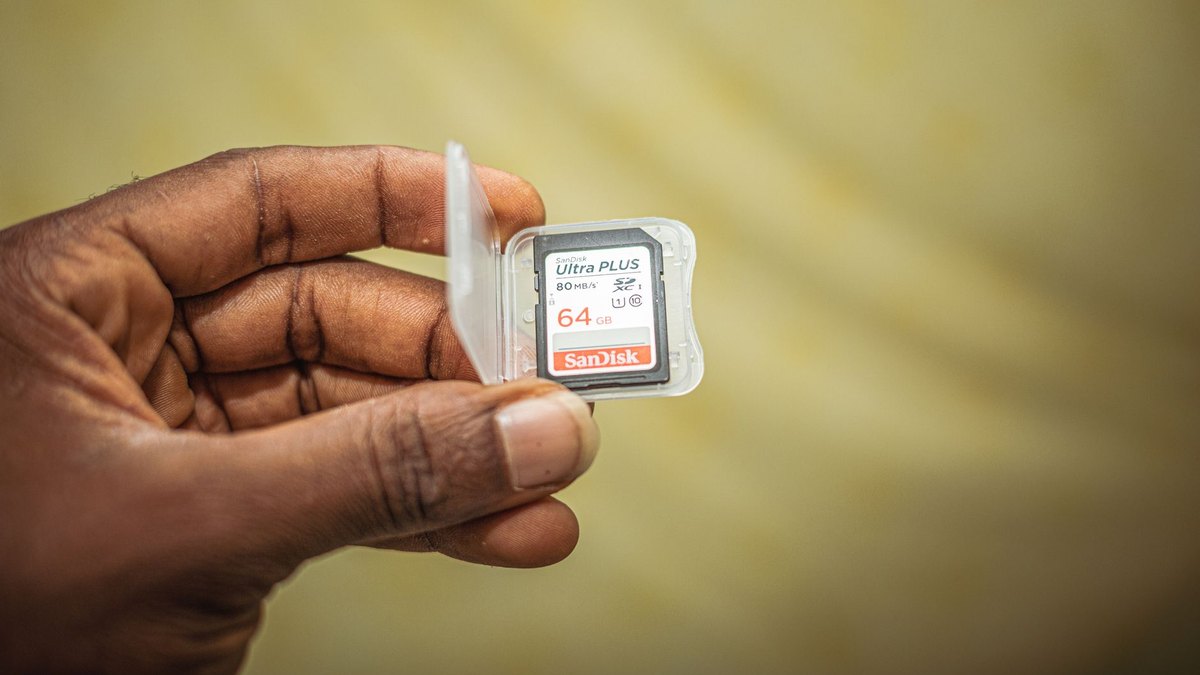
Photo: josh A. D / Pexels
Why SD Cards Cost So Much More in 2026, and Whether to Stock Up
In This Article
The memory card you were going to buy for next season costs meaningfully more than it did last year, and the reason has nothing to do with cameras. It is AI data centres, and the squeeze is not over.
If you have priced a 256GB microSD recently and assumed you were imagining things, you were not. Memory has been getting more expensive all year, driven by demand from AI data centre buildouts rather than anything happening in the camera market. For anyone who records a season of riding footage on an action camera or a drone, that has a direct cost attached to it, and it arrived quietly.
Why cards got expensive
NAND flash is a commodity, and commodity prices move on supply and demand at the manufacturing level. In 2026 the demand side changed sharply: AI infrastructure consumes enormous quantities of NAND and DRAM, and memory makers have been reallocating capacity toward that higher-margin business. Consumer cards, which are cut from the same wafer supply, get what is left.
That is the whole mechanism. There is no shortage of sand, no factory fire, no shipping crisis specific to SD cards. The capacity that used to go into consumer flash is going into servers, and the consumer market pays more for a smaller share of the output. Memory makers are also not in a hurry to expand consumer-grade capacity when enterprise contracts pay better.

The numbers behind it
TrendForce tracked roughly a 60 percent quarter-over-quarter rise in NAND contract prices in the first quarter of 2026, with further increases projected. Contract prices are the wholesale deals between manufacturers and buyers, and they lead retail pricing by a lag, which is why cards on a shelf today reflect a price set weeks or months ago and the next resupply reflects a worse one.
The same research house forecast enterprise SSD prices rising 53 to 58 percent quarter over quarter in the same period, described as a record. Enterprise SSDs are not consumer cards, but they compete for the same fab output, and that is what transmits the pressure down to the card in your camera bag.
Figures from TrendForce memory market research. Contract pricing movements are wholesale; retail card pricing in Canada will vary by capacity, brand and retailer, and no single retail figure is quoted here because it was not verified live at the time of writing.
It is not just cards: cameras are next
On October 30, 2026, Canon told PetaPixel that it will pass higher memory and component costs onto consumers through price increases if those costs do not come down. That is a camera manufacturer saying out loud what every manufacturer is thinking, and it matters because it moves the story from a memory card problem to a camera-buying problem.
A camera body is not primarily made of flash, but it contains some, and it contains a great deal of other components sharing the same strained supply chain. When a company at Canon's scale signals price movement, it is usually not bluffing. It is pre-announcing so the eventual increase reads as telegraphed rather than sudden.
Worth being precise about what Canon actually said and did not say: this is a conditional warning about passing on costs, not an announced price increase with a date and a number attached. No Canon product in Canada has a new price as a result of this, as of November 3, 2026.
What this costs a rider per season
Here is where it stops being an economics story and starts being a packing-list story. Action cameras and drones want fast, high-capacity cards, because high-bitrate recording fails on slow media in exactly the way that ruins a once-in-a-trip clip. That means V30 or better microSD at 128GB and up, which is the segment that has moved most.
A 256GB V30 microSD used to be the cheap, boring consumable you bought two of before a trip. That is the card class Insta360 and GoPro bodies require for their higher bitrate modes, and it is now one of the more expensive line items in the bag.
The practical effect is not that riding gets more expensive in a dramatic way. It is that the correction you used to make casually (buy another card, they are cheap) now costs enough to think about, and the failure mode of running out of space on day three of a trip has gotten more annoying to solve at a gas station in rural Newfoundland, where the only card available is whatever the nearest shop stocks and priced accordingly.
Should you stock up now?
The honest answer depends on one question: does your next trip depend on a card you do not own yet?
If the answer is yes, buy now. The forward signal from contract pricing is upward, Canon has warned publicly about passing costs on, and there is no announced capacity expansion in consumer flash that would reverse this quickly. Waiting has no obvious upside and a probable cost.
If you already have enough capacity for the riding you actually do, do not buy speculatively. Cards have a finite life, they degrade with write cycles, and a card sitting in a drawer for eighteen months is not an appreciating asset. Buying three spares to beat a price rise you might not face for a year is not saving money.
One thing I would change regardless of price: label your cards and rotate them deliberately rather than grabbing whichever one is on top. When cards cost little, people treat them as disposable and lose track of which one holds last year's footage. At current prices they are worth the discipline of a named, backed-up rotation. The expensive part of losing a card was always the footage, not the plastic, but the plastic now has a bill attached too.
Frequently Asked Questions
Why are SD cards so expensive in 2026?
NAND flash manufacturing capacity has been redirected toward AI data centre demand. TrendForce tracked roughly a 60 percent quarter-over-quarter rise in NAND contract prices in Q1 2026, and consumer cards compete for the remaining supply.
Will SD card prices go down soon?
No clear signal points to a near-term decline. Contract prices were projected to keep rising through 2026, and memory makers are prioritizing enterprise business over consumer flash.
Is Canon raising camera prices?
Canon told PetaPixel on October 30, 2026 that it will pass higher memory and component costs onto consumers through price increases if costs do not come down. That is a conditional warning, not an announced increase with a date or figure.
Should I buy memory cards now or wait?
Buy now if an upcoming trip depends on capacity you do not have. Do not buy speculatively if you already have enough cards, since flash degrades over time and unused spare cards are not an investment.
What card do GoPro and Insta360 cameras need?
Both require V30 or faster microSD for their higher bitrate recording modes, typically 128GB and up. That is the card class most affected by the 2026 price movement.
Does this affect CFexpress too?
Yes. CFexpress cards use the same NAND supply, and the larger capacities used by full-frame mirrorless bodies have seen the same upward pressure on contract pricing.