Image: Property of Sigma
Sigma FP2 at $2,199: The World's Smallest Full-Frame Camera
In This Article
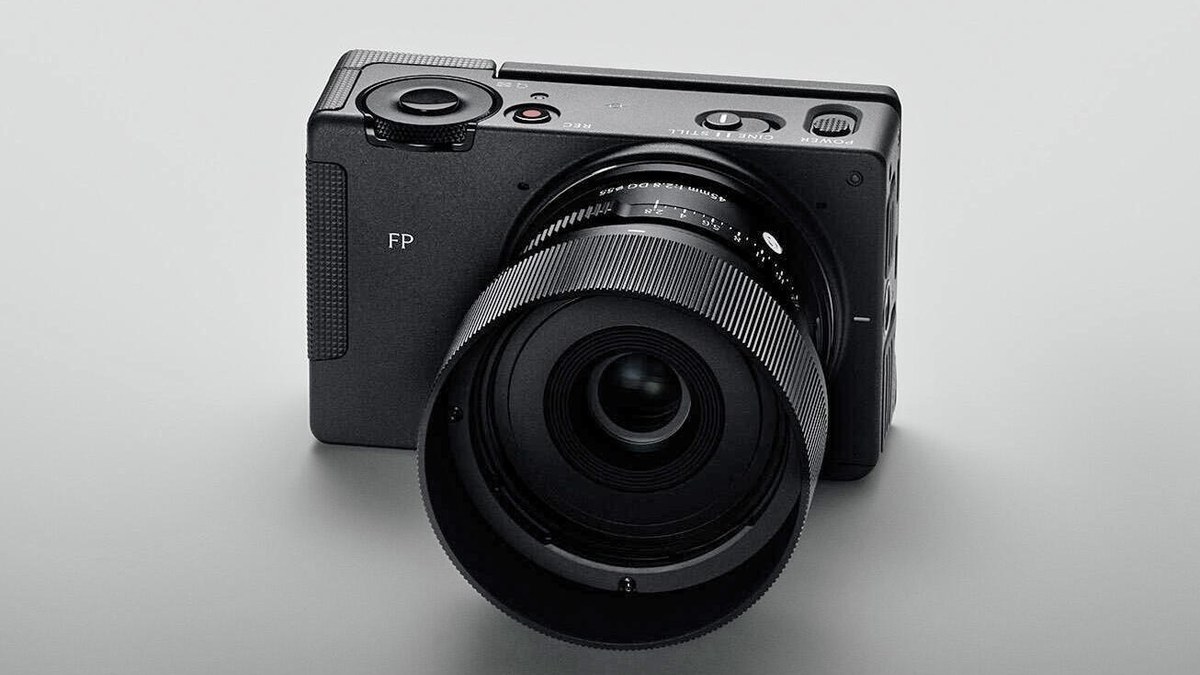
Sigma has confirmed the FP2, the sequel to the tiny full-frame box camera that never quite fit a category, and the headline is the one Sigma wants you to repeat: the world's smallest full-frame camera. It ships November 11, 2026 at $2,199 body only, or $2,749 bundled with either the EVF-21 viewfinder or a 50mm F2 DG lens.
That is a strange price to open with, because $2,199 in November 2026 puts it in direct contention with established hybrid bodies that include a viewfinder, in-body stabilisation and a mechanical shutter. So the interesting question is not whether the FP2 is small. It is whether small is still worth that much to anyone who shoots both stills and video.
What the FP2 actually changes
The original FP was a 24.6MP camera in a body the size of a paperback, with no stabilisation, no viewfinder, a contrast-detect autofocus system that struggled in low light, and a shutter that made flash work awkward. It earned a devoted following anyway, mostly among filmmakers who wanted a full-frame sensor in a rig that weighed almost nothing.
The FP2 keeps that philosophy and upgrades the internals where the filmmaking case is strongest. The sensor is new: 24.5MP, partially stacked, back-side illuminated, still full-frame. It is electronic shutter only, which makes that design choice absolute rather than a compromise, and it can shoot stills at up to 20 frames per second.
The body remains L-Mount, 112.8 x 69.9 x 41.8 mm, and 446 g with a battery installed (388 g bare). For anyone coming from a conventional mirrorless body, that weight number is the whole pitch. A full-frame camera that weighs less than most telephoto lenses changes what you are willing to carry up a hill.
The sensor, the shutter and why both matter
A partially stacked sensor is the detail worth understanding, because it is the real difference between the FP and the FP2 in daily use. Stacked designs read out faster, which means less rolling shutter distortion when something moves through the frame, and better autofocus tracking because the sensor can sample the scene more often.
Sigma has not published a readout speed figure, so I am not going to invent one. But a partially stacked sensor plus 20 fps stills plus electronic-shutter-only is a coherent package: Sigma committed to the readout being fast enough that a mechanical shutter adds nothing.
Here is the trade a spec sheet will not tell you about. Electronic shutter only means you lose flash sync above the sensor's readout limit, and it means banding under certain LED and fluorescent lighting. If you shoot events, portraits with strobes, or anything where a flash is the light source, this is not your camera, and that has been true of the FP line since day one.
It also means no in-body stabilisation. There is no IBIS on the FP2, same as the original. Sigma's answer is that the camera is designed to live on a gimbal or in a cage, and that lens-based stabilisation covers the handheld case. That is a defensible answer for video. It is a much weaker answer for stills, and it is the single biggest reason a lot of photographers will look at this and buy something else.
What you get instead is a camera that does not fight you on a gimbal. A body this light needs very little counterweight, which means a smaller stabiliser will do the job and the whole rig stays under carry-on limits. If you have ever balanced a full-size mirrorless body on a travel gimbal, you know exactly what that saves you.
Video: 6K OpenGate and internal storage
This is where the FP2 makes its case. It records 6K OpenGate, which means the full sensor height and width are used rather than a cropped 16:9 window. OpenGate matters because it lets you reframe to vertical and horizontal from one take, which is exactly what anyone producing for both YouTube and short-form video needs to do.
Beyond that, Sigma lists 6K up to 60 fps, 4K up to 120 fps using a cropped portion of the sensor, and ProRes RAW support. The camera carries 70GB of internal storage plus an SD card slot, which is a genuinely useful addition: 70GB is enough for a solid block of high-bitrate recording without swapping cards, and it means the SD slot becomes a backup rather than a single point of failure mid-shoot.
The 4K at 120 fps crop is worth flagging honestly. A cropped high-frame-rate mode means the wide end gets less wide when you slow things down, so a wide lens behaves more like a normal one. Plan your lens kit around that if slow motion is part of your workflow, rather than discovering it on the day.
What Sigma left out, on purpose
Three omissions define the FP2, and none of them look like accidents.
- No in-body stabilisation. Video shooters will gimbal it. Stills shooters will notice immediately, particularly with longer lenses and slow shutter speeds.
- No built-in viewfinder. The EVF-21 is a separate addition, which is why the $2,749 bundle exists. Shooting stills on a rear screen in November daylight is not a pleasant experience.
- No mechanical shutter. Fast readout covers most of the gap, but flash and some artificial lighting remain a real limitation.
The counter-argument is that every one of those omissions is what makes 446 g possible, and that the FP2 is not competing with a conventional hybrid for the same buyer. It is competing with a compact cinema camera that happens to fit in a jacket pocket.
The number that decides it
$2,199 USD body only
Bundle with the EVF-21 viewfinder or the 50mm F2 DG lens: $2,749. Ships November 11, 2026.
Pricing is US. Canadian pricing and availability have not been published, and this site does not guess currency conversions.
What $2,199 buys you in 2026
At this price the FP2 sits above bodies that include a viewfinder, IBIS and a mechanical shutter. It sits below full-frame cinema options from the usual suspects. What it does not have is a direct competitor, because nobody else is shipping a full-frame interchangeable-lens camera this small.
That is the honest read on the value question. You are not buying specifications per dollar. You are buying a specific physical object: a full-frame sensor, L-Mount glass and 6K OpenGate in 446 g. If that object solves a problem you have, the premium is easy to justify. If it does not, the FP2 is a worse camera than a conventional hybrid at the same money, and no amount of smallness fixes that.
One more thing worth knowing for anyone in Atlantic Canada: L-Mount glass is not sitting on a shelf in most of the region, so the practical cost of building a kit includes shipping and wait times. That is not a reason to avoid the camera, but it belongs in the budget if you are starting from nothing.
Who should and should not buy it
Buy it if you shoot video for a living and want a full-frame B-cam or gimbal camera that adds almost nothing to your bag, you already own L-Mount glass, or you produce vertical and horizontal from the same take and want OpenGate without a rig.
Skip it if you shoot stills primarily, you use flash, or you shoot handheld in low light without stabilisation. In all three cases a conventional hybrid at the same price will do more of what you need.
The FP2 is a deliberate, narrow, well-executed tool. Sigma has now made that argument twice, and the fact that almost nobody else has tried suggests the market for it is real but small, exactly like the camera. For a hybrid shooter weighing $2,199, the honest answer is that this is not the general-purpose body to buy. It is the specialist second body, and it is a good one.
Frequently Asked Questions
How much does the Sigma FP2 cost?
$2,199 USD body only. A bundle with the EVF-21 viewfinder or a 50mm F2 DG lens is $2,749. It ships November 11, 2026.
Does the Sigma FP2 have in-body stabilisation?
No. The FP2 has no IBIS, the same as the original FP. Sigma's design assumes gimbal or cage use and relies on lens-based stabilisation for handheld work.
What sensor does the Sigma FP2 use?
A 24.5MP partially stacked, back-side illuminated full-frame sensor with an electronic shutter only, capable of up to 20 fps stills.
Can the Sigma FP2 record 6K?
Yes. It records 6K OpenGate, 6K up to 60 fps, and 4K up to 120 fps using a cropped portion of the sensor, with ProRes RAW support.
Does the Sigma FP2 have a viewfinder?
Not built in. The EVF-21 viewfinder is an optional accessory, which is why Sigma sells a $2,749 bundle that includes it.
How much does the Sigma FP2 weigh?
388 g body only, or 446 g with a battery installed. It measures 112.8 x 69.9 x 41.8 mm and uses the L-Mount.