HomePod Mini 2 Lands at 149 USD: Siri AI and a Big Price Climb
The HomePod mini 2 arrives today at 149 USD with the S10 chip, Sound Glow and Siri AI. What actually changed, and what the 50 dollar jump buys you.
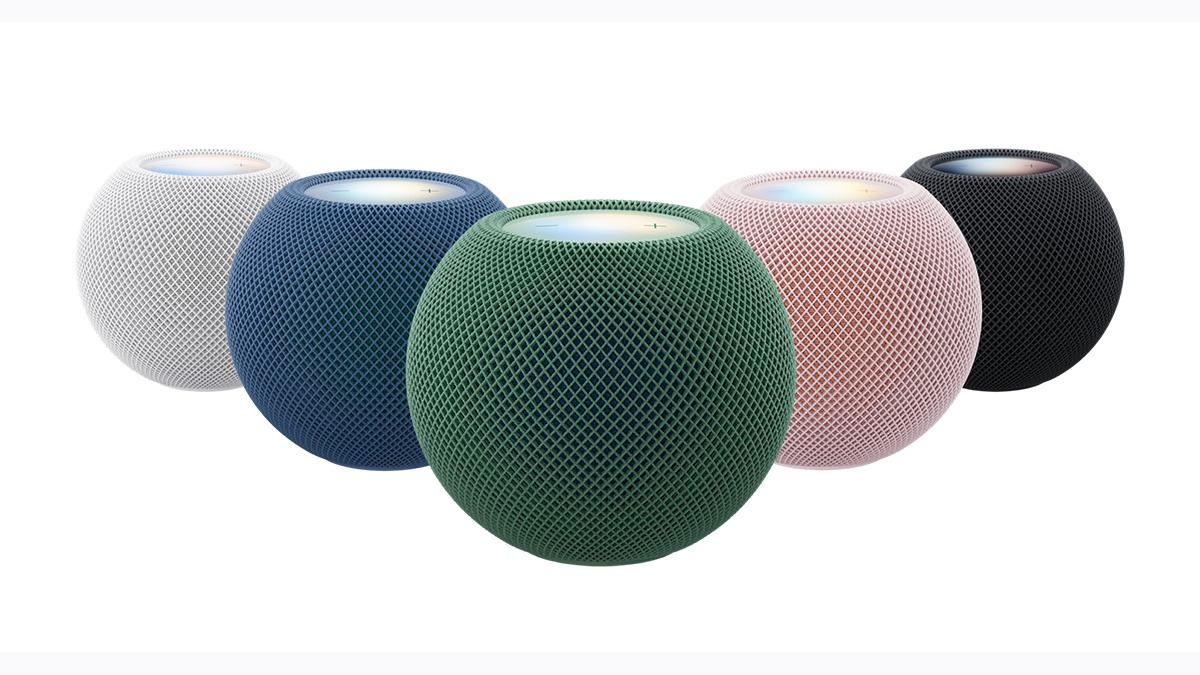
Image: Property of Apple
In this article
What launched today
The HomePod mini 2 is in customers' hands today. Apple confirmed the speaker for an October 30 launch after opening pre-orders earlier in the month, and the first units are now arriving. This is the first real refresh of the HomePod mini since the original arrived in 2020, a gap of six years, so the question is not whether it is newer but whether it is meaningfully different. The short answer is that the outside looks identical, the inside is a different machine, and the price is 50 dollars higher than it was a few months ago.
The headline figure is 149 USD in the United States. Apple Canada sets its own number, so check apple.com/ca rather than converting, and expect the Canadian price to land somewhere above the US figure after the exchange rate and Apple's usual rounding. It comes in white, midnight, blue, pink and green, and Apple is using a two-tone mesh this time, which adds some colour variation the original did not have.
What the S10 chip actually does
The processor is the real story. The HomePod mini 2 runs an S10 chip, the same silicon that debuted in the Apple Watch Series 10, built on TSMC's N4 4nm process and derived from the A16 Bionic that shipped in the iPhone 14 Pro. The original HomePod mini used the S5, so this is several generations of headroom in a device that does not need to render graphics.
What Apple does with that headroom is computational audio. The S10 analyses the music as it plays and applies tuning models in real time: optimising loudness, adjusting dynamic range, and controlling the driver and the two force-cancelling passive radiators. The physical speaker arrangement is unchanged from the first generation, a full-range driver with a neodymium magnet firing into an acoustic waveguide for a 360-degree field. So the improvement in sound is not new hardware so much as much better management of the hardware that was already there.
That matters more than it sounds. The original mini was criticised for thin bass and for compressing dynamics at high volume. Both of those are software-solvable problems when you have processing power to spare, and both are the kinds of things computational audio is specifically good at. Whether it closes the gap to a full-size HomePod is something only listening will settle, but the mechanism for a real improvement is present.
Sound Glow and the design that did not change
The exterior is essentially the same bulbous mesh sphere, 3.3 inches tall and 3.9 inches wide, though it has shed about 0.2 pounds and now weighs 0.74 pounds. The top gets the new party trick: a backlit touch interface Apple calls Sound Glow. It glows and pulses in sync with whatever is playing, pulling colours from the album artwork so each song produces a different palette, and Apple says ambient soundscapes like rain get their own bespoke animations.
Sound Glow is also available on the original HomePod mini, which is worth noting because it tells you the feature is software rather than a new display. The touch gestures are the familiar set: tap to play or pause, double-tap to skip, triple-tap to go back, touch and hold for Siri, and volume buttons on either side. Underneath, there is Wi-Fi 6E, Bluetooth 6, Thread for smart home, and the U1 Ultra Wideband chip that handles the handoff when you bring an iPhone close and the music transfers with matching visual, audible and haptic effects.
The temperature and humidity sensors from the original carry over and can now trigger automations, and Sound Recognition lets the speaker listen for smoke and carbon monoxide alarms and send an alert to your devices. The three far-field microphones isolate your voice from playing music. Power is still a non-detachable colour-matched USB-C cable into a 20W adapter, which means it can run from a battery pack, a small detail that has always made the mini more portable than the full-size HomePod.
The price climb from 99 to 149
Here is the part worth sitting with. The HomePod mini launched at 99 USD. Apple raised it to 129 USD in June 2026, and the second generation arrives at 149 USD. That is a 50 percent increase over the original price in roughly six months of movement, on a product whose main appeal was always that it was the cheap way into the Apple smart home.
This is not an isolated Apple decision. Memory and storage costs have climbed across the industry this year, and Apple has been repricing entry-level products rather than absorbing the increase, from the MacBook Neo's education pricing to the high-memory Mac Studio configurations. The pattern is consistent: the cheapest products in a lineup have the thinnest margins, so they move first when component costs rise. The HomePod mini is exactly that product in Apple's audio lineup, sitting below the 349 USD HomePod and the 299 USD HomeView smart home hub.
The competitive problem is real, though. At 149 USD the mini is competing against smart speakers from Amazon and Google that cost a third as much, and against Sonos and similar brands on audio quality. The argument for paying it has always been ecosystem integration: HomeKit control, Apple Music, Siri, handoff from an iPhone, and multiroom audio that works with an Apple TV. That argument is stronger than it was, because the S10 and Siri AI genuinely add capability. Whether it is 50 dollars stronger is the question a buyer has to answer individually.
The Siri AI catch nobody mentions
Siri AI is the most interesting feature and it comes with fine print worth understanding before you buy. The HomePod mini 2 supports Siri AI with personal context, meaning Siri can draw on your messages, notes and calendar to answer questions, and can recognise the voices of up to six family members and tailor music and podcast recommendations to each one.
But the processing does not happen on the speaker. Siri AI on the HomePod mini 2 requires a connected Apple Intelligence-capable device, an iPhone, iPad or Mac, to supply the compute. Without one paired and available, the advanced Siri features are not available on the speaker. That is a meaningful limitation for anyone imagining a standalone smart speaker, and it is the sort of detail that gets buried under the launch coverage.
In practice, most people considering a HomePod mini already own a recent iPhone, so the requirement is invisible. But it does mean the mini is best understood as an extension of your phone rather than an independent computer, and it means anyone with an older iPhone that does not support Apple Intelligence gets a much less capable speaker than the marketing suggests. Check that before you spend 149 dollars.
The Canadian buying decision
For Canadian buyers there are three things to weigh. First, price: check apple.com/ca for the actual figure, and compare it against the previous HomePod mini, which is still widely available and frequently discounted at retail. If the older model is meaningfully cheaper right now, the honest calculation is whether Sound Glow and the S10's audio processing are worth the difference to you.
Second, the pairing requirement. If everyone in the house has an Apple Intelligence-capable iPhone, the multi-user voice recognition is genuinely useful and the price makes more sense. If the household is mixed, one person benefits and everyone else gets a standard smart speaker.
Third, what you actually want it for. A single mini in a kitchen or bedroom for music, timers, intercom and HomeKit control is the use case it was designed for, and at that job it is very good. As a main speaker for a living room it is the wrong product, and the 349 USD HomePod is the answer. Two minis paired in stereo is the sweet spot many people land on, and at 149 each that is now a 298 dollar proposition rather than the 198 it used to be, which changes the maths for anyone planning a pair.
Frequently Asked Questions
How much does the HomePod mini 2 cost?
It is priced at 149 USD in the United States. Canadian pricing is set separately and should be checked on apple.com/ca.
Did the HomePod mini get more expensive?
Yes. The original launched at 99 USD, Apple raised it to 129 USD in June 2026, and the HomePod mini 2 arrives at 149 USD.
What chip does the HomePod mini 2 use?
It uses the S10 chip, the same silicon that debuted in the Apple Watch Series 10, built on TSMC's 4nm process and derived from the A16 Bionic.
Do I need an iPhone to use Siri AI on the HomePod mini 2?
Yes. Siri AI with personal context requires a connected Apple Intelligence-capable iPhone, iPad or Mac to provide the processing power.
When does the HomePod mini 2 launch?
It launches on October 30, 2026, and pre-orders opened earlier in October.