Apple's October 2026 Lineup: What Is Actually Worth the Money?
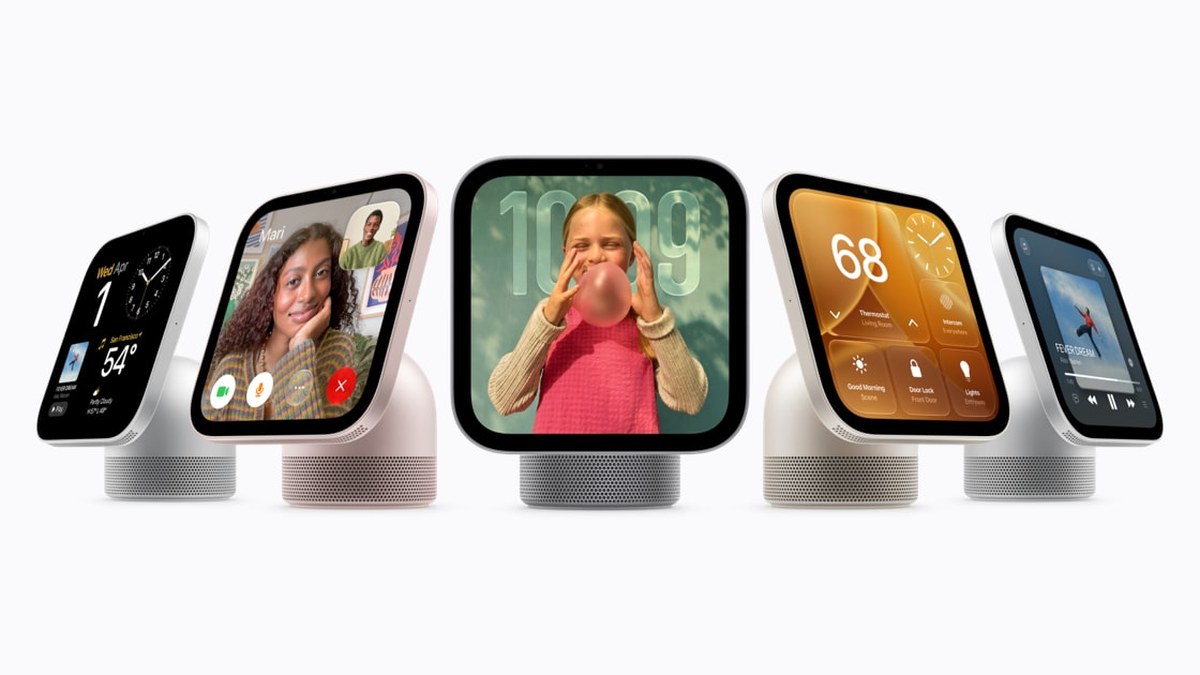
Image: Property of Apple Inc.
The short answer: the HomeView is the only October release that earns its price, the Apple TV 4K is the worst value Apple has shipped in years, and everything else sits somewhere between.
In this article
- The whole October lineup at a glance
- HomeView, the 299 USD smart display: good and bad
- Apple TV 4K: the price nobody wanted
- HomePod mini 2: six years for a chip and colors
- Apple Home Collection: beautiful, encrypted, expensive
- iPhone Duo: 1,999 USD and seven years late
- The pattern: Apple waits, then charges for the privilege
- Greg's take, from someone who worked at Apple for 11 years
The whole October lineup at a glance
Apple's October 2026 releases, in order of arrival: the HomePod mini 2 launches October 30 at 149 USD. The Apple HomeView smart home display and the fourth-generation Apple TV 4K both arrive November 13 at 299 USD each. The iPhone Duo, Apple's first foldable, goes on sale October 23 starting at 1,999 USD. The Apple Home Collection (cameras, a lock and thermostats built with LG and Schneider Electric) follows in December, priced from 39.95 USD for a sensor to 399.95 USD for the Cam.
That is a lot of product in one month, and it is Apple's biggest home push in years. But four of these five things carry genuinely aggressive price tags, and several of them are years late to categories competitors have owned since the late 2010s.
HomeView, the 299 USD smart display: good and bad
The good: HomeView is the device Apple loyalists have asked for since Amazon and Google popularized smart displays nearly a decade ago. It has a 7-inch square screen, the A18 chip, personalized views for up to six household members, third-party apps from your iPhone or iPad, hands-free kitchen features like guided recipes and timers, a privacy story Apple is leaning hard into, and a display that dims to the lowest brightness Apple has ever shipped. Canada is among the launch markets alongside the US, UK, Australia and New Zealand. ADT will even install the wall-mounted version for you.
The bad: 299 USD is roughly double what competent smart displays from Amazon and Google sell for. The wall-mounted version costs the same but has a weaker speaker. Some AI features require a nearby iPhone or iPad. And the whole device is unavailable in the European Union because Siri AI is not ready there. Reporting also suggests the entire home lineup was originally planned for 2024, meaning this shipped two years late even by Apple's own internal schedule.
Verdict: If you are deep in Apple Home and want a kitchen command center, pre-order. If you own an Echo Show or Nest Hub that works, there is nothing here that justifies nearly 400 CAD after tax.
Apple TV 4K: the price nobody wanted
The good: The new Apple TV 4K finally gets real upgrades: the A19 chip, Wi-Fi 7, far-field microphones so you can talk to Siri across the room, more internal storage, surround sound via four HomePods, and Siri AI. In a rare goodwill move, Apple is also bringing Apple Intelligence and Siri AI support to older Apple TV 4K models. If you bought the 2022 model, you just got a free feature bump.
The bad: 299 USD. The previous Apple TV 4K started at 129 to 149 USD, so the entry price has effectively doubled in four years. The old remote needed a Lightning cable; the new Siri Remote is 59 USD if you want it separately. The Apple TV is a streaming box, and streaming boxes from Google, Amazon and Roku do the streaming part fine at a third of the price.
Verdict: This is the weakest value in the lineup. The Verge's early coverage called the pricing "a price problem," and even Apple-focused communities that normally defend the brand called it out. Buy it only if you specifically want far-field Siri, HomeKit camera viewing on the big screen, or you are pairing it with HomeView.
HomePod mini 2: six years for a chip and colors
The good: The original HomePod mini launched November 16, 2020 at 99 USD and was never meaningfully updated, only recolored. The HomePod mini 2 brings the S10 chip, "Sound Glow", five colors, four-speaker surround pairing, and Siri AI support.
The bad: The price rises to 149 USD, a 50 percent increase over the original 99 USD launch price. And the headline feature, Siri AI, will not even be available at launch; Apple says it arrives through a future software update. You are paying more for a speaker whose main selling point is a promise.
Verdict: If you already own minis, skip this generation entirely. If you are buying your first one and want a HomeKit Siri endpoint, it is still the cheapest door into Apple Home, but the value story is weak.
Apple Home Collection: beautiful, encrypted, expensive
The good: Apple's first-party cameras, video doorbell, smart lock and thermostats (built with LG and Schneider Electric) bring end-to-end encryption, one-tap iPhone setup, no separate app or account, iCloud+ recording with no extra camera subscription, and genuinely thoughtful touches like an indoor camera that physically tilts away when someone comes home.
The bad: The Cam starts at 399.95 USD and the Lock at 349.95 USD, against 200 USD-class competition from Ring, Nest and Eufy. The thermostats start at 199.95 USD. Availability starts in December with select accessories slipping to early 2027, and Canadian pricing and availability have not been confirmed yet.
Verdict: Privacy-focused Apple households will pay the premium happily. Everyone else gets better hardware value almost anywhere else.
iPhone Duo: 1,999 USD and seven years late
The good: Apple's first foldable is real: a 7.6-inch inner display with a minimal crease, a 5.4-inch outer screen, the A20 Pro chip, dual 48MP cameras, Apple Pencil support, up to 2TB storage, and Touch ID back on a flagship for the first time in nearly a decade. Pre-orders opened October 16 and it goes on sale October 23.
The bad: Samsung shipped the first Galaxy Fold in 2019; Apple arrives more than seven years later at a starting price of 1,999 USD, which is roughly 2,800 CAD before tax. MacRumors reports the Duo is missing at least ten features the iPhone 18 Pro has. Apple has reportedly told retail staff to discourage walk-in purchases on launch day because there will likely be no stock. Even the second-generation buying advice writes itself: first-generation Apple products are where the compromises live.
Verdict: If you have been waiting years for an Apple foldable and can absorb the price, it looks like the most polished first-gen foldable anyone has shipped. For everyone else, this is a wait-for-version-two product by default.
The pattern: Apple waits, then charges for the privilege
Step back and the pattern is hard to miss. The HomePod mini went six years between real updates. The Apple TV 4K went four. Apple's smart display arrives years after the category matured, and its foldable arrives seven years after Samsung proved the market. Apple's traditional play, ship late and ship polished, worked when the late product redefined the category. These products mostly refine categories that Amazon, Google and Samsung already own, and then add a premium on top.
The reader reaction says the same thing. The comment sections under MacRumors' launch coverage, normally split between defenders and critics, show a rare collective disappointment, with the Apple TV pricing called "insane" and HomeView described by one reader as "a shared iPad connected to a speaker." That kind of consensus is unusual for an Apple launch.
Greg's take, from someone who worked at Apple for 11 years
I spent over a decade at Apple as a Creative, so I know how these lineups get built: a few genuine upgrades, a few price experiments, and a bet that the ecosystem is sticky enough that most people stay. The HomeView is the product I would actually consider, because a genuinely private, well-made home display is something nobody else ships quite this way. The Apple TV at 299 USD is the product I would not buy on principle, because doubling the entry price of a streaming box asks customers to fund a strategy, not a product. And the iPhone Duo is version-one hardware at version-three prices.
One more thing worth watching: Apple has an announced "Pro and tell" experience in Los Angeles on October 28, and reporting points to touchscreen OLED MacBook Pro models, an iPad mini 8 with OLED, and M6 Macs. If those land at normal Mac pricing, October may end up remembered for the Macs rather than the home gear. (Note: the October 28 product details are reported, not officially announced.)
Frequently asked questions
What did Apple release in October 2026?
Apple announced the HomePod mini 2 (149 USD, October 30), the HomeView smart display (299 USD, November 13), a fourth-generation Apple TV 4K (299 USD, November 13), and the Apple Home Collection of cameras, a lock and thermostats (December, starting at 39.95 USD). The iPhone Duo foldable also goes on sale October 23 starting at 1,999 USD.
Is the new Apple TV 4K worth 299 USD?
For most people, no. The previous model started at 129 to 149 USD and still gets the new Apple Intelligence and Siri AI features. The new one adds the A19 chip, Wi-Fi 7 and far-field microphones, which matter mainly if you want hands-free Siri or HomeKit camera viewing.
Why is the HomeView not available in the EU?
Apple says HomeView is not sold in the European Union because Siri AI is currently unavailable in iOS there. The UK, US, Canada, Australia and New Zealand are launch markets.