Solo vs Group Motorcycle Touring: What 4,000 km Taught Me
I've done my touring every way — solo, two-up with Monique, and with groups of riding friends. Newfoundland, Montana, the Tail of the Dragon, Sturgis, Daytona — 200,000 km (124,000 miles) across 28 states and several Canadian provinces, split between independent rides and group runs with friends from the local Indian and touring communities. This summer I did the 3rd annual Eastern Canadian IMRG Celebration (ECIC) in Muskoka, Ontario — 4,000 km (2,485 miles) with a group. It changed some of my assumptions.
How the ECIC Group Ride Came Together
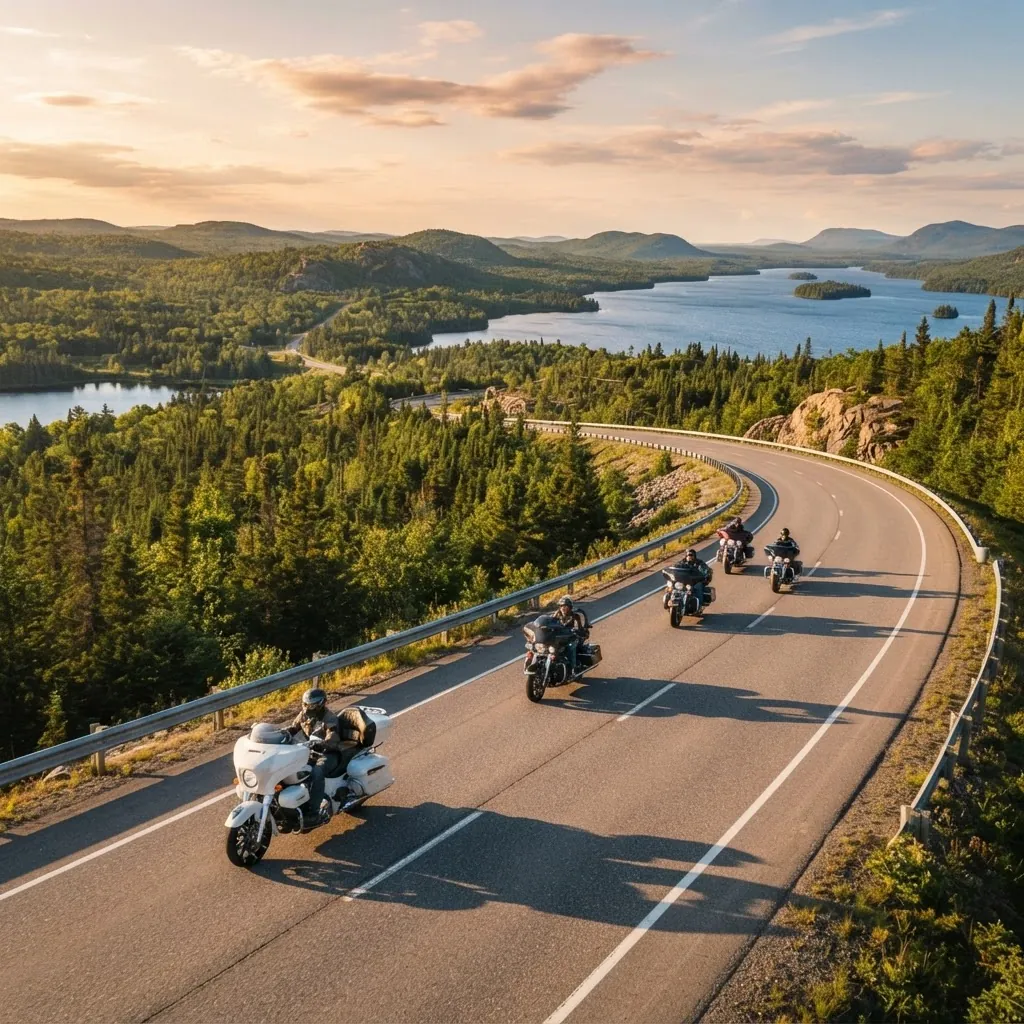
This was the ECIC — a ride I do every year with fellow riders from the Halifax IMRG group. It's an established annual event, not something you stumble into. I rode out of Dieppe with Raye, and we picked up Kent in Fredericton. By the time we got to Muskoka, the group had grown. Indian riders from across eastern Canada, all converging on the same destination. The route out used Highway 30 (toll road), Ottawa, Renfrew, and Highway 28 through the edge of Algonquin — one of the best stretches of road in Ontario.
What Group Riding Actually Feels Like
If you've never done a multi-day group tour, the biggest adjustment is pace. Solo, you stop when you want. You make a left turn on a whim. You decide at a gas station that you're going 50 km farther before stopping. Group riding doesn't work that way. You move together, stop together, eat together. For someone used to going solo, that takes adjustment.
Table of Contents
The flip side is that you're never truly alone in a breakdown situation. You have a built-in safety net. And the social side — the stories around the dinner table, the connections with riders from other provinces — is genuinely something you don't get rolling into a motel by yourself at 7 PM.
The Pace Problem
Every group has a range of comfort speeds. Some riders want to push. Some are more conservative. Finding a pace that works for everyone without frustrating the faster riders or stressing the slower ones is a real logistical challenge. On the ECIC, the organizers handled it well — staggered starts, designated lead and tail riders, clear fuel stop communication. A well-organized group ride is a very different experience from an informal one.
On a 4,000 km (2,485 mile) trip my Indian Pursuit averaged 5.8 L/100km (40.6 mpg US / 48.8 mpg UK) — which is actually slightly better than my typical solo touring average, likely because group pace tends to be steadier and slightly slower on average.
Solo Advantages Nobody Talks About
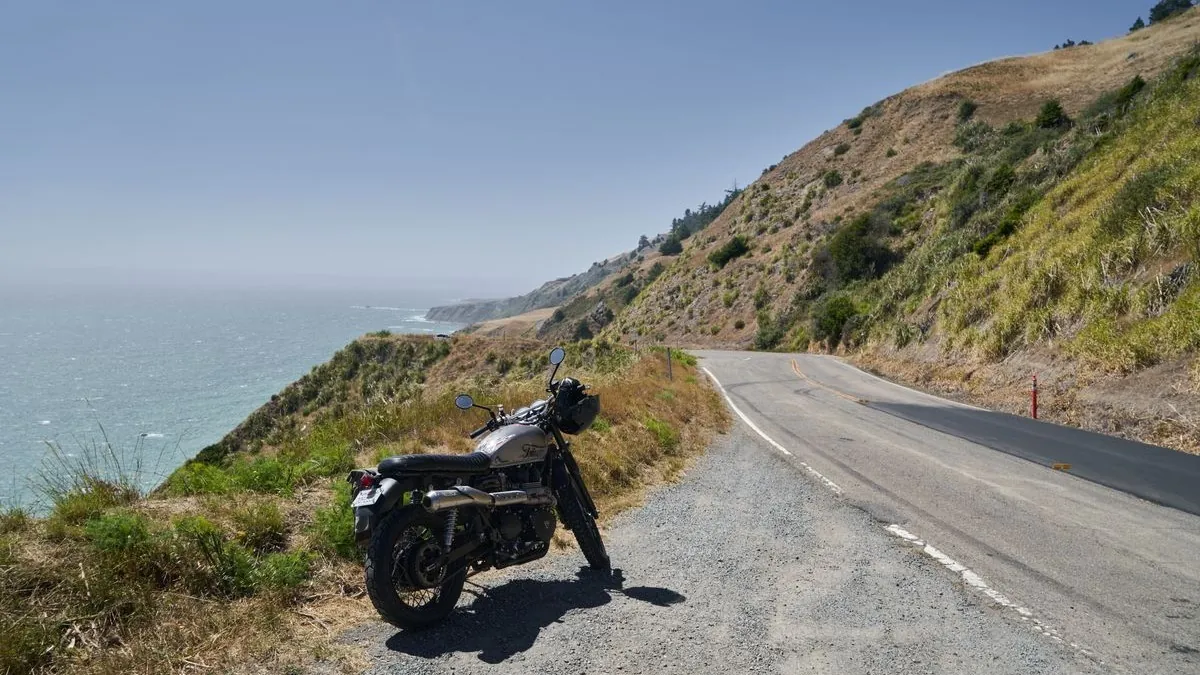
- You stop wherever the light is good for a shot. No waiting for the group.
- You can push through 500 km (311 miles) in a day if you're feeling it — or stop at 200 km (124 miles) if you're not.
- Restaurant stops take 20 minutes instead of an hour.
- No diplomatic navigation of group consensus on where to eat, stay, or how long to spend at a viewpoint.
- You can change your entire route mid-trip based on a weather app and nobody is affected but you.
Group Advantages Nobody Talks About
- Breakdown coverage — someone always has tools, someone always has roadside assistance.
- The social experience at destinations is richer. You arrive as a small community.
- Motivation — on a tough day, the group pulls you through when solo willpower would have you calling it early.
- You meet riders and hear routes you never would have found on your own.
- Safety in numbers on unfamiliar roads, especially in remote stretches of Ontario or Quebec.
What I'd Do Differently
Ride the first day solo to the group rendezvous point instead of riding with others from the start. You get the best of both — the solitary early miles with your own music and pace, then the community when you arrive. It's how I'll approach the next group event.
Frequently Asked Questions
Is it better to ride a motorcycle solo or in a group?
Both have advantages. Solo riding offers total freedom — you set the pace, route, and stops. Group riding provides safety, camaraderie, and shared experiences. For long-distance touring, a small group of 3-6 riders is the sweet spot. Solo is better for introspective rides; groups are better for social experiences.
How do you plan a group motorcycle trip?
Plan group motorcycle trips with clear communication, designated lead and tail riders, agreed fuel stop intervals, and a group intercom system. Discuss pace expectations before departing. Keep groups small (3-8 bikes) for manageability. Use a mesh intercom system to stay connected without phone service.
What are the risks of group motorcycle riding?
Group riding risks include peer pressure to ride beyond your comfort level, distraction from group dynamics, and increased risk of chain-reaction incidents. Mitigate these by riding your own ride, maintaining safe following distances, and never feeling pressured to keep up with faster riders.
How many riders is too many for a group motorcycle trip?
Groups larger than 8 riders become difficult to manage on the road. For long-distance touring, 3-6 riders is ideal. Larger groups should split into smaller sub-groups with staggered departure times.
Buy on Amazon
Affiliate Disclosure: As an Amazon Associate I earn from qualifying purchases. If you buy through these links, I may earn a small commission at no extra cost to you.