Best Motorcycle Rain Gear for Touring in 2026
What's Inside
The Reality of Riding in Rain
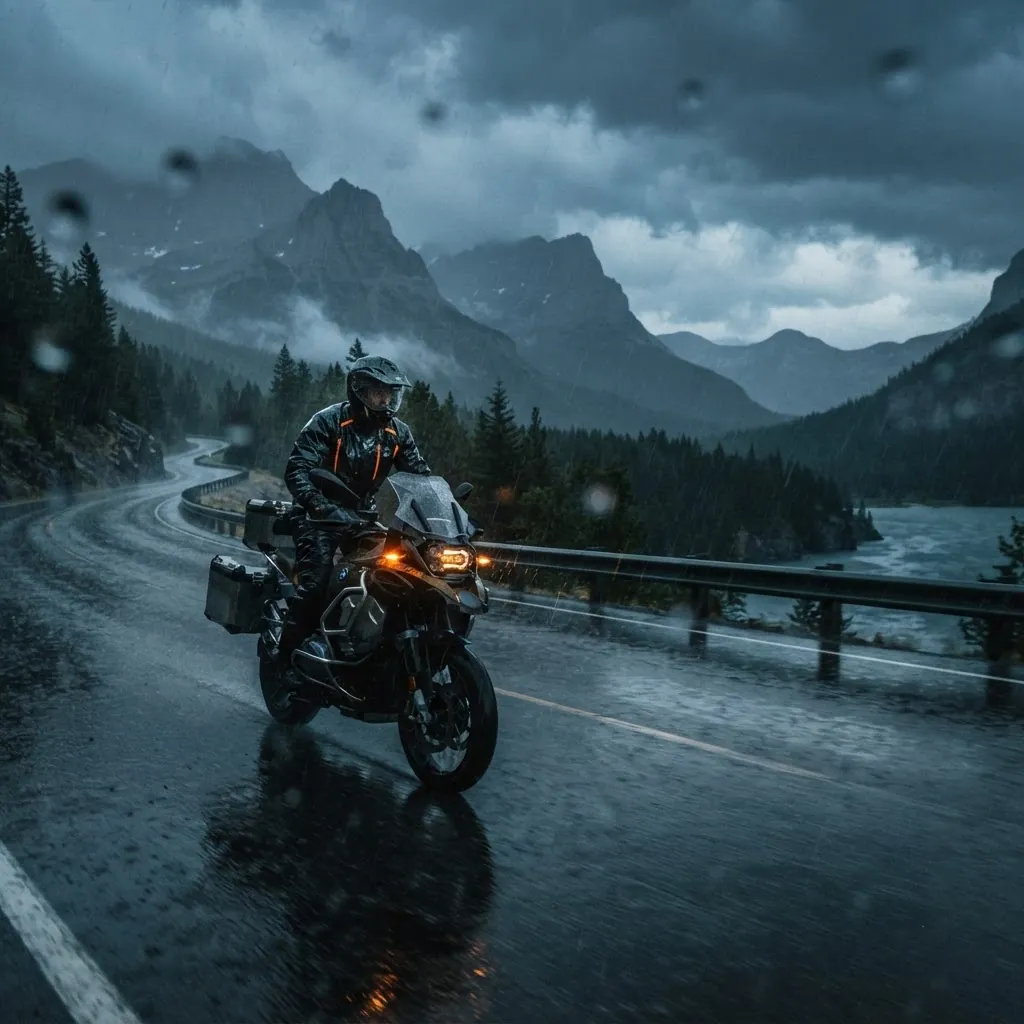
I just rode 4,000 km (about 2,500 miles) through Atlantic Canada and Quebec. A good chunk of that was in rain — not light mist, but full-on highway deluge where you can barely see the taillights ahead of you. That trip taught me more about rain gear in four days than five years of fair-weather riding ever did.
Here's the reality: most motorcycle rain gear falls into two categories. There's the cheap stuff that keeps you dry for the first 30 minutes then soaks through, and there's the expensive stuff that works but costs more than your helmet. The sweet spot — gear that actually works for a full day of riding without costing a fortune — is harder to find than people think.
Rain Jackets: One-Piece vs Two-Piece
The first decision is whether to go with a one-piece rain suit or separate jacket and pants. Here's the breakdown:
- One-piece suits — Best for maximum waterproofing. Nothing to unzip, no gaps for water to sneak in at the waist. The downside: you look like a garbage bag, and they're hard to put on at a gas station without taking off your boots.
- Two-piece (jacket + pants) — More practical for touring. You can put the jacket on without removing boots, and you can wear just the pants if only your lower half is getting wet. The risk: water can seep in at the waist seam.
- Over-jackets only — If your riding jacket is already water-resistant (many touring jackets have a Gore-Tex layer), you might only need a lightweight packable rain shell for downpours.
For touring, I strongly recommend a two-piece setup. The flexibility is worth the small risk of water at the waist, and if you tuck the jacket into the pants, you'll be fine 95% of the time.
Frogg Toggs Pilot Series Two-Piece Rain Suit
The best value rain suit I've found. Lightweight, packs into its own pouch (about the size of a sandwich), and keeps you dry in real downpours. Non-slip seat panel so you don't slide on your saddle. Around $60-80 CAD ($45-60 USD).
Check Price on Amazon →One thing nobody tells you: buy a rain suit one size larger than your normal riding gear. You need to fit it over your jacket and pants, and if it's too tight, the seams will stretch and leak. This is a common mistake on multi-day trips — the seams stretch and leak by day two.
Waterproof Gloves That Actually Work
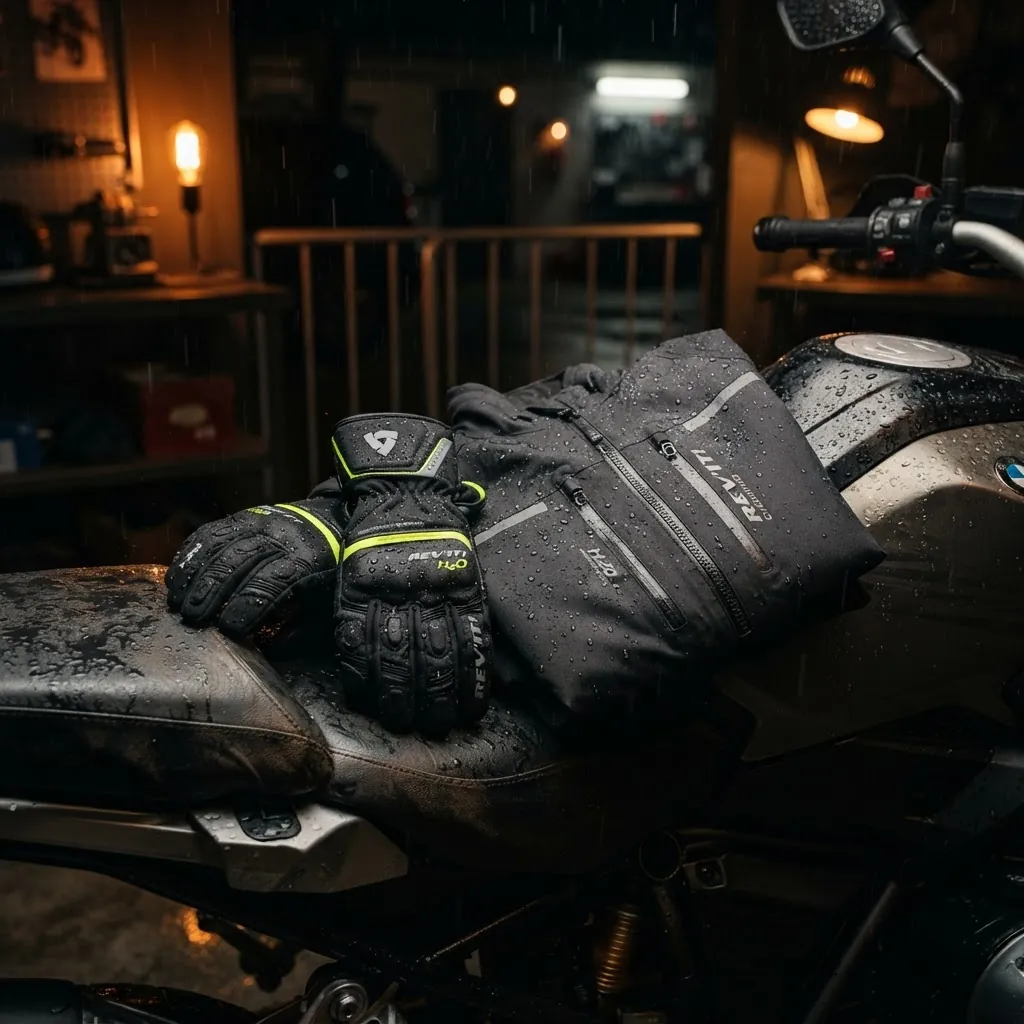
Gloves are the hardest piece of rain gear to get right. They need to keep your hands dry, maintain grip feel on the controls, and not be so bulky that you can't operate the clutch. Most "waterproof" gloves on the market fail at at least one of these.
There are two approaches:
- Waterproof over-gloves — Thin rubber or Gore-Tex gloves you pull on over your regular gloves. Cheap ($15-25), effective, but you lose all feel. Good as emergency backup.
- Waterproof riding gloves — Gloves with a waterproof membrane built in. More expensive ($60-150), better feel, but the membrane can make your hands sweaty in warm rain.
Alpinestars 365 GTX Gloves
Gore-Tex waterproof membrane, goat leather palm for grip feel, and a mid-length cuff that fits under your jacket sleeves. A top-tier all-conditions option. Pricey at $150-180 CAD ($110-135 USD), but well-regarded for durability.
Check Price on Amazon →If you ride in warm weather and only occasionally hit rain, keep a pair of waterproof over-gloves in your tank bag or saddlebag. They take 10 seconds to pull on and they'll save your hands when you hit an unexpected storm. I carry the Stormr over-gloves and they've been a lifesaver more than once.
Stormr Waterproof Over-Gloves
Pull-on rubber over-gloves that fit over any riding glove. Not for permanent use, but perfect for those "I didn't expect rain today" moments. Under $20 CAD.
Check Price on Amazon →Boots: Where Most Riders Get It Wrong
Here's the uncomfortable truth: most motorcycle boots are not waterproof. They might say "water-resistant" on the tag, but that means they'll survive a light sprinkle, not 200 km of highway spray. If you're touring, you need boots with a genuine waterproof membrane — Gore-Tex or equivalent.
The problem is that waterproof boots tend to be hot in summer. On a 4,000 km (2,485 mile) trip through Atlantic Canada and Quebec, conditions can swing from 30°C (86°F) heat to pouring rain in the same day. Gore-Tex boots handle the rain perfectly but feet sweat in the heat. There's no perfect solution here — it's always a compromise.
TCX Baja Waterproof Boots
Touring boots with a waterproof membrane, reinforced ankle protection, and a touring sole that's comfortable for walking. Not as breathable as non-waterproof boots, but when it rains, you'll be glad you have them. $180-220 CAD ($135-165 USD).
Check Price on Amazon →Budget alternative: waterproof sock liners. SealSkinz makes waterproof socks that you wear under your regular riding boots. They're not as good as proper waterproof boots, but at $35 CAD ($25 USD), they're a fraction of the cost and they actually work for shorter rides.
Rain Pants and Overpants
Rain pants are the most overlooked piece of rain gear. Riders spend $200 on a waterproof jacket and then let water soak through their jeans into their seat. Wet pants mean a wet seat, which means a wet backside for the rest of the day.
For touring, get overpants that you can pull on over your regular pants without removing your boots. Look for:
- Full-length zippers on both legs (so you can put them on with boots on)
- Heat-resistant panels on the inner legs (exhaust pipes melt cheap rain pants)
- An elastic waistband or drawstring (not a belt — belts let water in)
Nelson Rigg PS-1000 Rain Pants
Full-length leg zippers, heat-resistant inner legs, packs into its own pouch. Affordable at $40-50 CAD ($30-38 USD). Not the most durable, but for occasional touring use, they're excellent value.
Check Price on Amazon →Visibility: Being Seen in the Rain
Rain reduces visibility for everyone on the road — including the drivers around you. This is where rain gear does double duty: it keeps you dry and it can keep you alive.
If I could only change one thing about my rain setup, I'd add more hi-vis. A black rain suit is a visibility risk. After a close call in heavy rain where a transport truck couldn't see a rider clearly, the lesson was simple: buy hi-vis. A hi-vis rain jacket is one of the cheapest safety upgrades you can make.
- Choose rain gear in hi-vis yellow or orange whenever possible
- Add reflective tape to your existing rain gear if you already own a dark suit
- Run your high beams in rain, even during the day
- A hi-vis helmet cover costs $10 and makes a massive difference in low-visibility conditions
Hi-Vis Motorcycle Helmet Cover
Neon yellow waterproof helmet cover with reflective strips. Fits most full-face helmets. The cheapest safety upgrade you can buy. Under $15 CAD.
Check Price on Amazon →The Layering System That Actually Works
Here's a recommended system for multi-day touring where the weather can change from sun to storm in an hour:
| Layer | Item | Purpose |
|---|---|---|
| Base | Moisture-wicking shirt (synthetic, not cotton) | Keeps skin dry from sweat |
| Mid | Fleece or insulated riding jacket liner | Warmth when wet |
| Outer | Rain jacket over suit | Blocks rain and wind |
| Hands | Regular gloves + waterproof over-gloves | Grip feel + waterproofing |
| Feet | Wool socks (merino) | Wool stays warm when wet |
| Legs | Riding pants + rain overpants | Dry legs, dry seat |
The key insight: cotton kills. A cotton t-shirt soaked in rain will stay wet for hours and make you cold even in moderate temperatures. Switch to merino wool or synthetic base layers. Merino wool socks in particular are a game-changer — they stay warm even when soaking wet.
Smartwool Merino Wool Socks (Motorcycle)
Merino wool stays warm when wet, unlike cotton. I wear these on every long ride now. The difference in comfort after riding through rain is night and day. $25-30 CAD per pair.
Check Price on Amazon →How to Pack Rain Gear on a Motorcycle
Rain gear is useless if it's buried in your saddlebag under everything else. When it starts raining, you need it in 60 seconds, not 10 minutes of unpacking.
Rain Gear Packing Strategy
- Pack rain gear in a dedicated dry bag, separate from other gear
- Keep it accessible — top of a saddlebag or in a tank bag, not at the bottom
- Use a bright-colored dry bag (orange or yellow) so you can grab it fast
- Pack over-gloves separately in your tank bag for quick access
- Always unpack and dry your rain gear overnight — never store it wet
- Keep a microfiber cloth in the same bag to wipe your visor
One more thing: if you're touring with a passenger, they need their own rain gear too. A passenger sitting in wet clothes for 4 hours is not a happy passenger. Budget for two sets of rain gear if you ride two-up.
Riding in rain isn't fun, but with the right gear it's manageable — and sometimes it's the only way to get where you're going. On my 4,000 km trip, I hit rain for almost two full days. The gear I've recommended here is what got me through it without quitting. If you're planning a long tour, invest in rain gear before you need it, not after you're already soaked.
Frequently Asked Questions
What is the best motorcycle rain gear for touring?
The best motorcycle rain gear for touring is a one-piece waterproof suit that goes over your riding gear. Look for sealed seams, reflective panels, and a packable design. A two-piece suit offers more flexibility but lets water in at the waist. Pair with waterproof gloves and waterproof over-boots for full protection.
Can you ride a motorcycle in the rain safely?
Yes, riding in the rain is safe with proper gear and technique. Reduce speed by 20%, increase following distance, avoid painted lines and metal surfaces, and use smooth inputs. Good rain gear keeps you dry and focused. Riding through torrential rain on a 4,000 km (2,485 mile) trip proves that proper gear makes all the difference.
How much does motorcycle rain gear cost in Canada?
Motorcycle rain gear in Canada ranges from $60 CAD for basic over-suits to $250+ CAD for premium waterproof gear. Waterproof gloves run $40-120 CAD and over-boots $30-80 CAD. A complete rain setup can be assembled for under $200 CAD.
Should I carry rain gear on every motorcycle trip?
Yes. Weather changes rapidly on long rides, especially in Eastern Canada where conditions can shift from sun to downpour within an hour. Pack rain gear even on clear days for trips longer than 100 km (62 miles).
Buy on Amazon
Affiliate Disclosure: As an Amazon Associate I earn from qualifying purchases. If you buy through these links, I may earn a small commission at no extra cost to you.
Comments
Join the conversation. Comments are reviewed before appearing.