AGV Pista GP R3 and RLS: Can a Helmet That Moves on Impact Prevent Concussions?
AGV's new MotoGP-spec Pista GP R3 does something no road helmet has done: its outer shell is designed to slide and even detach on impact. AGV claims a 6-fold reduction in concussion risk. Here's what that means — and what it doesn't.
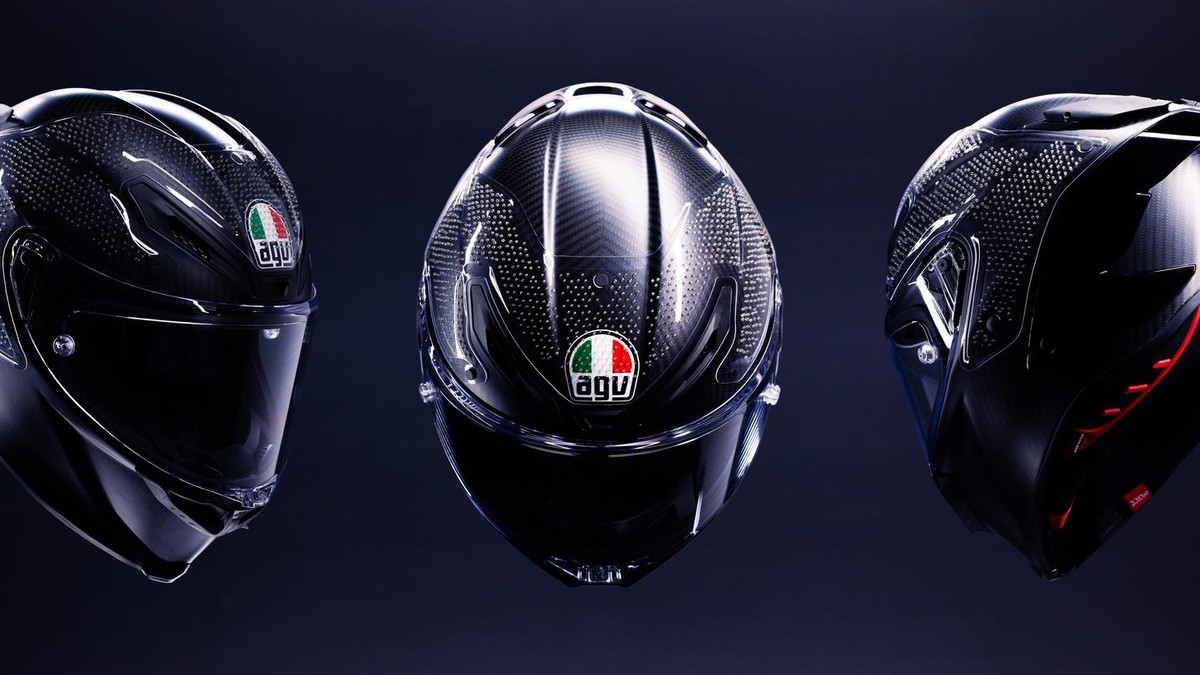
Image: Property of AGV / Dainese S.p.A.
Helmets have gotten very good at one thing: absorbing straight, linear impacts. What they've historically been bad at is rotation — the glancing, angled hit where your head keeps turning after the helmet stops. That rotational energy is what turns a survivable slide into a concussion, and it's the problem AGV's new Pista GP R3, the latest version of the helmet worn by MotoGP racers, attacks directly with a technology called the Release Layer System, or RLS, inside what AGV calls its Sphera system.
Table of Contents
How RLS Works: Roll, Release, Protect
Most rotational-injury tech lives inside the helmet — MIPS-style low-friction layers between your head and the foam. RLS flips that: it puts the movement on the outside. The Pista GP R3's exterior carries mobile panels mounted on micro-bearings. When the helmet hits asphalt at an angle, the panels roll with the direction of the impact with minimal resistance — and when the force is high enough, they can physically release from the shell entirely. AGV describes the sequence as roll, release, protect: the controlled movement dissipates rotational energy during the critical milliseconds of impact so less of it reaches your head.
It's a genuinely different protection mechanism, and it was developed for the highest level of racing, where riders fall at speeds road riders hope never to see. Independent lab testing reported by RideApart indicates the FIM's official test lab measured a striking reduction in rotational force with the system integrated.
The 6-Fold Claim, Explained
AGV's own testing, conducted at the Aragon Institute for Engineering Research at the University of Zaragoza, reports a 6-fold reduction in concussion risk for the Pista GP R3 with RLS. Read the fine print and it's a fair test design: the figure is the arithmetic mean of frontal, right lateral and left lateral impact results, converted into concussion-risk probability using the BrIC metric — a brain-injury criterion the research community uses specifically for rotational loading. That's a lab result, measured on a test rig, not a promise about your next crash. But it's a serious number produced by a recognized injury-biomechanics lab, and the direction it points is unambiguous: managing rotation matters.
How It Compares to MIPS and Friends
RLS is the outside-in version of the same physics. MIPS and similar systems let the helmet's inner liner shift relative to the skull, buying 10-15 millimeters of shear movement inside the helmet. RLS lets the shell itself move against the road surface, which is where the rotational energy first appears. In theory, exterior release can dissipate energy that interior slip can never reach — the road never touches your helmet's structure, only the sacrificial panels. The trade-off is practical: the Pista GP R3 is a MotoGP-spec racing helmet, priced and shaped for the track, and the RLS panels add complexity. For street riders, the immediate benefit of this launch isn't that everyone needs one — it's that the technology proven at racing's top level always migrates down to road helmets within a few product generations. Helmet-based rotational protection is now a two-front war, and that's great news for everyone who rides.
Should This Change What You Buy?
Today, honestly, no — unless you're a track rider with a race budget, in which case the Pista GP R3 is now the most interesting helmet money can buy. For the rest of us, the takeaway is what to look for on the shelf: any helmet with a rotational-energy system (RLS-style exterior layers, MIPS, or their competitors) is managing the injury mechanism that causes concussions. That's the feature worth paying for, ahead of graphics and vent counts. And when RLS tech hits AGV's road-helmet line in the coming years, it'll be worth a hard look — I'll be watching for exactly that.