How Far Should You Ride a Motorcycle in One Day?
There is no universal answer, but there is a useful one. Daily distance depends on your experience, your bike, the terrain, and how many days you are riding. The goal is not to cover the most kilometres. It is to arrive in good shape and do it again tomorrow.
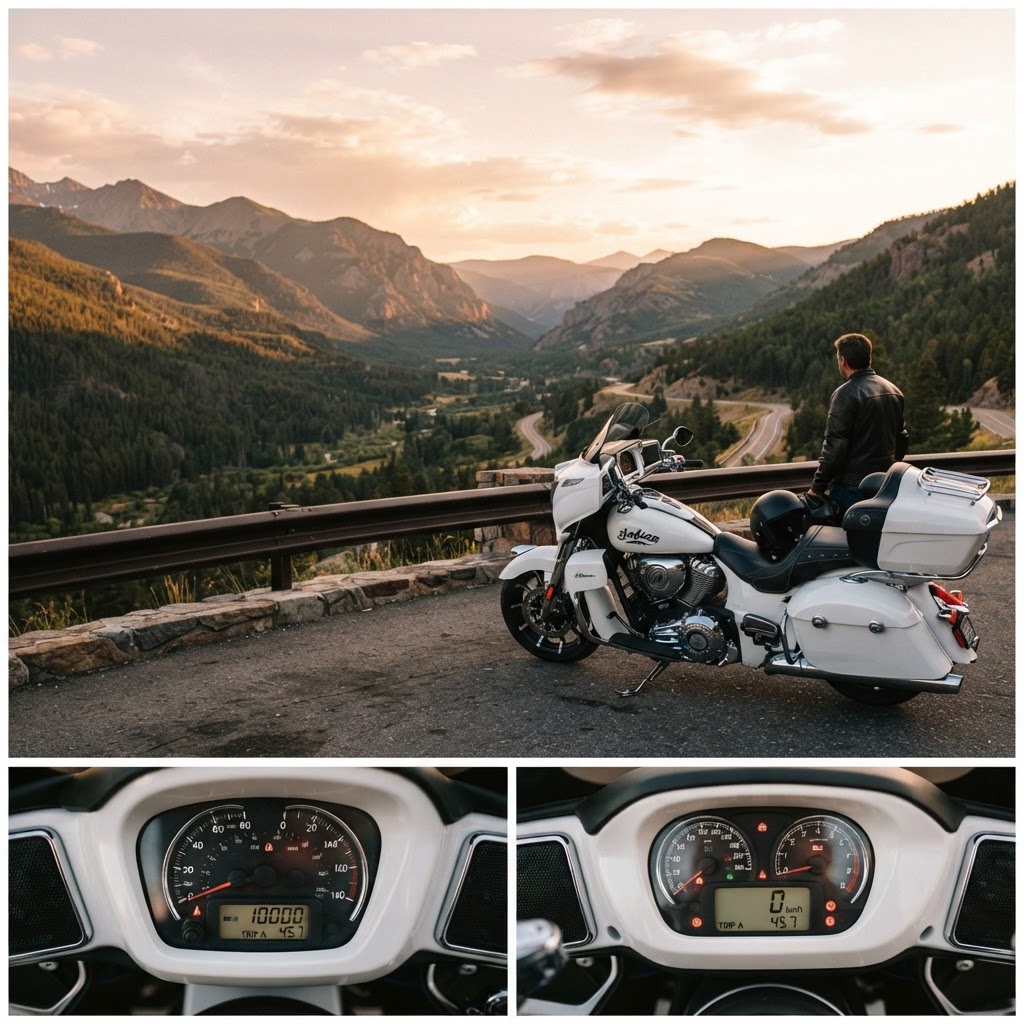
Image: Property of Indian Motorcycle.
Table of Contents
The Short Answer
For a single-day ride: 300 to 500 km (186 to 311 mi) is a comfortable range for most experienced riders. Under 300 km (186 mi) is a relaxed day. Over 500 km (311 mi) is a long day that will leave you tired. Over 700 km (435 mi) is endurance territory, and you should not plan it casually.
For multi-day touring: 300 to 400 km (186 to 249 mi) per day is the sweet spot. This gives you progress without compounding fatigue. You arrive with energy, recover overnight, and are ready to ride the next morning. If you are touring for more than a few days, especially over 50, this range is even more important.
Daily Distance Ranges by Experience
| Rider Type | Single Day | Multi-Day Tour | Notes |
|---|---|---|---|
| Beginner (0-5,000 km) | 200-300 km (124-186 mi) | 200-250 km (124-155 mi) | Focus on building stamina, not distance |
| Intermediate (5,000-30,000 km) | 300-450 km (186-280 mi) | 250-350 km (155-217 mi) | Start feeling comfortable on longer days |
| Experienced (30,000+ km) | 400-600 km (249-373 mi) | 300-400 km (186-249 mi) | Know your limits, pace for multi-day |
| Iron Butt territory | 800+ km (497+ mi) | 500+ km (311+ mi) | Requires training, not a casual plan |
These ranges assume paved roads in decent conditions. Gravel, rain, heavy traffic, or mountain passes reduce your effective range by 25 to 40 percent.
What Reduces Your Daily Range
Distance is not just about kilometres. Several factors reduce how far you can safely ride:
Weather. Rain reduces your range by 30 to 50 percent. Your grip is less secure, visibility is worse, and the mental load of riding carefully drains you faster. Cold has a similar effect: your body spends energy staying warm, leaving less for riding attention.
Terrain. Twisty mountain roads are more rewarding but more tiring. You are making more decisions per kilometre, and the physical demands of constant inputs add up. A 300 km (186 mi) day in the mountains feels like a 500 km (311 mi) day on the highway.
Traffic. Stop-and-go riding in cities or construction zones is more fatiguing than steady highway cruising. If your route includes urban traffic, plan fewer total kilometres.
Bike setup. A bike with proper handlebar reach, a good seat, and wind protection lets you ride longer. A bike that fights you on posture cuts your effective range significantly.
Passenger or loaded luggage. Extra weight changes handling and increases the physical demands of slow-speed maneuvers. Plan 10 to 15 percent less distance when touring two-up or fully loaded.
Signs You Have Ridden Too Far
Your body gives warnings before it quits. Learn to recognize them:
Missed turns and exits. If you are missing turns you would normally catch, your attention has degraded. This is one of the first signs of fatigue.
Delayed braking. If you are braking later than usual or noticing hazards later than you should, your reaction time has slipped. Stop immediately.
Wandering attention. If your mind is drifting to anything other than the road, you are too tired to ride safely. This is not laziness. It is cognitive fatigue.
Physical stiffness and pain. Neck, shoulders, or lower back pain that appeared during the ride and is getting worse. Your body is telling you it is done.
Irritability. If everything on the road is annoying you, you are fatigued. A rested rider is patient. A tired rider is frustrated. Stop.
"The goal is not to cover the most kilometres. It is to arrive in good shape and do it again tomorrow."
Planning Multi-Day Tours
When touring for several days, plan your daily distances backwards. Start with how many total kilometres you want to cover and how many days you have. Then build in a buffer day.
For example: a 2,400 km (1,491 mi) tour in 7 days averages 343 km (213 mi) per day. Plan 4 days at 400 km (249 mi), 2 days at 300 km (186 mi), and 1 buffer day at 0 km for rest or weather delays. That buffer day is not wasted. It is insurance.
Plan your longer days at the start of the tour when you are fresh. Save the shorter days for the end, when fatigue has accumulated. Most riders plan it the other way and pay for it.
For detailed tour preparation, check out the multi-day tour preparation guide and the real cost of motorcycle touring in Canada.
My Real Numbers on the Pursuit
On my 2024 Indian Pursuit, I have found that 400 km (249 mi) is my comfortable daily maximum for multi-day touring. My 10,000 km ownership report documents this in detail.
On the ECIC Muskoka 2026 trip (approximately 4,000 km / 2,485 mi over 8 days), my daily distances ranged from 250 km (155 mi) on slow days through twisty terrain to 500 km (311 mi) on highway transit days. The 500 km days were possible but required the next day to be shorter.
The Pursuit's fuel range is approximately 390 km (242 mi) per tank at touring speeds, which naturally creates a break point. I use fuel stops as a forced pacing mechanism. When the fuel light comes on, I stop for fuel, water, and 10 minutes of walking. This aligns well with the 90-minute rule for touring after 50.
Plan 300 to 400 km (186 to 249 mi) per day for multi-day touring. Build in a buffer day. Put your longer days at the start. If you feel fatigued, stop. No kilometre is worth arriving unsafe.