Home / Tech Blog / Solar Power Banks 2026
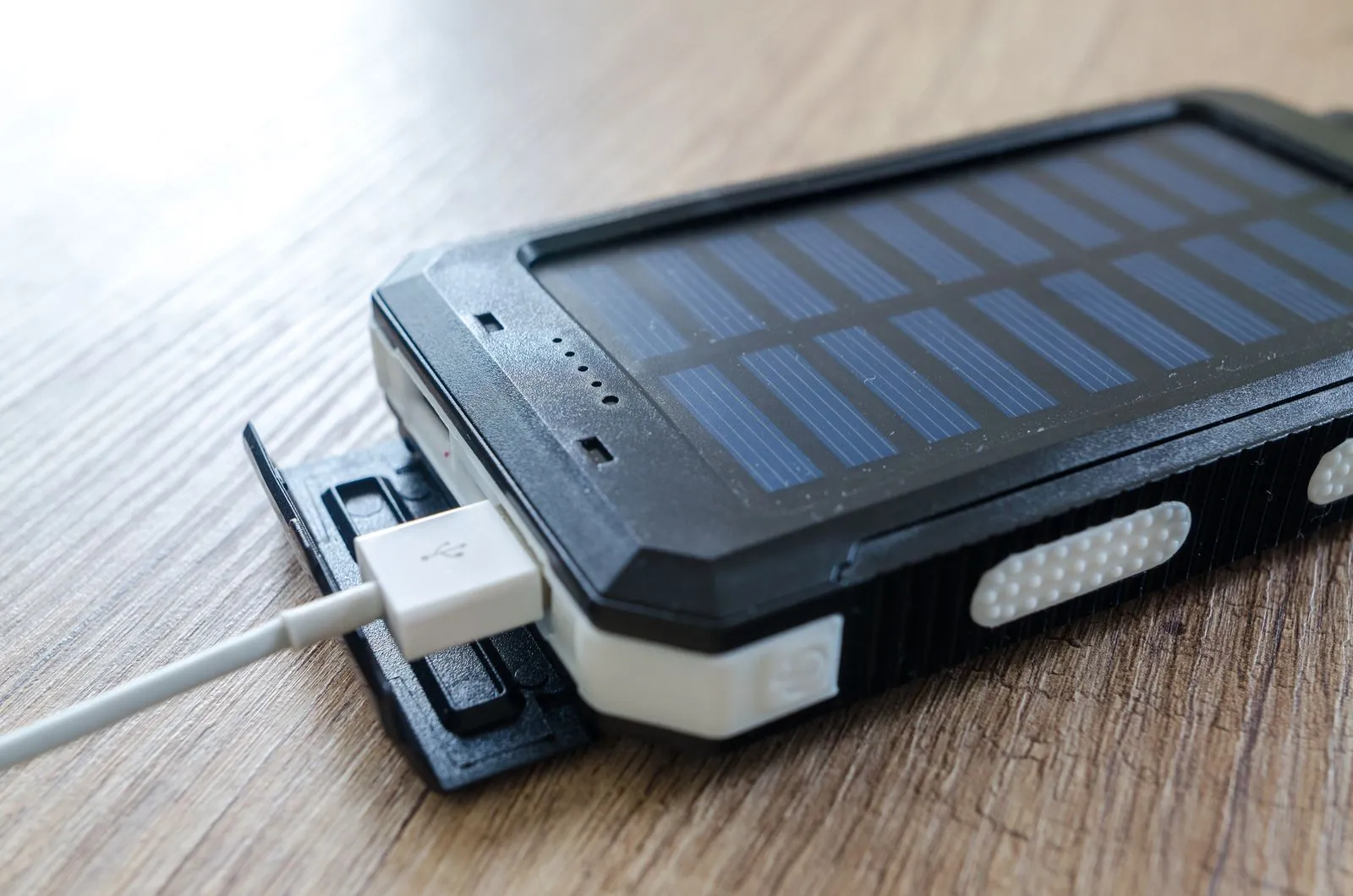
Solar power banks are one of the most over-marketed product categories in outdoor tech. Every Amazon search returns dozens of "solar chargers" claiming to power your phone, tablet, and camera with nothing but sunlight. The reality is more complicated — and more honest.
Here's what actually works for camping, motorcycle touring, and off-grid adventures in 2026, based on real-world performance rather than marketing claims.
The most reliable off-grid power setup isn't a single "solar power bank" — it's a hybrid system: a high-capacity power bank paired with a separate foldable solar panel. The power bank stores energy efficiently, and the solar panel generates enough wattage to be useful.
Here's the math: a 30W solar panel in direct sunlight produces about 25W of usable power (panels are never 100% efficient). That's enough to charge a phone in 2-3 hours or trickle-charge a 20,000mAh power bank over a full sunny day. A small built-in 2W panel produces almost nothing by comparison.
$130-150 CAD ($95-110 USD)
27,650mAh capacity, 250W output (charges laptops, cameras, phones simultaneously). IPX5 splash resistance. The sheer output capacity makes it ideal for motorcycle touring where you need to charge an Insta360, phone, and intercom overnight. It's not waterproof enough for sustained rain, so pack it in a dry bag.
$200-230 CAD ($150-170 USD)
25,600mAh, 100W USB-C PD output. Designed specifically for outdoor use with a more rugged build and better cold-weather performance. Goal Zero's ecosystem includes compatible solar panels that clip directly in. More expensive than the Anker but more durable for rough conditions.
$60-80 CAD ($45-60 USD)
10,000mAh, 18W USB-C. Budget pick for short trips where you only need phone charging. BioLite also makes compatible solar panels, but at this capacity, you're better off just carrying a second power bank rather than adding solar.
$80-100 CAD ($60-75 USD)
Three monocrystalline panels, folds to the size of a tablet. Produces ~22W in direct sunlight. USB-A and USB-C outputs. IP67 rated. The best balance of price, weight (680g), and output for camping and motorcycle touring. Strap it to a pannier during a lunch stop and you'll add meaningful charge.
$120-140 CAD ($90-105 USD)
20W foldable panel with magnetic kickstand. Built to pair with Goal Zero power banks. More rugged than the BigBlue but heavier and more expensive. The kickstand design lets you angle it for optimal sun capture — a feature that actually matters if you're stationary at a campsite.
$90-110 CAD ($65-80 USD)
21W foldable, IP67 rated. Three panels with built-in USB output. Lightweight at 590g. Similar performance to the BigBlue but with Anker's build quality. A solid choice for motorcycle touring where panel weight matters.
For motorcycle touring, your power needs are different from backpacking. You're charging more devices (cameras, intercoms, phones, maybe a drone) but you also have more luggage space. Here's the recommended setup:
| Device | Battery Capacity | Charges per day |
|---|---|---|
| Insta360 Ace Pro 2 | 1,400mAh | 2-3 |
| Insta360 X5 | 1,800mAh | 2-3 |
| Smartphone | 3,500-4,500mAh | 1 |
| Motorcycle intercom | 800mAh | 1 |
| Headlamp | 1,200mAh (rechargeable) | 0.5 |
Daily total: roughly 12,000-18,000mAh. A 27,000mAh power bank covers 1.5-2 days without any solar input. Add a 28W foldable panel for lunch stops and campsite evenings, and you can extend indefinitely in sunny conditions.
IP (Ingress Protection) ratings tell you how well a device resists dust and water. The first digit is dust (0-6), the second is water (0-9). For outdoor use:
Most "solar power banks" on Amazon claim IP67 or IP68, but independent testing has shown many fail at their rated protection. Stick with reputable brands — Anker, Goal Zero, BioLite — that actually test to their claimed ratings.
The bottom line for 2026: don't buy an all-in-one "solar power bank" expecting it to charge from sunlight alone. Get a quality high-capacity power bank and a separate foldable solar panel. It's more gear, but it actually works — and that's the whole point.
Affiliate Disclosure: As an Amazon Associate I earn from qualifying purchases. If you buy through these links, I may earn a small commission at no extra cost to you.