No Electrics, No Entry-Level, But a Trike Is Coming: Indian's Post-Polaris Product Strategy Explained
Under new CEO Mike Kennedy and owner Carolwood LP, Indian Motorcycle has a clear roadmap: no EVs, no small-displacement bikes, no distractions. Just cruisers, baggers, touring motorcycles — and a factory trike. Here's what it means for owners and buyers.
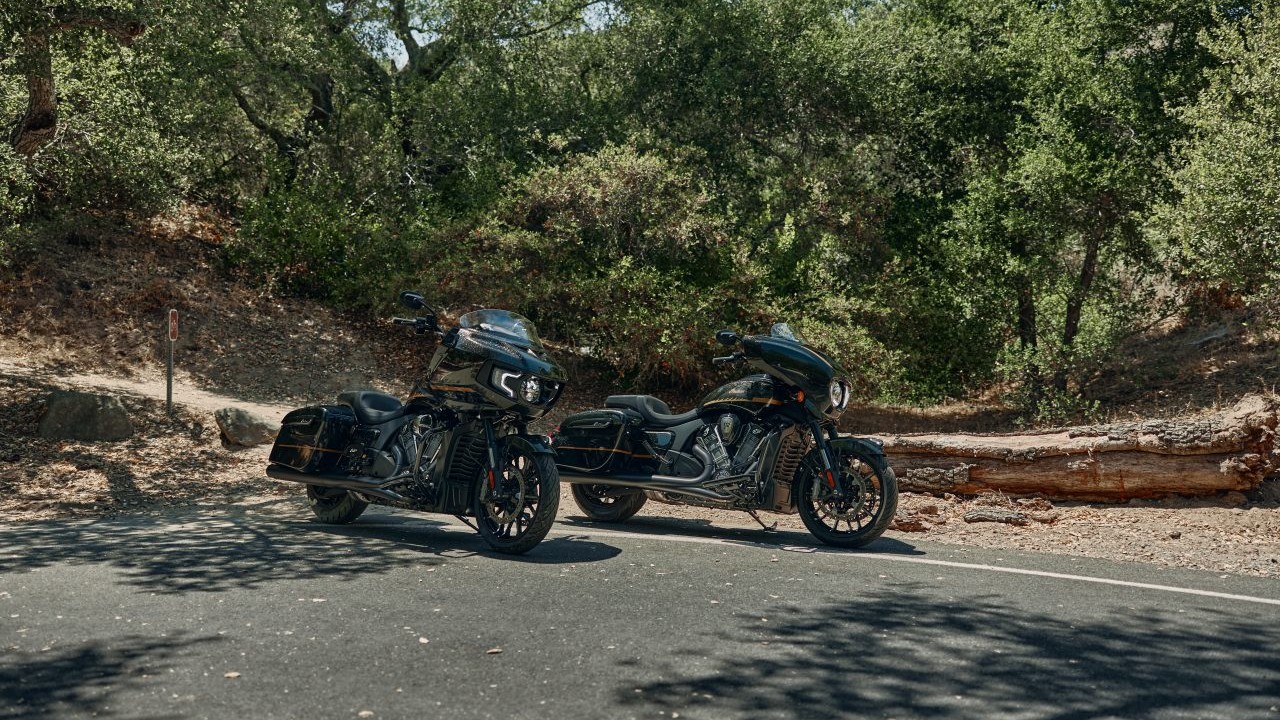
Image: Property of Indian Motorcycle.
Table of Contents
The Strategy at a Glance
No EVs. No electric motorcycles, full stop.
No entry-level. No small-displacement bikes — that would be a "distraction."
Trike confirmed. Thunderstroke 116 or PowerPlus engine, full touring features.
Aspirational brand. Porsche, not Lamborghini. Pre-owned as the gateway.
~900 employees. Down from Polaris's tens of thousands. ~$500M revenue.
A New Indian: Smaller, Focused, Independent
When Polaris Inc. separated Indian Motorcycle in early 2026 and sold it to private equity firm Carolwood LP, the brand went from being a small piece of a $12 billion empire to a standalone company. Indian now operates with approximately 900 employees and about $500 million in revenue — a fraction of Polaris's total, but a size that Kennedy says allows for sharper focus.
"It feels like a startup," Kennedy told Powersports Business in April 2026. "But you don't often get to build a startup around a brand that's been around for 125 years."
Kennedy himself brings a rare perspective. His 35-year career spans the OEM side (Harley-Davidson), retail (RumbleOn), and aftermarket (Vance & Hines). That full-spectrum view shapes a leadership philosophy built on simplification: fewer SKUs, clearer product positioning, and a relentless focus on the segments where Indian is already strong.
No Electric Motorcycles — Period
While competitors experiment with electric platforms — Harley-Davidson has LiveWire, Zero Motorcycles continues to expand, and Honda launched the WN7 electric this year — Indian is staying out of the EV space entirely.
Kennedy was emphatic when asked about electric motorcycles. The answer was no. Indian's focus remains on internal combustion engines: the Thunderstroke 116 and the PowerPlus 108 and 112 platforms that power the current lineup.
For Indian Pursuit owners like me, this is actually reassuring news. It means continued investment in the engines we ride, continued development of the PowerPlus platform, and no concern about parts availability or service support being shifted to a new powertrain. Indian is doubling down on the bikes its customers actually buy.
No Entry-Level Bikes: The Aspirational Play
Perhaps the most surprising element of Kennedy's strategy is the explicit rejection of the entry-level segment — the hottest category in the motorcycle industry right now. When RideApart asked Kennedy about entry-level motorcycles, his response was an emphatic "No."
His reasoning: an entry-level bike "will be a distraction for this company." Instead, Indian sees itself as an aspirational brand — a Porsche, not a Lamborghini (Kennedy rejected the Lamborghini comparison but accepted the Porsche one).
"We're not going to be that entry-level motorcycle because of size," Kennedy explained. He used his own daughter — a nurse with her motorcycle license who can't physically manage a 101 Scout — as an example of where Indian's bikes don't fit. Rather than build a smaller bike for riders like her, Indian wants to build brand aspiration through apparel, licensing, and the pre-owned market.
"The pre-owned product is a great gateway for riders into the brand," Kennedy said. "As people come in, maybe on other brands or other pre-owned brands, they're looking at the Indian product line as an aspirational brand."
For context, the most accessible new Indian is the Scout Bobber at $12,999 US MSRP. That is accessible by American cruiser standards but far from entry-level pricing in the broader motorcycle market, where bikes under $6,000 dominate the entry segment.
The Trike: What We Know
The most concrete new product confirmed in Kennedy's roadmap is a factory Indian trike. This is significant because Indian has never offered a factory-built three-wheeler — customers who wanted one had to go to aftermarket builders.
What We Know About the Indian Trike
Engine: Thunderstroke 116 or PowerPlus
Features: Ride Command navigation, heated and cooled seats, large cargo storage
Timeline: Reveal expected for the 2027 model year
Positioning: Factory-built, dealer-distributed — not an aftermarket conversion
The trike market is currently dominated by Harley-Davidson's Tri Glide Ultra and Freewheeler, along with Can-Am's Spyder and Ryker lineup. Indian entering this space gives riders who want three-wheel stability a factory-backed American alternative for the first time.
Industry speculation points to a potential reveal at Sturgis 2026, with orders opening for the 2027 model year. However, Indian has not officially confirmed a launch date.
Streamlining the Lineup
One of Kennedy's early priorities is simplifying Indian's product range. "The product line has gotten too complex," he said. "It makes it harder for riders to shop and harder for dealers to manage inventory."
The solution: fewer SKUs, clearer positioning, and a renewed emphasis on the segments where Indian is strongest — cruisers, baggers, and touring motorcycles. Indian will rely more heavily on aftermarket partners for customization rather than offering every possible factory variation.
This aligns with what we've already seen in the 2026 lineup. The 125th Anniversary Collection — Chief Vintage, Scout Bobber, Challenger, and Roadmaster special editions — celebrates heritage rather than expanding the range. The Signature Series with the PowerPlus 112 engine represents the top of the range, not a new platform.
| Category | Models | Starting MSRP (USD) |
|---|---|---|
| Cruiser | Chief, Sport Chief, Chief Bobber, Chief Vintage | From $19,999 |
| Scout | Scout Bobber, Sport Scout, 101 Scout, Scout Classic, Super Scout | From $12,999 |
| Bagger | Challenger, Challenger Elite | From $26,499 |
| Touring | Pursuit, Pursuit Dark Horse, Pursuit Limited, Roadmaster | From $32,499 |
| Elite | Challenger Elite, Pursuit Elite, Signature Series | From $39,999 |
Prices verified on indianmotorcycle.com as of August 2026. MSRP excludes destination and handling fees.
Dealers and the Aftermarket Ecosystem
Kennedy is emphatic about the dealer network. "Our scorecard will be the health of our dealers," he said. "If they're not successful, we're not successful."
Indian currently works with approximately 600 dealers globally, most operating multi-line showrooms. Kennedy is comfortable with that model — dealers carrying multiple brands is a practical reality. The priority is earning their commitment through transparency and communication.
The aftermarket is equally important. Rather than trying to offer every variation from the factory, Indian plans to simplify the core lineup and let aftermarket partners handle customization. "When the aftermarket thrives, the brand thrives," Kennedy said.
For owners, this is good news. It means Indian is investing in the ecosystem around its bikes — parts, accessories, service support — rather than chasing new segments. If you ride a Pursuit or a Chief, the aftermarket will continue to grow.
The Market Reality Behind the Strategy
Kennedy's strategy is backed by real numbers. In 2025, the US highway motorcycle market was down 6.5% overall — but Indian's market share grew in both the touring and cruiser segments.
"When I analyze the market, it is not a factual statement to say that only the $6,000 bikes are the ones selling," Kennedy countered. "That just isn't true. There's a ton of market share left to be gained."
The message is clear: Indian doesn't need to chase entry-level buyers to grow. The heavyweight cruiser and touring segments — where Indian is already winning — have enough room for expansion. The 2026 King of the Baggers season, where Indian has won 7 of 10 races, reinforces the brand's credibility in exactly the segment Kennedy is targeting.
What This Means for Current Indian Owners
If you already ride an Indian — whether it's a Pursuit, Chief, Scout, or Challenger — Kennedy's strategy is mostly good news:
Your bike will hold value. By positioning as an aspirational brand and not flooding the market with entry-level models, Indian is protecting the resale value of existing bikes. The pre-owned market isn't a compromise — it's part of the strategy.
Your platform will continue to receive investment. No EV pivot means the PowerPlus and Thunderstroke engines get continued development. The 112ci Signature Series shows Indian is still pushing the performance envelope with internal combustion.
Aftermarket support will grow. Kennedy's emphasis on the aftermarket ecosystem means more parts, more accessories, and more options for personalizing your bike.
A trike option may be in your future. If three-wheel stability becomes appealing — whether due to age, injury, or just wanting a different riding experience — a factory Indian trike will eventually be an option with the same engines and technology as the two-wheel lineup.
As a 2024 Pursuit owner, the no-EV stance is the part that matters most to me. I bought a PowerPlus 108 because I love the engine. Knowing Indian is committed to internal combustion for the foreseeable future means my investment — and the platform I've been upgrading and maintaining — isn't going to be orphaned by a pivot to electric.
Frequently Asked Questions
Sources: RideApart (Feb 10, 2026), Powersports Business (April 21, 2026), RevZilla Common Tread, Wheels of Grace Magazine (June 15, 2026), Indian Motorcycle official website (indianmotorcycle.com). Pricing verified August 2026.