Image: Property of Honda
Honda V3R 900 E-Compressor: The First Supercharged V3 You Can Buy
In This Article
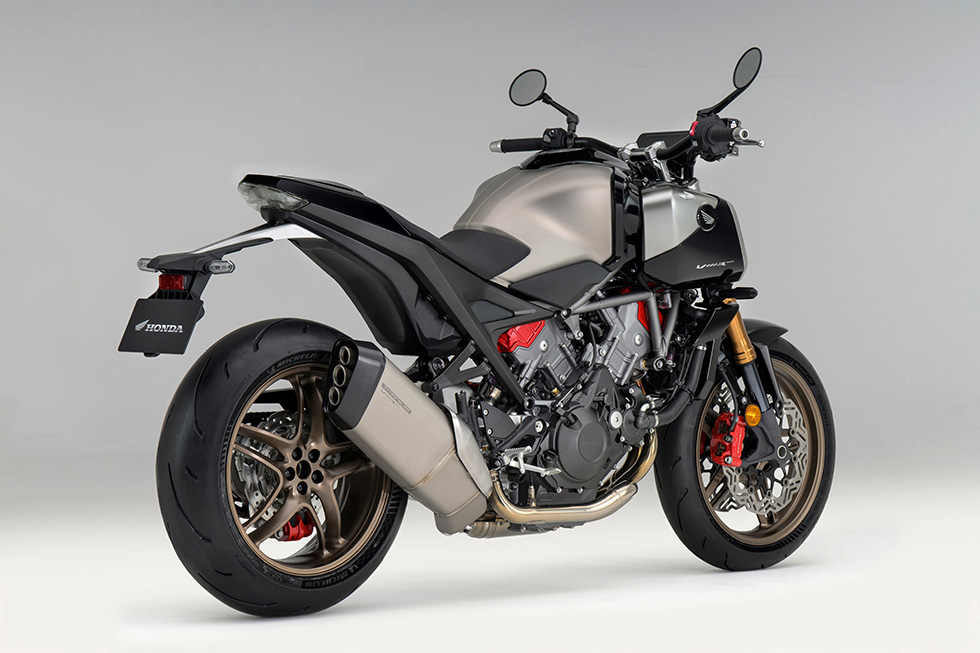
Honda did not bring the V3R 900 E-Compressor to EICMA as a show bike. It brought it as a planned production model, with a V-three engine and an electrically driven compressor. Here is what the technology actually does, and what Honda has not said yet.
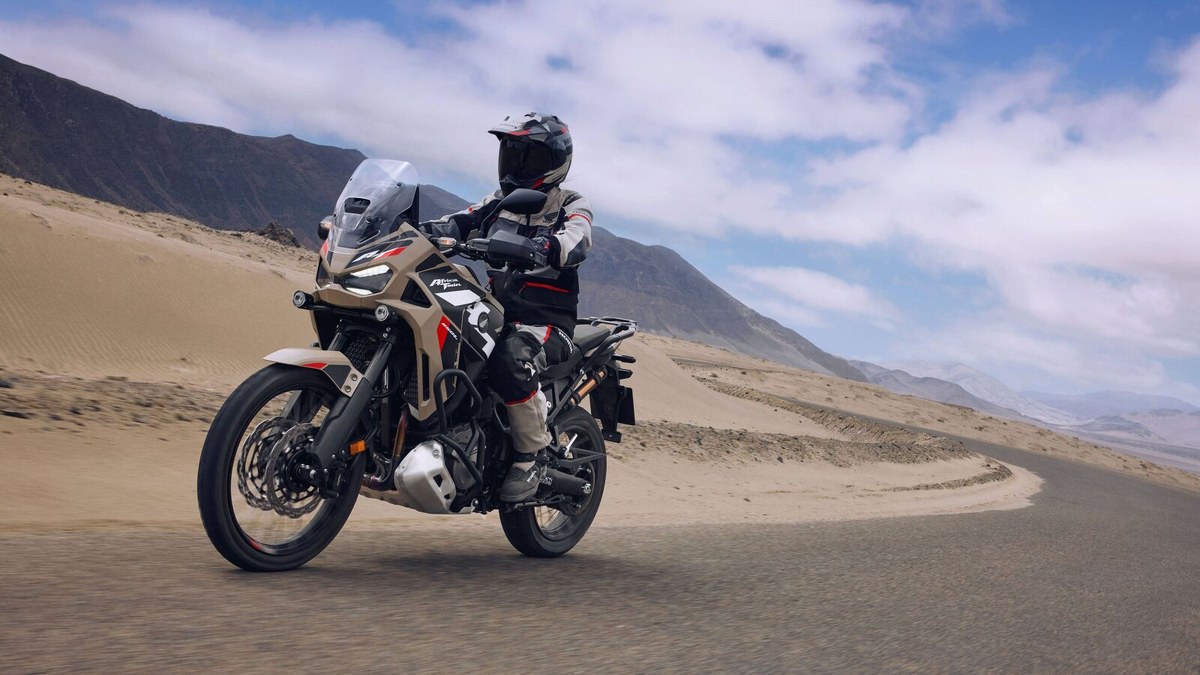
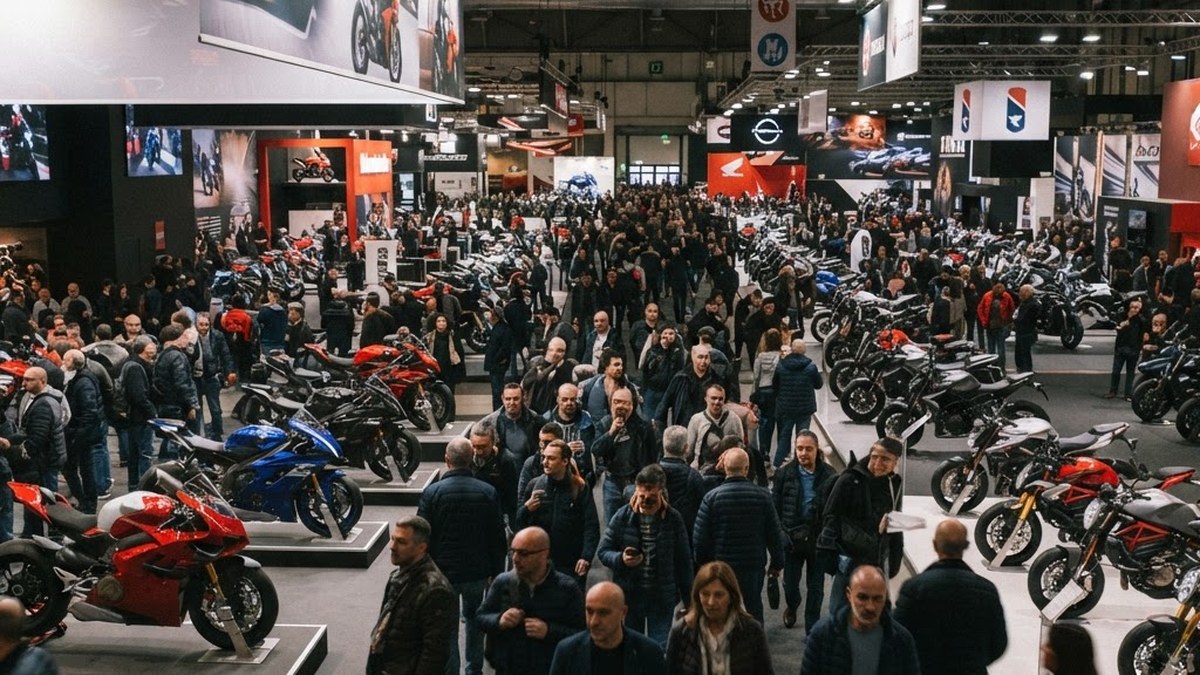
Every year EICMA produces a pile of concepts that never reach a showroom. The V3R 900 E-Compressor is not one of them, and that is the part worth paying attention to. Honda's own November 3, 2026 EICMA release lists it as a planned production model, alongside the CRF1150L Africa Twin and the new Fireblade, both of which are 2027 machines for Europe. Concept bikes do not sit in that list.
What Honda actually announced
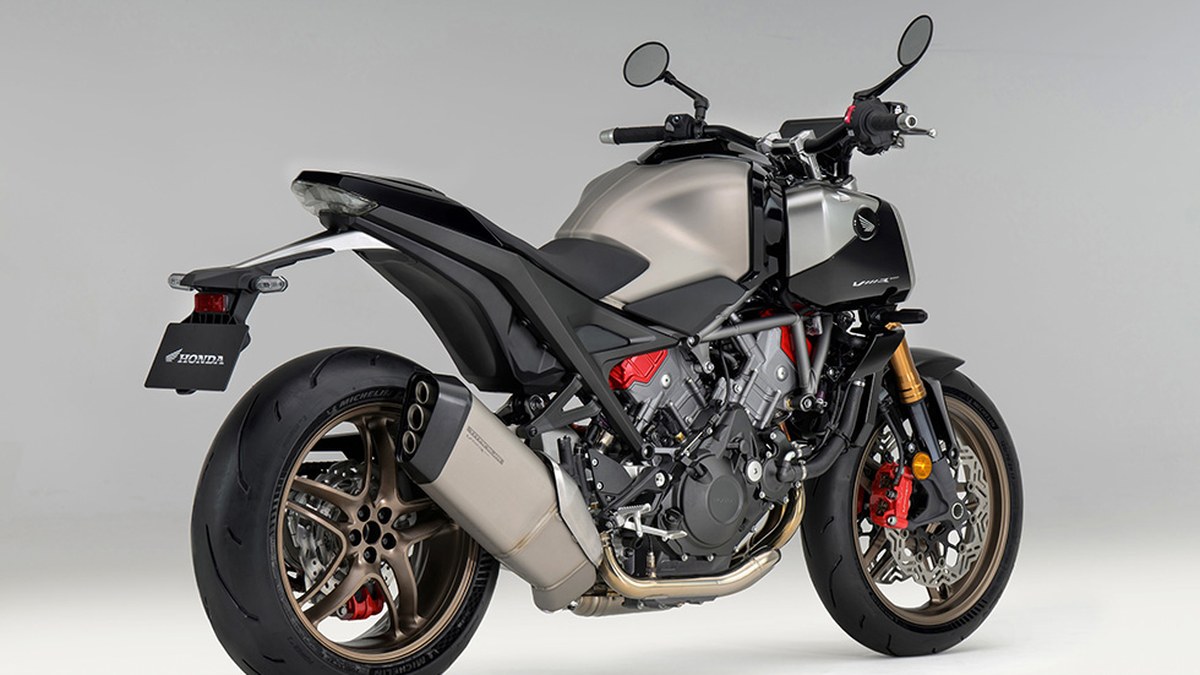
The release is short, and it is worth quoting precisely rather than paraphrasing: Honda will exhibit the V3R 900 E-Compressor Planned Production Model, "featuring a proprietary V-type three-cylinder engine equipped with the world's first electronically-controlled compressor for a motorcycle." Honda footnotes that claim as according to its own research, so attribute it that way. What is not footnoted is the architecture: a V3 with a compressor is genuinely unusual, and no mainstream manufacturer currently sells one.
The rest of the release is styling and software. An asymmetrical design, a titanium fuel tank, titanium exhaust pipes and muffler, and an enhanced version of Honda RoadSync with a revised human-machine interface and AI-powered voice controls. Honda RoadSync needs its dedicated app installed, which the release notes, and which matters to anyone who has dealt with a bike that wants a phone before it will do anything useful.
Honda published no power figure, no weight, no price, and no launch date for the V3R 900 E-Compressor in its November 3, 2026 release. Nothing in this article estimates those numbers, because guessing a supercharged engine's output is how a spec page becomes fiction.
What an electric compressor does that a turbo cannot
A turbocharger is driven by exhaust gas, which means it needs exhaust flow before it can make boost. On a motorcycle that creates two problems: lag right where you want response, and a packaging nightmare, because the turbo sits in the exhaust path and then the charge pipe has to route back to the intake on a machine with almost no spare volume.
A belt-driven supercharger solves the lag problem by being mechanically tied to the crank, which is what Kawasaki did with its H2 series. But a belt-driven blower is always spinning in proportion to engine speed, so it builds boost with rpm and it costs crankshaft power to turn even when boost is not wanted.
An electrically driven compressor decouples boost from engine speed. The compressor speed is controlled by software, so it can be spun up before the throttle is opened rather than after, and it can be switched off when boost is not needed. Honda's claim that it is electronically controlled is the load-bearing word: the difference from every previous forced-induction motorcycle is that boost becomes a mapped, managed quantity instead of a mechanical consequence.
Why that matters more for touring than for lap times
Peak power is the number magazine covers want, and it is the least interesting thing about this engine for the way most people ride. What a managed compressor buys is a broad, flat torque curve from low in the rev range, which is exactly what makes a bike feel effortless two-up with luggage on a highway, or coming out of a slow corner loaded with a passenger.
That is the honest read on a V3 with a compressor: three cylinders give the engine a narrow enough package to sit in a sport or sport-touring chassis, and the compressor fills in the bottom and midrange that a 900cc triple would otherwise have to chase with revs. It is a torque solution wearing a performance headline.
There is a maintenance question here that nobody can answer yet, because it depends on the compressor's duty cycle and how Honda has handled heat and lubrication. An electrically driven compressor adds a high-speed rotating assembly, its own motor and controller, and a heat source near the engine. Until Honda publishes a service schedule, anyone telling you what it costs to own one is inventing it.
The Canadian question
Honda announced this at a European show, in a release about the European market lineup. That is not the same as a Canadian launch, and Canadian availability, price and specification have not been published. Canadian pricing on a low-volume, titanium-equipped, forced-induction Honda will not be gentle, and pretending otherwise would be dishonest. When Honda Canada confirms anything, this page gets the real number.
No price, power output, weight or launch date appears in this article because Honda has not published them. Treat any figure you see quoted elsewhere before that as speculation.
The verdict, before the test ride
The V3R 900 E-Compressor is the most consequential motorcycle at EICMA 2026 that is not for sale yet. Honda has taken forced induction, the one technology that has repeatedly failed to make the jump from flagship to mainstream on two wheels, and rebuilt it around electronics rather than a belt. That is a real engineering position, not a styling exercise.
What remains unknown is everything that decides whether it is worth owning: the power figure, the weight, the price, the service intervals, and whether Honda Canada brings it here at all. Those are the numbers to wait for. Everything else in this article is what Honda has actually said.
Frequently Asked Questions
Is the Honda V3R 900 E-Compressor a concept bike?
No. Honda lists it in its November 3, 2026 EICMA release as a planned production model, alongside the 2027 CRF1150L Africa Twin and the redesigned Fireblade.
What is an electronically controlled compressor?
It is a supercharger driven by an electric motor rather than a belt or exhaust gas. Because the compressor speed is controlled by software, boost can be built before the throttle opens and switched off when it is not needed, instead of rising and falling with engine rpm.
How much horsepower does the V3R 900 make?
Honda has not published a power figure. The name implies a 900cc class V-three engine, but no output, torque or weight figures were included in the announcement.
How much will the V3R 900 E-Compressor cost?
No price has been announced in any market. Honda also has not confirmed a launch date or Canadian availability.
Is a supercharged motorcycle harder to maintain?
It adds a high-speed rotating assembly, an electric motor and a controller, plus extra heat near the engine. Honda has not published a service schedule, so the maintenance cost is genuinely unknown rather than merely unconfirmed.
Does it come with titanium parts?
Yes. Honda specifies a titanium fuel tank, titanium exhaust pipes and a titanium muffler, plus an asymmetrical design and an enhanced Honda RoadSync system with AI voice controls.