
Photo: Greg Toope
Range is the number that decides whether a riding day is relaxed or tense. Here is the real figure from loaded touring, how to calculate your own, and where Atlantic Canada actually runs short of fuel.
The Numbers Riders Actually Need
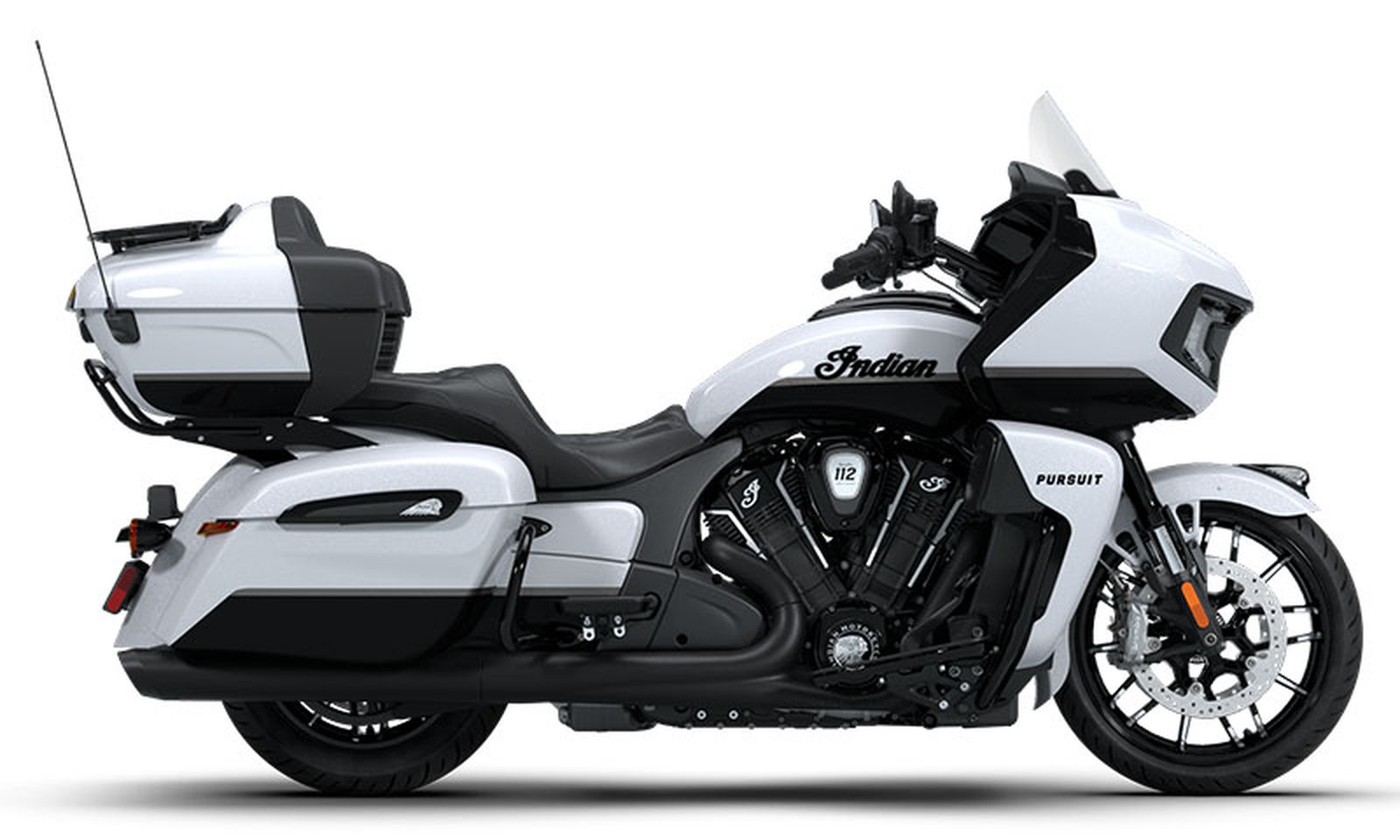
An Indian Pursuit carries 22.7 litres of fuel. At the loaded touring figure of 5.8 L/100km (40.6 mpg US), that is a working range of roughly 390 km (242 mi) before you are into the reserve.
Those two figures answer almost every fuel question a touring rider has, and they answer it better than any spec sheet, because they are the numbers from real loaded travel rather than a manufacturer's best case. A lighter throttle hand or a tailwind moves them slightly. Two-up riding with luggage and a headwind moves them the other way.
Planning rule: use 300 km (186 mi) as your comfortable next-stop distance on a loaded bagger, not the 390 km maximum. The last 90 km is where riders run out.
How to Work Out Your Own Range
Fill the tank, reset the trip meter, and ride normally until you refuel. Divide the litres you added by the kilometres ridden and multiply by 100. That gives your L/100km for that tank. Then multiply your usable litres by 100 and divide by that number to get your range.
Do it three times in three conditions: a highway day, a two-lane day with towns, and a day with a passenger or a headwind. The spread between those three is your real planning window, and it is usually 15 to 20 percent, not the 5 percent riders assume.
Use the worst of the three for planning. Fuel stops are cheap and predictable; running dry on a Newfoundland shoulder at dusk is neither.
Where Fuel Gets Tight in Atlantic Canada
Most of Atlantic Canada is not a fuel problem. The Trans-Canada has regular service, and Nova Scotia's two-lane roads pass through towns with stations every 40 to 60 km.
The exceptions are the ones worth planning around. The Cabot Trail's northern section has long stretches between services once the season winds down, and several businesses close outside summer. Central and western Newfoundland have genuine gaps, particularly on the road to Gros Morne and beyond, where a station marked on a map may be seasonal.
The rule that saves riders: never pass a station in rural Newfoundland with less than half a tank after 3 PM, because the next one may close before you arrive.
What a Fuel Day Costs
At 5.8 L/100km and roughly $1.65 a litre, a 400 km (249 mi) day costs about $38 in fuel. A five-day, 2,000 km trip is roughly $190 of fuel.
That is the smallest line in a touring budget and the one riders overthink. Fuel is predictable. Ferries, cabins and a night in a hotel when the weather turns are not.
Prices move, so treat the per-litre figure as a placeholder and use your own local number. The consumption figure is the part that transfers: 5.8 L/100km loaded is what the bike actually does, and it is the number to build the plan on.
The Reserve Light Is Not Your Plan
Most bikes give you 40 to 60 km from the moment the light comes on, and that figure shrinks exactly when you need it: loaded, two-up, into a headwind, or climbing. Treating the light as a usable part of your range is how riders end up coasting into a station.
The better habit is to plan the stop before you need it. On a 300 km leg, pick the fuel point at 250 km and treat anything past it as a bonus. That single choice removes the maths from the day and makes the riding better, because you stop looking at the gauge.
Carry a siphon-free plan rather than a can. A one-litre bottle of fuel does not rescue a bagger that is 20 km short; knowing where the next station is does.
The Planning Numbers in One Place
| Figure | Number |
|---|---|
| Tank capacity | 22.7 L |
| Loaded touring consumption | 5.8 L/100km (40.6 mpg US) |
| Theoretical range | about 390 km (242 mi) |
| Comfortable planning leg | 300 km (186 mi) |
| Fuel cost, 400 km day at $1.65/L | about $38 |
Frequently Asked Questions
How far can an Indian Pursuit go on a tank?
About 390 km (242 mi) at the loaded touring figure of 5.8 L/100km with a 22.7 litre tank. Plan stops at 300 km (186 mi) for margin.
How do I work out my own fuel range?
Fill the tank, reset the trip meter, ride normally, then divide litres added by kilometres ridden and multiply by 100 to get L/100km. Divide usable litres by that figure and multiply by 100 for range.
Where is fuel scarce in Atlantic Canada?
Central and western Newfoundland have real gaps, and stations marked on a map may be seasonal. The northern Cabot Trail also loses services outside peak season.
What does a riding day cost in fuel?
At 5.8 L/100km and about $1.65 a litre, roughly $38 for a 400 km day. Use your own local price; the consumption figure is the part that transfers.
Sources
- Indian Pursuit fuel figures. 22.7 litre tank capacity for the Pursuit model line.