Home / Moto Blog / EV Touring Reality
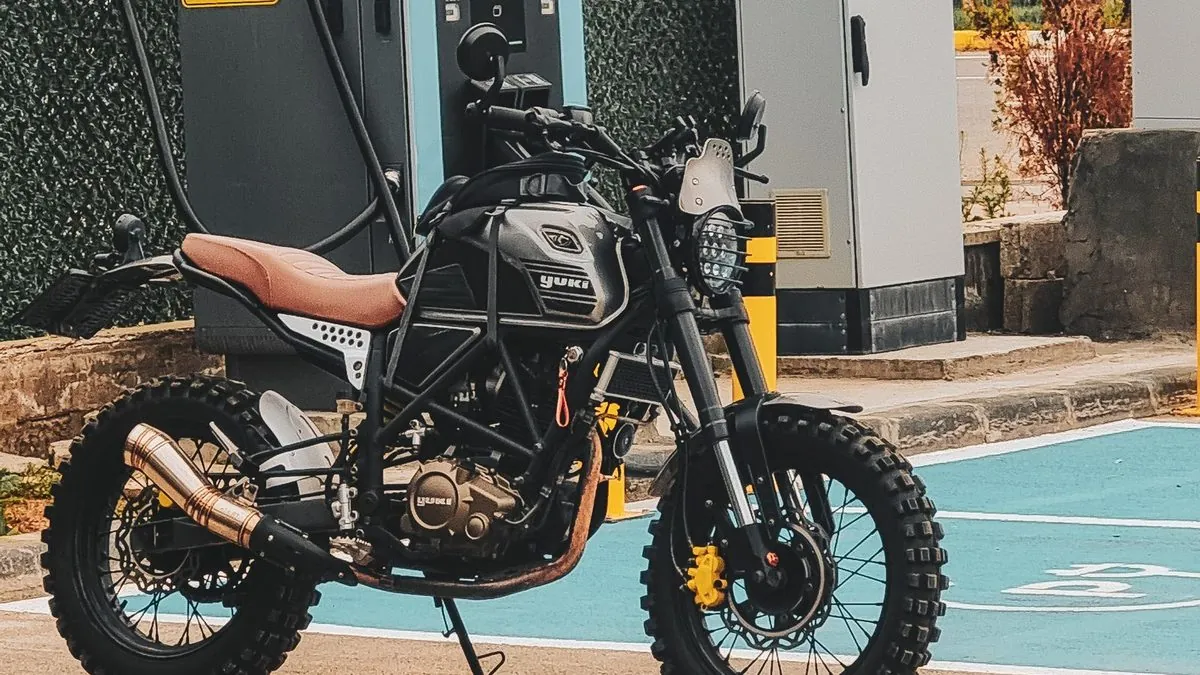
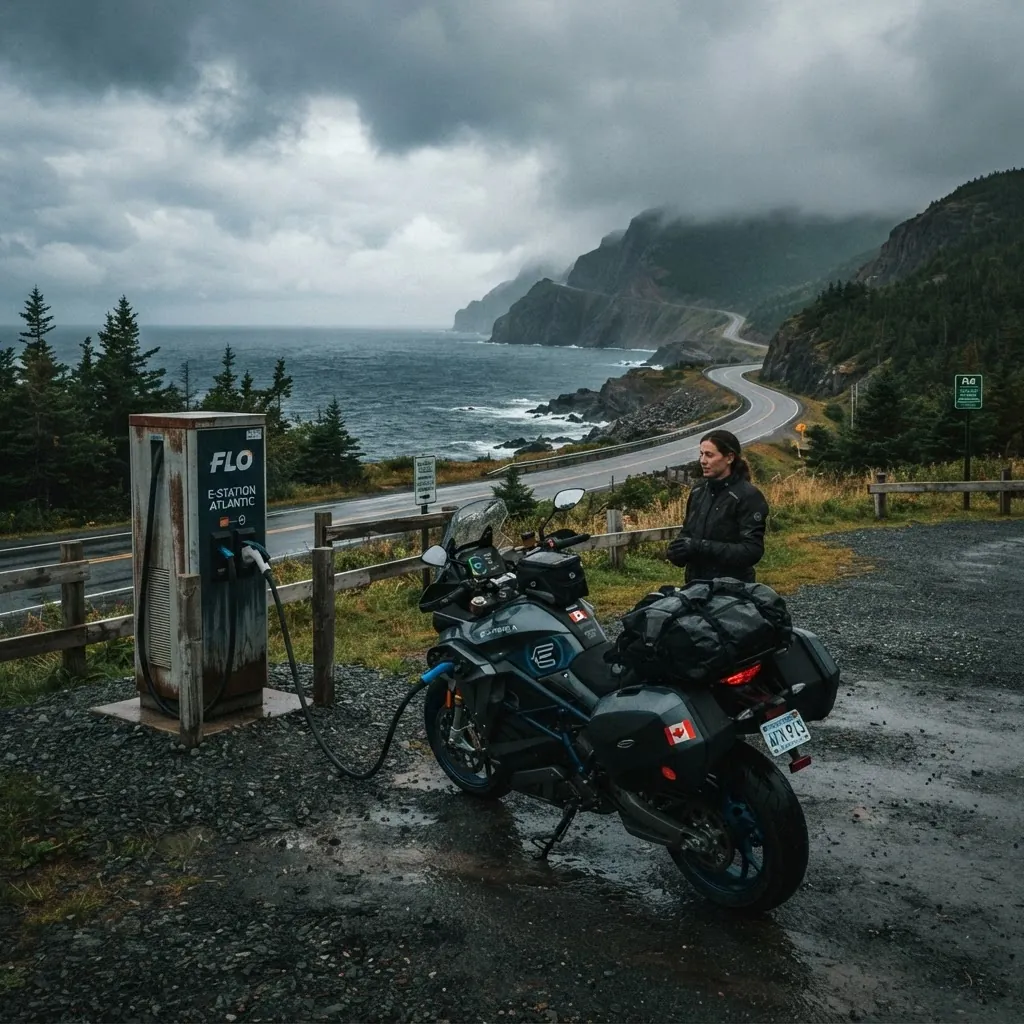
Electric motorcycles are getting better every year — more power, better range, faster charging. But "getting better" and "ready for Canadian touring" are two very different things. With searches for "electric motorcycle touring Canada" rising steadily, a lot of riders are asking whether 2026 is the year they can trade their gas bike for an electric one and still do cross-country trips.
The honest answer is no. Here's why, with real numbers.
The biggest barrier to electric motorcycle touring is range — not the marketing number, but the real-world number. Here's how motorcycle range actually works:
$16,499 USD (~$22,500 CAD)
15.4 kWh battery. Official city range: 146 miles (235 km). Highway range at 100 km/h (62 mph): approximately 90-110 km (55-68 miles). DC fast charge: 0-80% in 40 minutes, 0-100% in 60 minutes. 100 hp, 84 ft-lb torque.
That 146-mile (235 km) city range sounds reasonable — until you ride at highway speeds. Aerodynamic drag increases exponentially with speed, and a motorcycle with a rider has terrible aerodynamics. At 100 km/h (62 mph) on the highway, the LiveWire One's real-world range drops to roughly 90-110 km (55-68 miles). At 120 km/h (75 mph), expect 70-80 km (43-50 miles).
For context, a gas touring bike like the Indian Pursuit has a practical touring range of 390 km (242 miles) and refuels in 3-4 minutes. That's 5-6 hours of riding for 4 minutes of fueling. The ratio is fundamentally different.
Range wouldn't matter as much if chargers were everywhere. But in Canada, the charging infrastructure is concentrated along major corridors — the 401, the Trans-Canada Highway between major cities, and the Quebec-Windsor corridor.
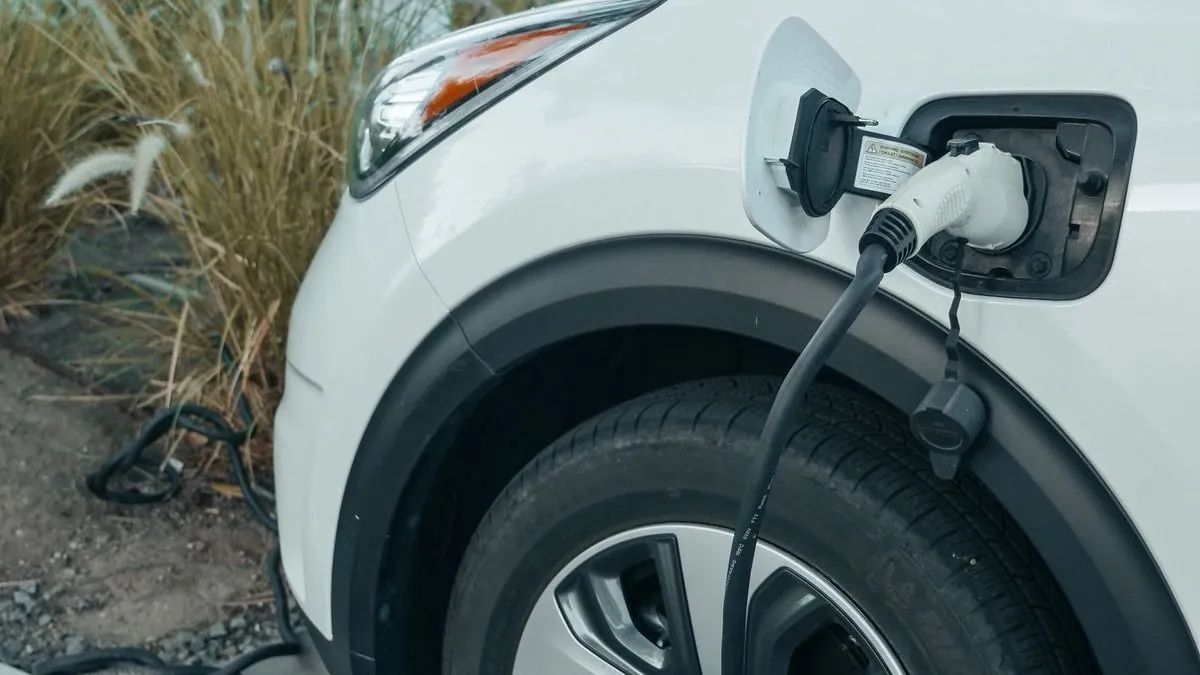
Here's what the charging map looks like for motorcycle touring routes:
| Route | DC Fast Chargers | Gap Between Chargers |
|---|---|---|
| Toronto to Montreal (QC-ON corridor) | Frequent | 50-80 km |
| Halifax to Moncton | Limited | 120-180 km |
| Moncton to Edmundston (Route 2) | Very limited | 200+ km |
| Trans-Canada through northern ON | Minimal | 250-400+ km |
| Cabot Trail, Cape Breton | Almost none | N/A |
| Newfoundland (TCH) | Sparse | 150-250 km |
The Maritimes and Atlantic Canada — where most of our touring routes live — are a charging desert outside the Halifax-Moncton corridor. A 200+ km gap between DC fast chargers is a non-starter for a bike with 90-110 km of highway range. You'd need Level 2 charging (4-6 hour stops) at every small-town charger you can find.
Canadian touring isn't just summer rides. Spring and fall touring — some of the best riding of the year — means temperatures between 0-15°C (32-59°F). Cold weather degrades electric motorcycle range by 30-40%.
At 5°C (41°F), a LiveWire One that delivers 110 km (68 miles) of highway range in summer drops to approximately 70-80 km (43-50 miles). At 0°C (32°F), expect 55-65 km (34-40 miles). That's barely enough to get between some chargers — and if you miss one, you're walking.
$22,500 CAD (~$16,499 USD)
The most established electric motorcycle in North America. 15.4 kWh battery, J1772 DC fast charging. Decent urban commuter. Poor touring bike — range and infrastructure make anything beyond 100 km (62 miles) from home a logistical challenge.
$17,000 CAD (~$12,499 USD)
10.5 kWh battery. Shorter range than the One — approximately 100 km (62 miles) city, less on highway. Lighter and more nimble. Still not a touring bike. Better as a second bike for urban commuting.
$35,000+ CAD (if available)
The best electric touring motorcycle on paper — 22 kWh battery, 200+ km (124+ miles) highway range, DC fast charging. The problem: Energica filed for bankruptcy in 2024 and availability is extremely limited. Parts and service are a major concern. Not a practical choice for a Canadian rider who needs reliability.
$28,000+ CAD
14.4 kWh (expandable to 18.2 kWh). Highway range approximately 120-140 km (75-87 miles) with the larger battery. Uses a proprietary charging system that's slower than J1772 — 2-3 hours for a full charge at a Level 2 station. No DC fast charging on most models. The lack of DC fast charging makes touring even harder.
Let's compare a real touring day — 400 km (249 miles) on the highway:
| Factor | Indian Pursuit (Gas) | LiveWire One (Electric) |
|---|---|---|
| Range per fill/charge | 390 km (242 mi) | 90-110 km (55-68 mi) |
| Fill/charge stops needed | 1 | 3-4 |
| Time per stop | 4 minutes | 40-60 minutes |
| Total stopped time | 4 minutes | 2-4 hours |
| Total trip time | ~5 hours | ~7-9 hours |
| Fuel/energy cost | ~$35 CAD | ~$12-15 CAD |
The electric bike costs less per kilometre — about 60% cheaper in fuel. But the time cost is enormous. A 400 km day trip that takes 5 hours on a gas bike takes 7-9 hours on electric. That's the difference between a day trip and an overnight.
Electric motorcycle touring in Canada will become practical when three things converge:
1. Range hits 250+ km (155+ miles) highway: This reduces charging stops to 1-2 per day, making the time penalty manageable. Current battery density suggests this is 3-5 years away for production bikes at reasonable prices.
2. DC fast chargers fill rural gaps: Canada needs DC fast chargers every 100 km (62 miles) along touring routes — not just along the 401 corridor. The federal government's EV infrastructure plan targets 2028-2030 for meaningful rural coverage.
3. Cold-weather range loss improves: Battery chemistry improvements (solid-state batteries, better thermal management) could reduce cold-weather range loss from 30-40% to 15-20%. Timeline: 4-7 years.
Electric motorcycles are genuinely great machines — for commuting. The instant torque, zero emissions, low maintenance, and quiet operation make them excellent urban vehicles. If your riding is 80% city and 20% highway, an electric bike is worth considering right now. But touring — the kind of riding this blog is built around — requires a fundamentally different capability that electric motorcycles simply don't have yet in Canada.
The technology will get there. The infrastructure will catch up. But in 2026, if you want to ride from Moncton to Muskoka, or from Halifax to the Cabot Trail, or across the Trans-Canada through northern Ontario — you need a gas bike. That's not anti-electric sentiment. It's just the math.
Affiliate Disclosure: As an Amazon Associate I earn from qualifying purchases. If you buy through these links, I may earn a small commission at no extra cost to you.