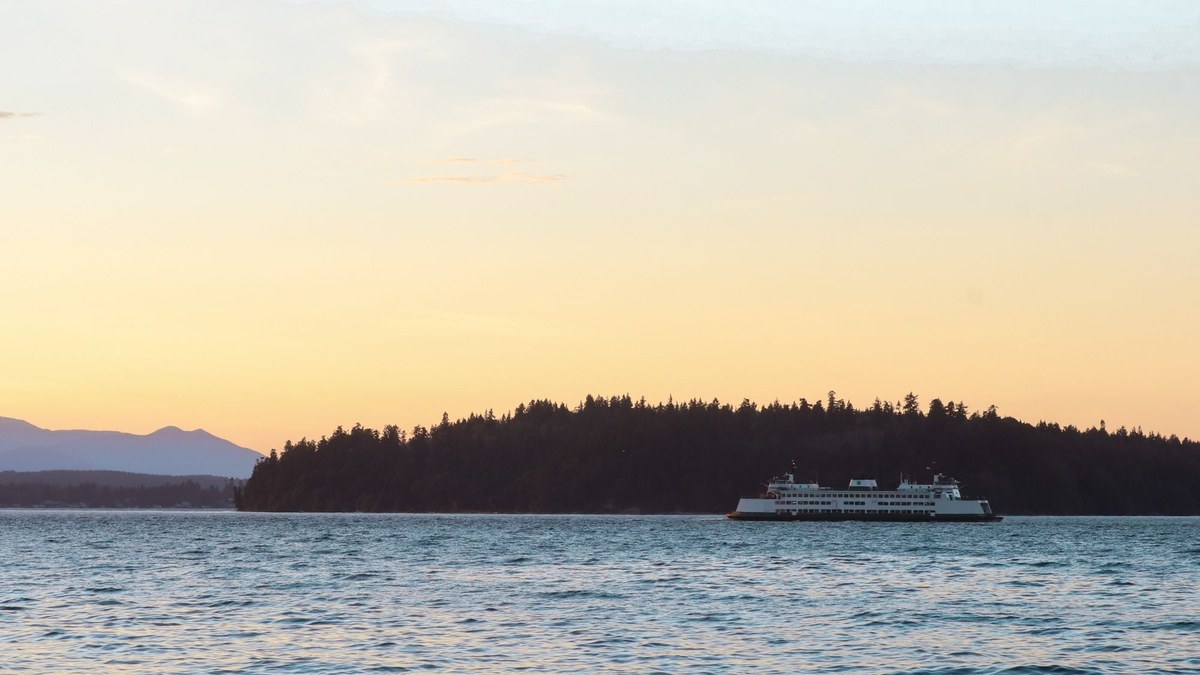

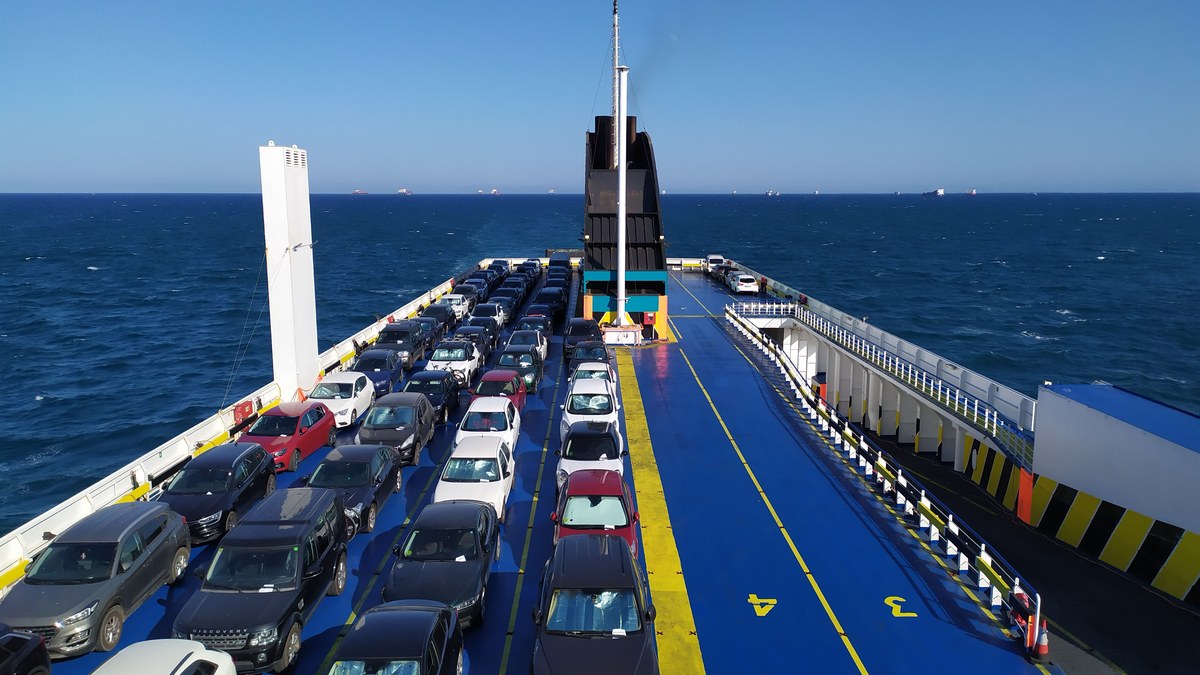
Photo: Bay Ferries / The CAT, official imagery
placeholder intro
What the Motorcycle Costs
Bay Ferries prices the motorcycle as its own line item, separate from the person riding it. These are the 2026 published rates, in US dollars:
| Vehicle | Spring / fall (May 14-June 15, Sept 24-Oct 14) | Summer (June 18-Sept 21) |
|---|---|---|
| Motorcycle | $87 | $116 |
| Motorcycle and sidecar | $103 | $137 |
| Motorcycle and trailer | $106 | $142 |
Two things worth noticing. First, the summer window costs $29 more each way for a solo bike, which is $58 on a return crossing. Second, a trailer adds $19 in spring and $26 in summer, so a bike towing a small trailer is paying close to the sidecar rate rather than an afterthought.
These figures are US dollars. If you are budgeting in Canadian, the number you write down depends entirely on the exchange rate on the day you book, so convert with the rate you actually get rather than a round number you remember.
The Rider Is a Separate Ticket
This is the part that catches people who add up the vehicle fare and stop. The passenger is booked and paid separately from the motorcycle:
- Adult passenger: $90 one-way spring and fall, $121 one-way in summer
- Port and security fee: $15 per person, each way
So a solo rider with a naked bike, in the shoulder season, one way, is $87 for the machine plus $90 for the human plus $15 for the port: $192 US. In peak summer that same one-way is $116 plus $121 plus $15, or $252. Return, doubled, and the summer crossing lands near $504 US before you have paid for a single night's accommodation in Bar Harbor or Yarmouth.
That is the number to compare against riding. If the plan is Nova Scotia to Maine and back, the ferry is buying you time, not saving you money.
Three and a Half Hours, and You Cannot Touch the Bike
The crossing runs 3.5 hours between Yarmouth and Bar Harbor. Motorcycles typically board first, which is the good news. The bad news is the rule that follows from it: passengers cannot access their motorcycle during the crossing.
Practical consequence: everything you need for three and a half hours comes off the bike with you. Jacket, gloves, phone, charger, medication, water. Do not plan on going back down to the vehicle deck for a layer because the wind picked up.
Bay Ferries advises arriving 60 to 90 minutes before departure. That is not padding on a border-crossing route, where check-in and document checks happen before you are waved onto the ramp.
Loading, Strapping and Riding On
The company's own motorcycle guide is specific about how the bike goes on, and it is worth reading before the day rather than at the ramp:
- You ride on and off. Riders ride the bike up the ramp and onto the deck at walking pace, following crew direction.
- Any passenger walks on and off separately, so the rider can manoeuvre at slow speed with nobody on the back.
- Helmet on whenever the motorcycle is moving, including the few metres on the ramp.
- Use the kickstand, never the centre stand.
- Leave the bike in gear, and tie the front brake lever back if you can.
- Tie-downs are required and the crew provides them.
- Bring a passport. This route crosses an international border, so it is not a domestic ferry with a casual ID check.
One line in Bay Ferries' own guide needs reading properly: "motorcycle passengers must walk on/off the ferry. This allows the driver to maneuver at slow speeds." That is about the pillion walking, not about pushing a bike up the ramp. Nobody walks a loaded touring bike up a steel ramp, and on a sailing with dozens of motorcycles boarding first, pushing them aboard one at a time would take hours. You ride it on at walking pace, the crew waves you into position, and the passenger you were carrying walks up separately so you are manoeuvring a bare bike.
The centre-stand rule surprises people who always park on the centre stand at home. On a moving deck with tie-downs pulling the bike down and forward, a centre stand is unstable and the crew will ask you to change it.
Planning for Next Season
The 2026 CAT season has closed: the fares page states the season has come to a close. So everything above is 2026 published pricing being used to plan 2027, and the figures should be re-checked against the fares page when next season's rates are posted. Seasonal dates shift year to year, and the spring/fall pricing window is worth planning around if your dates are flexible, since it is $29 cheaper each way on the bike alone.
If you are comparing this crossing against the Bay of Fundy routes, the maths is different in kind: The CAT is a time purchase between two countries, while the Fundy ferries are a shortcut within the Maritimes. My breakdown of what a Bay of Fundy loop actually costs covers that side, and the Newfoundland crossing in October piece covers the longer Marine Atlantic run.
For the full picture of what a trip in this region costs, including ferries, park entry and campsites, see what riding Atlantic Canada actually costs.
Frequently Asked Questions
How much is a motorcycle on The CAT ferry?
$87 one-way in spring and fall, and $116 one-way in summer, in US dollars, per Bay Ferries' published fares. A motorcycle with a trailer is $106 and $142 in the same windows.
Is the passenger fare included in the motorcycle fare?
No. The rider is booked separately: $90 one-way spring and fall, $121 one-way in summer, plus a $15 per-person port and security fee each way.
How long is the crossing?
Three and a half hours between Yarmouth, Nova Scotia and Bar Harbor, Maine.
Can I get to my motorcycle during the crossing?
No. Passengers cannot access their motorcycle during the crossing, so take everything you need with you when you leave the vehicle deck.
How early should I arrive with a motorcycle?
Bay Ferries advises arriving 60 to 90 minutes before departure. Motorcycles typically board first.
Do I need a passport?
Yes. The route crosses the Canada-US border, so a passport is required.
Can I stay on the bike while it is loaded?
No. You ride it on at walking pace while the crew directs you into position, and you get off once it is parked. Any passenger walks on separately so you are manoeuvring without a pillion. Helmet on whenever the bike is moving, kickstand rather than centre stand, and leave it in gear.
Sources
- Bay Ferries - The CAT fares. motorcycle, sidecar and trailer fares, passenger fares, port and security fee, season status.
- Bay Ferries - A guide to motorcycle travel with The CAT. 3.5-hour crossing, boarding order, arrival window, loading rules, passport requirement.