Why the Insta360 Luna Ultra and My iPhone 16 Pro Are My Off-Bike Cameras
The Luna Ultra has become my first-choice off-bike camera, even for tech reviews. My iPhone 16 Pro covers the moments when the Luna is not with me. Here is why this two-camera setup works.
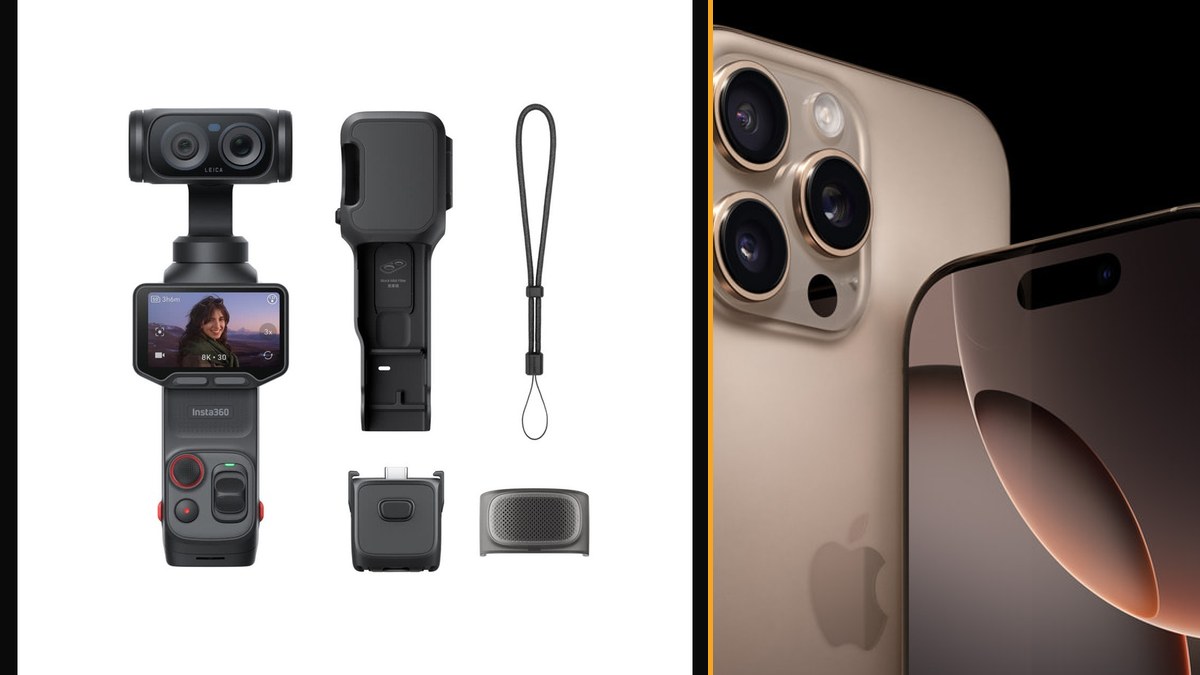
Image: Property of Insta360 and Apple. Official manufacturer photos combined for this comparison.
Table of Contents
- The short answer
- Why the Luna Ultra is my first choice
- Why it is crossing over to my tech channel
- How close is it to being my only camera?
- Why the iPhone 16 Pro still earns its place
- What I would reach for in each situation
- How I keep the two-camera workflow simple
- What I am not claiming
- My off-bike camera verdict
The short answer
When I get off the motorcycle, the Insta360 Luna Ultra is the camera I want in my hand. The iPhone 16 Pro is the one I know I already have in my pocket. That is not a ranking based only on a specification sheet. It is about what I actually reach for and what gets the shot without turning every stop into a production.
The Luna has become more than a travel accessory. I have even started using it for some tech-review videos on my other channel. The quality is that good, and it is so convenient to carry and move around that the usual reasons for leaving a dedicated camera behind get smaller. It is getting pretty close to being the only camera I need for off-bike work. “Pretty close” matters: it does not mean I am retiring every action camera, my Canon R6, or my phone.
Why the Luna Ultra is my first choice
The Luna Ultra is a dedicated camera with a stabilized gimbal and two lenses, co-engineered with Leica. Insta360 lists a 1-inch sensor on its wide camera, 8K recording, and a detachable two-inch OLED screen. Those features make sense on paper, but the reason I choose it is simpler: I can pick it up, walk to where the shot is, and frame something without organizing a big camera rig.
Being able to move freely changes the kinds of footage I can make. Think of a walking introduction at a destination, a smooth reveal of a motorcycle parked at a lookout, or a close detail of a piece of gear. The gimbal is designed to keep movement controlled while the dual-lens setup lets me switch between context and a tighter view. None of that requires the Luna to beat a larger camera at every technical test. It just has to make the good shot easier to get, more often.
The detachable screen can help when I need to see framing from a position that would be awkward with a fixed rear display. That is especially useful for solo filming. I would still choose the shooting position deliberately rather than assuming tracking or stabilization can rescue a poor composition.
Why it is crossing over to my tech channel
My motorcycle and tech channels have different subjects, but they share the same production problem: I need clear, engaging shots without wasting time between them. I have started using the Luna Ultra for some tech-review videos, not just off-bike travel material. That is the clearest sign of how much confidence I have in its quality.
A tech review needs more than one talking-head angle. It needs a product in context, a clean view of controls and ports, movement that shows size, and detail shots that tell viewers something useful. A camera I can carry across a room and reposition quickly fits that job. The Luna can move from a wider setup to a tighter product angle without me immediately reaching for a bigger rig.
That does not mean every shot in every review should come from one camera. For a fixed studio scene with specific lighting, lens, or audio needs, a larger camera can still have a role. My point is that the Luna has moved from “nice extra camera” to something I can consider at the start of a real review shoot. For a compact device, that is a big change in my workflow.
How close is it to being my only camera?
For much of my off-bike filming, close. An intro, some moving B-roll, detail shots, and a quick stand-up segment can all be planned around one portable camera. Fewer devices mean fewer batteries to check, fewer settings to match, and less hesitation about stopping to film. I can concentrate on what the scene is saying rather than which bag holds the correct camera.
But “almost” is not “always.” The Luna Ultra is a gimbal camera, not a camera I would treat like an action camera on the motorcycle. A moving bike needs a secure, weather-ready mounting strategy and equipment suited to vibration and exposure. There are also shoots where a dedicated camera with a particular lens, controlled audio setup, or long fixed recording session is the better tool. The Luna's strength is the size of the off-bike territory it covers, not an imaginary claim that it replaces every specialty camera.
Why the iPhone 16 Pro still earns its place
The phone wins a competition the Luna cannot enter if I left the Luna at home. My iPhone 16 Pro is just always with me. If I see a location, hear a useful point for a review, or want to capture a quick reaction before it disappears, availability beats a carefully packed camera that is somewhere else.
The phone is not a consolation prize. Apple specifies a 48-megapixel main Fusion camera, a 48-megapixel ultra-wide, and a 5x optical telephoto on the iPhone 16 Pro. It supports 4K Dolby Vision recording up to 120 frames per second with the main Fusion camera, plus Log and ProRes options. Those are real tools when I need them. But I do not need to use the most demanding format for every clip. A quick, well-framed standard video that makes it into the final edit is more useful than a giant file shot in the wrong setting.
There is also something freeing about using a phone for a short note-to-camera, a vertical update, a thumbnail reference, or a still image. It is already charged, connected, and ready to share. The Luna is the camera I choose when I know I am filming; the iPhone is the safety net that keeps me from missing a moment when I did not know I would be filming.
What I would reach for in each situation
| Situation | My first choice | Why |
|---|---|---|
| Planned off-bike video or walking sequence | Luna Ultra | Dedicated gimbal camera that is easy to carry and reposition. |
| Selected tech-review segments and product B-roll | Luna Ultra | Its quality and portability now make it a genuine review-video option. |
| Unexpected moment or quick update | iPhone 16 Pro | It is already with me, so there is no setup barrier. |
| Photo, reference image, or quick social post | iPhone 16 Pro | Capture, select, and share from the same device. |
| Continuous on-bike footage | Action camera | A gimbal camera and everyday phone are not substitutes for a properly mounted riding camera. |
This is a decision framework, not a claim that the devices were tested side by side in a controlled lab. The priorities are access, movement, the type of shot, and how the footage will be used. Good camera choices begin with the scene, not a maximum-resolution number.
How I keep the two-camera workflow simple
Using two cameras only helps if the footage can be assembled without a headache. The practical approach is to choose a common frame rate for ordinary clips, keep important settings predictable, and avoid mixing a heavily processed phone look with a flatter camera profile unless I intend to colour-match them. Apple Log on the iPhone and Insta360's I-Log are options, not requirements for every stop. Use them when the grading workflow justifies the extra work.
Audio deserves the same attention as image quality. If I am filming a spoken segment, I need to know which microphone is actually being recorded and listen to a short test. Wind, traffic, and a crowded room can wreck a useful explanation on either camera. Stabilization cannot repair clipped speech or a disconnected microphone.
At the end of a filming day, a simple folder structure helps: one folder for the Luna, one for the phone, and clear names for the project or date. Keep the source files intact until there is a verified backup. A phone clip is not “backed up” just because a cloud-sync icon appeared, and a camera card is not safe once it has been formatted for the next shoot.
For a one-person workflow, convenience is not a luxury feature. It determines whether I capture the second angle, try a different framing, or bring a camera at all. That is why the Luna Ultra keeps rising to the top of my off-bike kit, while the phone remains a genuinely useful companion rather than a redundant second device.
What I am not claiming
I am not saying the Luna Ultra replaces an action camera while riding, or that a phone should be operated on a moving motorcycle. I am not claiming measured battery-life, low-light, autofocus, or image-quality wins over another device from a head-to-head test in this article. This is an explanation of my camera choices and how I am actually using them.
I also would not tell every creator to buy a dedicated gimbal camera. If the phone you already own gets the job done, you may not need another device. If you shoot off-bike video frequently and find a phone awkward for moving shots or deliberate framing, the Luna makes much more sense. The strongest case for it in my kit is not that it can record 8K. It is that I want to take it with me, and I trust what I can make with it.
My off-bike camera verdict
The Insta360 Luna Ultra is now my first choice when I step off the bike. Its quality has convinced me to use it for some tech reviews too, and its portability makes moving between shots feel easy. It is remarkably close to covering everything I need from an off-bike video camera.
The iPhone 16 Pro stays in the picture because I always have it. When there is no time to fetch the Luna, a camera in my pocket beats the one I wish I had carried. Together they make a smaller, more practical kit: choose the Luna when I set out to film, use the iPhone when life hands me a shot, and leave the on-bike work to the equipment built for it.
Related Articles
Insta360 Luna Ultra ReviewMy deeper look at the dedicated camera and its features.Do Creators Still Need a Smartphone Gimbal?
When dedicated stabilization is worth carrying.Insta360 Ace Pro 2 vs GoPro HERO13 Black
Which action camera makes sense when the filming moves onto the bike.
FAQ
- Insta360 Luna Ultra product page
- Insta360 Luna series announcement
- Apple iPhone 16 Pro technical specifications
- Apple iPhone 16 Pro newsroom photo
Opinions about camera preference and use are Greg’s. Product specifications are attributed to the manufacturers, not independent lab tests.