Sony Alpha 7R VI Review: 67MP Resolution King for 2026
Sony's A7R VI packs 66.8MP into a fully-stacked sensor, shoots blackout-free at 30fps, records 8K video for up to 120 minutes, and won EISA's Professional Camera of the Year. At $4,499 USD, it is the highest-resolution Alpha ever — and the most expensive. Here is what you get for the money.
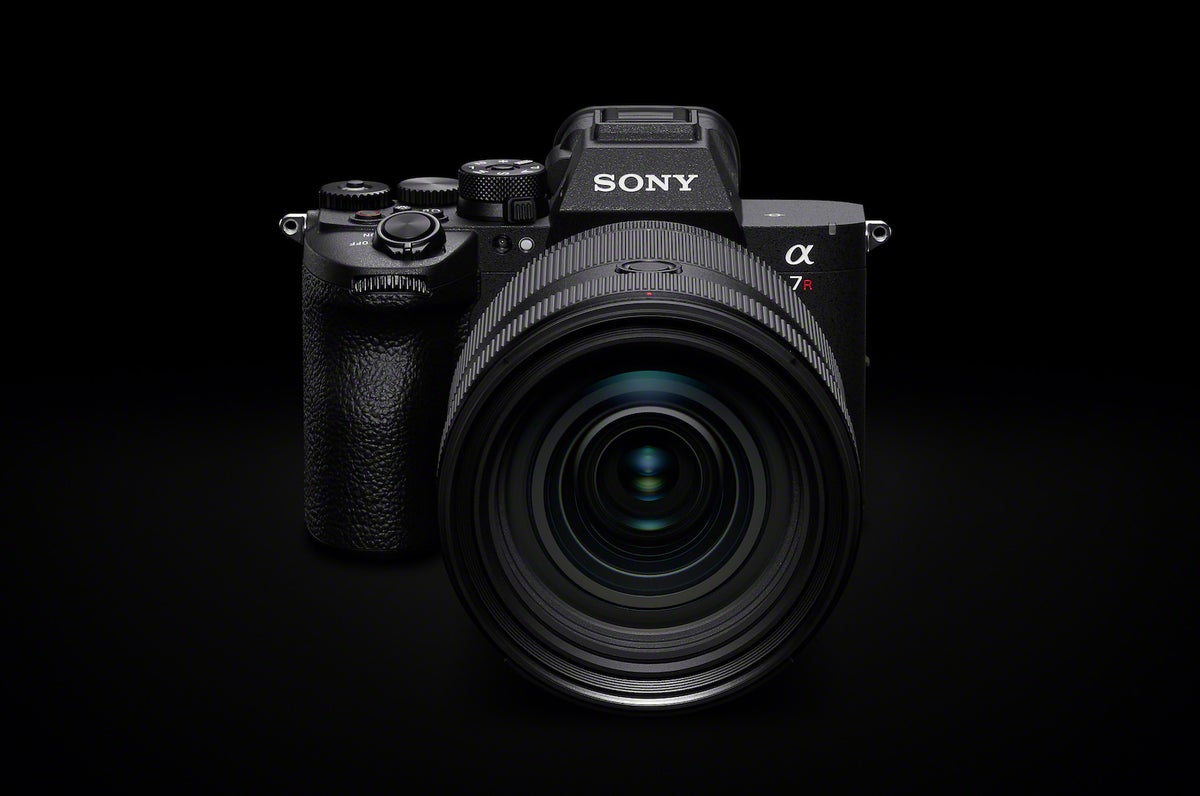
Image: Property of Sony Electronics Inc.
Table of Contents
The A7R VI at a Glance
The Sony Alpha 7R VI (ILCE-7RM6) launched on May 13, 2026, as the sixth generation of Sony's high-resolution flagship line. The headline number is 66.8 megapixels — a jump from the A7R V's already-impressive 61MP. But what makes the A7R VI special is not just the pixel count. It is the fact that this 66.8MP sensor is fully stacked, meaning the memory chips are bonded directly to the sensor for dramatically faster readout.
That stacked design enables something no previous A7R could do: blackout-free continuous shooting at 30 frames per second. The A7R V topped out at 10fps with viewfinder blackout between frames. The A7R VI streams a live feed to the viewfinder while simultaneously capturing 66.8MP images at 30fps. That is a generational leap, not an incremental upgrade.
The 66.8MP Stacked Sensor
The A7R VI uses a back-illuminated fully-stacked Exmor RS CMOS sensor with approximately 66.8 effective megapixels. Sony claims up to 16 stops of dynamic range and reduced noise in the mid-sensitivity range. The stacked architecture means the sensor reads out approximately 5.6x faster than the A7R V, which is what enables the blackout-free 30fps shooting.
For context, 66.8MP gives you files that can be printed at 29 x 19 inches at 300 DPI. That is large-format print territory — billboard-quality from a single frame. For landscape, architecture, and studio photographers who need maximum detail, the A7R VI delivers more resolution than any other full-frame camera on the market except medium format systems.
Sony also introduced a new feature called Dual Gain Shooting, which optimizes sensor performance to reduce noise without losing shadow detail. This is a first for the Alpha series and addresses a common concern with high-resolution sensors — that more megapixels mean more noise.
Speed & Autofocus
The BIONZ XR2 engine is new for this generation, with an integrated AI processing unit. Sony says it delivers up to 60 AF/AE calculations per second with AF/AE tracking during 30fps continuous shooting. The Real-time Recognition AF+ system uses skeletal-based human pose estimation — it does not just track a face, it tracks body position to predict movement.
This matters for sports and wildlife photographers who need high resolution AND high speed. Previously, you had to choose: the A9 III for speed (120fps global shutter, 24.6MP) or the A7R V for resolution (61MP, 10fps). The A7R VI bridges that gap with 66.8MP at 30fps blackout-free. It is not as fast as the A9 III, but it is the first camera to combine this level of resolution with this level of speed.
8K Video & Pro Features
The A7R VI records 8K at 30p with 8.2K oversampling for improved detail. It also shoots full-frame 4K at 60p and 120p without any crop. Sony's heat management system allows uninterrupted 8K recording for up to 120 minutes — significantly longer than most 8K-capable cameras, which typically overheat after 30-40 minutes.
The new 9.44M dot OLED viewfinder is a standout. It offers a DCI-P3 equivalent color gamut and 10-bit HDR, with brightness approximately three times higher than conventional EVFs. In bright outdoor conditions — where many EVFs become hard to see — the A7R VI's viewfinder remains clear and usable.
Sony also introduced a new battery system. The NP-SA100 has 2670 mAh capacity (about 1.3x the power of the previous NP-FZ100), good for up to 710 still images via the LCD or 600 via the viewfinder. The battery includes a deterioration indicator so you know when it is time to replace it.
The A7R VI also supports Sony's Camera Authenticity Solution with C2PA standard compliance, which verifies that images and videos were captured with a real camera and not AI-generated. This is increasingly relevant in 2026 as AI image generation becomes more sophisticated.
Full Spec Table
| Feature | Sony Alpha 7R VI |
|---|---|
| Sensor | 66.8MP full-frame stacked Exmor RS CMOS |
| Processor | BIONZ XR2 with AI processing unit |
| Burst | 30 fps blackout-free (electronic shutter) |
| AF calculations | 60 per second with tracking |
| Max video | 8K30p (8.2K oversampled), 4K120p (no crop) |
| 8K record limit | 120 minutes continuous |
| IBIS | 8.5 stops (center), 7.0 stops (periphery) |
| Dynamic range | Up to 16 stops |
| Viewfinder | 9.44M dot OLED, DCI-P3, 10-bit HDR |
| Screen | 4-axis multi-angle LCD |
| Memory cards | Dual slots: CFexpress Type A + UHS-II SD |
| Battery | NP-SA100 (2670 mAh), 710 shots (LCD) |
| Body | Magnesium alloy, dust/moisture resistant |
| Price (body) | $4,499.99 USD / CAD $5,999.99 |
| XLR-A4 adaptor | $779.99 USD / CAD $1,089.99 |
Price & Value
At $4,499.99 USD (CAD $5,999.99), the A7R VI is expensive. It costs $700 more than the Canon R5 Mark II ($3,799) and $2,200 more than the Canon R6 Mark III ($2,799). The only full-frame camera that costs more is Sony's own A1 II at $6,499.
But the A7R VI is not competing with mid-range cameras. It competes with the Canon R5 Mark II (45MP, 30fps, 8K) and the Nikon Z8 II (rumored 45.7MP). Compared to the R5 Mark II, the A7R VI offers 22MP more resolution, blackout-free shooting (the R5 Mark II has viewfinder blackout at 30fps), and longer 8K recording time. The R5 Mark II has Canon's Dual Pixel AF, which many prefer, and is $700 cheaper.
The A7R VI also won the EISA Professional Camera 2026-2027 award, which describes it as enabling professional photographers "to deliver their projects and assignments to the highest standard." The EISA panel highlighted the outstanding image quality, exceptionally wide dynamic range, and the camera's dual card slots accepting both CFexpress Type A and UHS-II SD cards.
The Verdict
The Sony A7R VI is the highest-resolution full-frame camera you can buy that also shoots at professional speeds. The 66.8MP stacked sensor combined with 30fps blackout-free shooting is a combination that did not exist before this camera. If you are a working professional who needs both maximum resolution AND speed — a landscape photographer who also shoots wildlife, or a studio photographer who also covers events — the A7R VI eliminates the need for two camera bodies.
At $4,499 USD, it is not cheap. But for what it delivers, the price is justified. The Canon R5 Mark II is $700 less and offers similar speed, but 22MP less resolution. The Nikon Z8 II is rumored but not confirmed. And nothing else on the market combines 66.8MP with 30fps blackout-free shooting.
Who should buy it: Working professionals who need maximum resolution and speed in one body. Landscape photographers who also shoot wildlife. Studio photographers who also cover events. Anyone who currently owns both a high-resolution body and a high-speed body and wants to replace both with one camera.
Who should skip it: Enthusiasts who do not print large or crop heavily. The A7 V at $3,299 CAD offers 33MP, 30fps, and excellent autofocus for $2,700 less. For most non-professional shooters, the A7 V is the better value.