MacBook Pro Mini-LED vs PROLED: Is the 400 USD Upgrade Worth It?
Both MacBook Pro models use the same M5 chips. The difference is the screen, and exactly 400 USD. A straight comparison of what PROLED adds and who needs it.
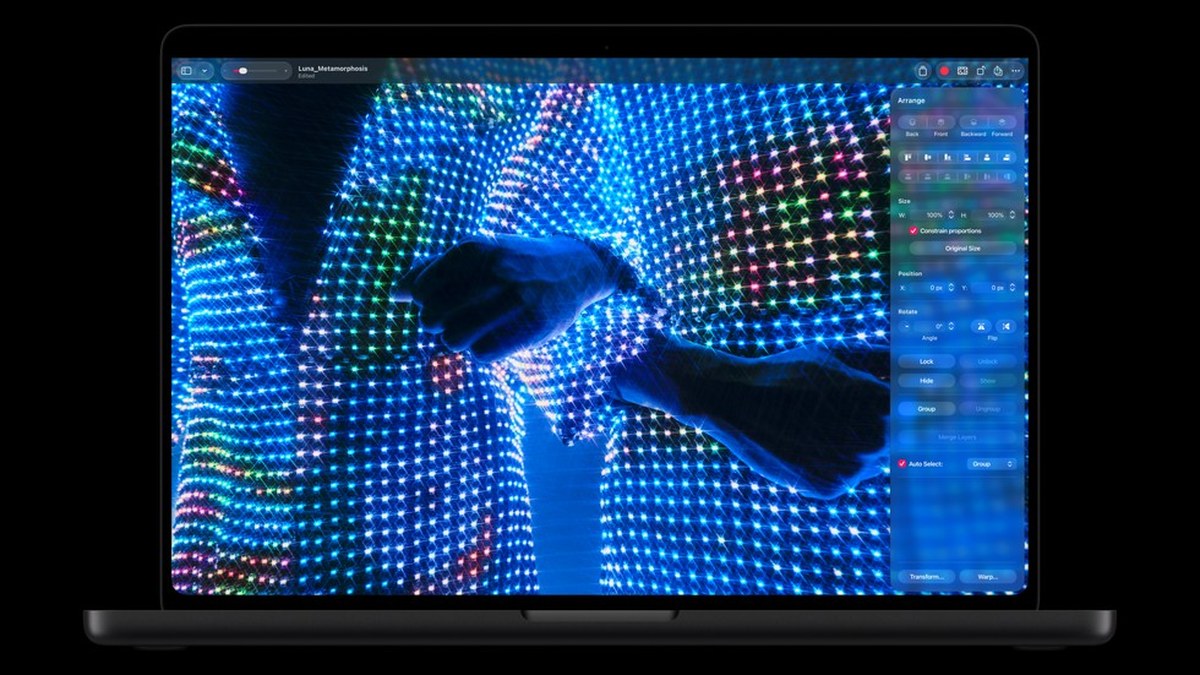
Image: Property of Apple
In this article
The four hundred dollar question
Apple is now selling two MacBook Pro laptops with the same M5 Pro and M5 Max chips, the same battery, and the same ports, at prices that differ by exactly 400 USD. The 14-inch with M5 Pro is 2,499 USD in the mini-LED version and 2,899 USD with the new PROLED XDR display. The 16-inch goes 2,999 USD and 3,399 USD. The M5 Max models follow the same pattern at 4,099 and 4,499 USD for the 14-inch, and 4,399 and 4,799 USD for the 16-inch. So the decision is not which laptop, it is whether the screen is worth 400 USD. That is the whole question.
What the mini-LED display actually is
The mini-LED panel Apple calls Liquid Retina XDR is genuinely excellent and it is not the compromise people imagine when they hear LCD. Apple rates it at a 1,000,000:1 contrast ratio, up to 1,000 nits of sustained full-screen brightness, and up to 1,600 nits of peak brightness for HDR content, with ProMotion adaptive refresh from 10Hz up to 120Hz and P3 wide colour. SDR brightness on the current generation is rated up to 1,000 nits for outdoor use. That peak HDR number is the same 1,600 nits Apple has shipped since 2021, and it is still brighter than almost any laptop you can buy from anyone else.
What PROLED adds
The PROLED XDR panel is tandem OLED, two self-illuminating pixel layers, and the differences that matter are specific. Peak brightness reaches 2,000 nits in both HDR and SDR, which is the number that changes how the screen behaves in a bright room rather than just in an HDR movie. Contrast goes from 1,000,000:1 to 10,000,000:1 with true blacks and no blooming around highlights. Colour covers P3 and Adobe RGB in a single default preset with more than 80 percent Rec. 2020 coverage for HDR grading, which the mini-LED panel does not do. The nano-texture option is now etched into the cover glass rather than applied as a film. And the panel responds to touch, which no mini-LED MacBook Pro does.
Where the money disappears
Two things about the PROLED upgrade are worth saying plainly. First, it does not make the laptop faster. Both machines have M5 Pro or M5 Max, both offer up to 128GB of unified memory and 16TB of storage, and both deliver the same battery estimates per configuration, up to 24 hours of streaming video on the 16-inch M5 Pro. Second, the 400 USD is only the entry ticket. If you want the nano-texture glass, more memory, or the 16TB SSD, you are stacking on top of an already higher base. The real-world gap between a mid-spec mini-LED machine and a comparable PROLED machine is often closer to 700 or 800 USD.
Who should pay it
Pay the 400 USD if your work is judged on a screen. Colourists and photographers get a reference-grade panel with Adobe RGB and 2,000 nits, which is the difference between guessing and knowing on location. Video editors grading HDR get the Rec. 2020 coverage and the contrast. Designers and illustrators get touch for drawing, which is the one capability the mini-LED model cannot offer at any price. Anyone who works outdoors or in bright rooms gets a screen that stays readable at 2,000 nits of SDR, which is a genuine daily difference rather than a spec sheet line.
Who should keep the 400 USD
Skip it if your MacBook Pro is a text and timeline machine. On code, documents, email and timeline editing, the mini-LED panel is already one of the best laptop displays made, and nobody has ever described it as dim. Skip it if you are on a budget and choosing between a better screen and more memory or storage, because memory and storage cannot be added later and the display cannot be removed. And skip it if you are coming from an M1 Pro or later machine that still does your work, because the chips in both of these laptops are the same silicon as last generation.
The Canadian decision
None of these figures are Canadian prices, and Apple Canada does not price by conversion. Check apple.com/ca for both the mini-LED and PROLED configurations before deciding, because the gap in Canadian dollars will not be a clean 400 and the education and business channels price them differently. The one certainty is the structure: Apple is keeping the mini-LED models on sale alongside the new ones, so the cheaper option is not going away. That means you can wait for reviews of the PROLED panel in early November without losing the ability to buy the model you want.
Frequently Asked Questions
Is the PROLED display worth 400 USD more than mini-LED?
It is worth it if your work depends on colour accuracy, HDR grading, or working in bright light, or if you want touch. For text, code and general use, the mini-LED display is already excellent and 400 USD is hard to justify.
Does the PROLED MacBook Pro have a faster chip?
No. Both the mini-LED and PROLED models use the same M5 Pro and M5 Max chips, with the same memory and storage ceilings and the same battery estimates.
How much brighter is PROLED than mini-LED?
Mini-LED peaks at 1,600 nits for HDR content with 1,000 nits sustained full-screen. PROLED reaches 2,000 nits in both HDR and SDR, with a 10,000,000:1 contrast ratio.
Can I still buy the mini-LED MacBook Pro?
Yes. Apple is selling the mini-LED models alongside the new PROLED models, starting at 2,499 USD for the 14-inch M5 Pro and 2,999 USD for the 16-inch.
What does PROLED add besides brightness?
Adobe RGB coverage alongside P3 in one preset, more than 80 percent Rec. 2020 for HDR work, true blacks without blooming, nano-texture etched into the glass, and touch support.