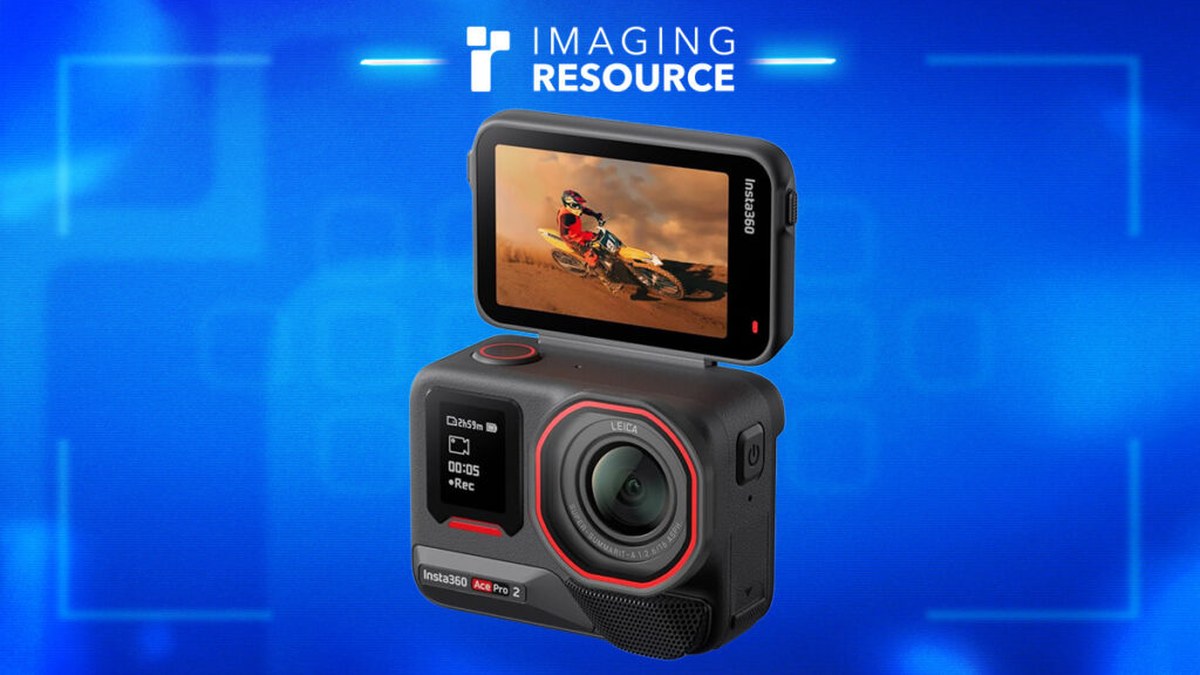


Photo: illustrative archive image, gregtoope.com
The question riders ask before a long trip is rarely about runtime in the abstract. It is how many packs go in the tank bag. The answer is arithmetic, not opinion, and it comes down to two published numbers per camera: minutes of recording per battery in the mode you will actually use, and minutes of charging to get a pack back. Everything below is drawn from Insta360's and GoPro's own published specifications, with prices in CAD and temperatures in both Celsius and Fahrenheit.
The Arithmetic Nobody Runs
Three numbers decide your packing list, and only one of them is a spec.
- Minutes of recording per pack in your chosen mode, at 77°F (25°C), screen off, Wi-Fi on.
- Minutes of charging per pack on a 30W PD3 adapter, which is the supply every fast-charge figure assumes.
- How many minutes you actually record across the day, which is always far less than the hours you spend riding.
The third number is the one riders get wrong, and it is the one that saves them the most weight. A six-hour ride is not six hours of footage. It is a few minutes at each stop, a couple of corners you wanted, and a stretch left running by mistake at a fuel stop. Insta360 publishes about 140 minutes of 8K30 on a single X6 Xtreme pack, and most riders assume that means they need three of them. It usually means they need one, and a second only because cold and forgetfulness are real.
The spec table gives you a maximum, not a plan. Record the actual minutes on one ordinary ride before you buy a third battery.
What Each Mode Costs You in Packs
This is Insta360's own X6 spec table, measured with the screen off and Wi-Fi on at 77°F (25°C). The spread is more than two and a half times between the cheapest and the most expensive setting, so your mode choice changes the packing count more than any accessory will.
| Mode (screen off, Wi-Fi on) | Runtime per pack | Packs for 120 min recording | Packs for 300 min recording |
|---|---|---|---|
| Endurance 6K24 | about 200 min | 1 | 2 |
| 4K30 | about 190 min | 1 | 2 |
| 6K30 | about 170 min | 1 | 2 |
| 8K30 | about 140 min | 1 | 3 |
| PureVideo 8K30 | about 95 min | 2 | 4 |
| 6K60 | about 90 min | 2 | 4 |
| 8K50 | about 79 min | 2 | 4 |
The pattern is not the one people expect. The highest resolution is not the most expensive setting and the sharpest one is not the cheapest. Endurance mode exists precisely for the rider who wants the most minutes out of the fewest packs, at a resolution that still holds up on a motorcycle mount.
Two packs also come in two capacities, and the label is easy to miss: the Xtreme Battery shipped in the box is 2,600 mAh, while the optional Lite Battery is 1,300 mAh. The Lite is half the capacity, so it is a top-up rather than a shift, and any packing count based on Xtreme packs needs doubling if the spares are Lite.
Cold Is What Actually Ends the Day
Every runtime figure above is a 77°F (25°C) number. An Atlantic Canada November morning is not, and lithium-ion chemistry slows as the pack gets cold, which raises internal resistance and makes the camera read a healthy battery as a flat one. Nothing in the pack is damaged. The day ends early anyway.
GoPro publishes the clearest cold number in the category: the Enduro battery for the HERO13 Black is rated to operate at temperatures as low as 14°F (−10°C), and GoPro says it carries 10% more capacity than the standard pack it replaced. That 14°F (−10°C) figure is the number to plan around, because it is roughly where a Canadian shoulder-season ride stops being a maybe.
The practical response is not more batteries. It is where you carry them. A pack in a tank bag or a jacket pocket stays closer to body temperature and holds its voltage; the same pack in an unheated top box overnight gives you a camera that dies at 80% on the first shot. Warming a cold pack back up restores almost all of its capacity, so a dead camera at noon is often a warm pocket away from working.
Charging Is the Loop That Makes One Pack Enough
The charge loop is what turns two batteries into a full day, and the spec assumes a supply most bikes do not have. Insta360 publishes about 24 minutes to 80% and about 35 minutes to 100% on the X6, measured with a 30W adapter that supports PD3. Change the adapter and the number stops being a promise.
| Supply | Delivered | What it buys you |
|---|---|---|
| 30W PD3 adapter | 30W | 80% in about 24 min, 100% in about 35 min |
| Power bank, 15–18W output | 15–18W | a partial charge, not the spec figure |
| Bike socket, 5V 2A | 10W | hours, not minutes |
| Bike socket, 5V 1A | 5W | barely ahead of what the camera uses while recording |
A USB socket wired into a motorcycle accessory circuit is rarely a 30W PD port. Most are 5V at 1A or 2A, and they hold that voltage rather than negotiating, which is 5W to 10W against the 30W the spec assumes. Capacity on the pack label does not fix it either: plenty of power banks advertise a large number and then cap output at 15W or 18W.
The comparison with older cameras is a useful test of your existing gear. The X5 reaches 80% in about 20 minutes on a 9V/3A supply and the X4 takes about 38 minutes on 9V/2A. If you already own a charger that fast-charged an X5, it will almost certainly charge an X6 well, because 9V/3A and 30W PD overlap. The cheap dual-port brick in the glovebox will not.
The Packing Plan by Ride Length
Here is the whole thing as a count, assuming Endurance or 4K30 for most of the ride and a camera that is switched off between stops rather than left running.
| Riding day | Realistic record time | Packs | Charge plan |
|---|---|---|---|
| 3–4 hours, summer | 45–70 min | 1 | none needed |
| 6 hours, summer | 90–140 min | 2 | swap at lunch |
| 6 hours, near freezing | 90–140 min | 3 | packs in a jacket pocket, swap early |
| Full day, 8–10 hours | 150–220 min | 3 | 30W PD adapter at the midday stop |
Two habits do more than a third battery. The first is switching the camera off at every stop rather than trusting it to idle, because a camera left running at a fuel stop is the single most common way riders lose half a pack. The second is charging off the camera rather than on the bike: 24 minutes at a coffee shop with the camera off beats two hours plugged into a 10W bike socket while recording, both in charge gained and in heat.
Cold then becomes the tiebreaker. Below about 5°C (41°F) add one pack to whatever the table says, and carry every spare somewhere that stays warm. That is a smaller, cheaper correction than buying batteries to solve a temperature problem.
Frequently Asked Questions
How many Insta360 X6 batteries do I need for a six-hour ride?
Two Xtreme packs covers a typical six-hour day if you record in Endurance or 4K30 and switch the camera off between stops. One pack buys about 190 to 200 minutes in those modes at 77°F (25°C), which is more than most riders actually record in a day.
Does the X6 Lite Battery count the same as the Xtreme?
No. The Xtreme Battery shipped with the camera is 2,600 mAh and the optional Lite Battery is 1,300 mAh, so the Lite gives roughly half the runtime. A packing count built on Xtreme packs needs doubling if your spares are Lite packs.
How long does an X6 battery take to charge?
About 24 minutes to 80% and about 35 minutes to 100%, measured on a 30W adapter supporting PD3. A 5V/2A bike socket delivers about 10W, so it turns those minutes into hours.
Why does my camera die at 80% in cold weather?
Cold slows lithium-ion chemistry, which raises internal resistance and makes the camera read a healthy pack as flat. Nothing is damaged and warming the pack restores almost all of its capacity. Carry spares in a jacket pocket rather than a cold top box.
What is the GoPro HERO13 Enduro battery rated for in the cold?
GoPro rates the Enduro battery for the HERO13 Black to operate at temperatures as low as 14°F (−10°C), and says it carries 10% more capacity than the standard pack. Plan around that figure as the limit on a cold ride rather than a comfort margin.
Is 8K worth the runtime cost on a motorcycle trip?
Usually not for a full day of riding. 8K30 runs about 140 minutes per pack against about 200 in Endurance 6K24, so it costs you a third of your recording day for footage you will mostly downscale anyway.
Sources
- Insta360 X6 hardware specifications. Runtime per mode, Xtreme 2,600 mAh and Lite 1,300 mAh capacities, and 24/35 minute charge figures with a 30W PD3 adapter.
- Insta360 X6 online manual. Mode names and recording settings used in the tables above.
- GoPro Enduro battery. Operating temperature down to 14°F (−10°C) and the capacity gain over the standard pack.