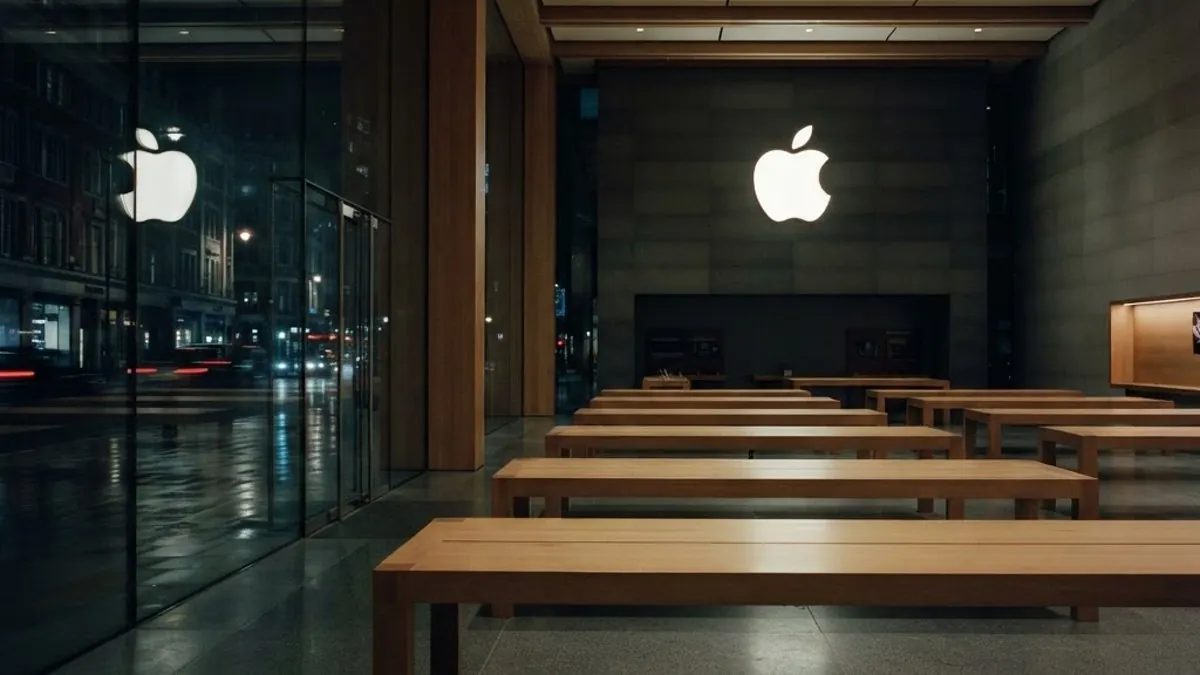
Apple Retail: From Genius Bar to Sales Floor — What Went Wrong and What Comes Next
I spent over 11 years at Apple as a Creative. We lived and breathed Apple. Now I walk in and get more wrong information than I ever gave out — and I'm not the only one saying it. Here's what happened to Apple Retail, and why it has to change.
Table of Contents
- How It Started: Steve Jobs and Ron Johnson's Big Bet
- The Golden Age: When Staff Lived Apple
- The Shift: From Passion to Process
- Apple Retail by the Numbers
- The Problem: I've Lived It
- Online vs. Physical: Where Apple Retail Fits Now
- What Has to Change
- The Future of Apple Retail
- Frequently Asked Questions
How It Started: Steve Jobs and Ron Johnson's Big Bet
On May 19, 2001, Apple opened its first two retail stores — one at Tysons Corner in McLean, Virginia, and another at the Glendale Galleria in Glendale, California. The tech press was skeptical. Gateway had just failed at retail. The dot-com crash was fresh. Why would a computer company open physical stores?
Steve Jobs had hired Ron Johnson from Target in 2000 to build something that had never existed: a retail experience where the store itself was the product. Johnson came up with the Genius Bar — a tech support station inspired by the concierge desk at a hotel. Jobs reportedly called the idea "idiotic" at first, but Johnson won him over.
It worked. By the time Johnson left in 2011, Apple had opened over 350 stores and had become the most profitable retailer per square foot on the planet. The stores weren't just selling products — they were selling a feeling. You walked in and felt like you were part of something.
The Golden Age: When Staff Lived Apple
I spent over 11 years at Apple as a Creative — the role where your job was to know the Mac lineup inside and out. Final Cut Pro, Logic Pro, the entire iWork and iLife suite, macOS itself. You ran one-on-one training sessions, group workshops, and you were the person customers came to when they had questions that went beyond "which iPhone should I buy?"
The people I worked with didn't just work at Apple. They were Apple. They used Macs at home. They edited video in their spare time. They could tell you the difference between a Mid 2012 MacBook Pro and a Late 2012 model from across the room. They had opinions about FireWire vs. Thunderbolt and they'd debate them on break.
The hiring was selective. The training was intense. And the culture — at least in the early days — felt like you were part of a mission, not a sales floor.
Apple still lists the Creative and Creative Pro roles on its careers page. The titles exist. But the depth of knowledge that used to come with them? That's harder to find.
"We didn't just sell products. We taught people how to make things. That was the job. And most of us would have done it for free because we believed in it that much."
— Greg Toope, Apple Creative for 11+ yearsThe Shift: From Relationships to Transactions
Here's what I think actually happened. Somewhere between Ron Johnson's departure and Angela Ahrendts' arrival in 2014, Apple stopped building relationships and started optimizing for transactions.
When I was a Creative, the job wasn't to sell you something. The job was to help you. You'd come in with a question about Final Cut Pro, and we'd spend 30 minutes going through it. You'd leave knowing something you didn't know before, and you'd trust that store for life. That trust is what brought you back when it was time to buy a Mac, an iPad, accessories — everything. The relationship came first. The sale was a byproduct of the relationship.
At some point, someone in a spreadsheet realized that the 30-minute Final Cut session didn't directly generate revenue, but the iPhone case upsell at checkout did. So the priorities flipped. The relationship became the byproduct. The sale became the point.
Ahrendts redesigned the stores into "town squares" with Today at Apple sessions — which sounded great in press releases but shifted the focus from one-on-one expertise to community programming. Deirdre O'Brien took over as SVP of Retail + People in 2019 and further merged Apple's online and physical retail operations. The reservation system became more rigid. Appointments became harder to get. The Genius Bar — once the centerpiece of the store — started feeling like an afterthought tucked behind a wall of iPhone displays.
The post-pandemic era accelerated the decline. Apple Stores went appointment-only for purchases. Staff turnover increased. And the people being hired increasingly came from general retail backgrounds — phone stores, mall chains — rather than the Mac-obsessed community that defined the early years.
The old Apple Store wasn't a store. It was a relationship. You knew your Creative by name. They knew your projects. They remembered that you were editing a wedding video and asked how it turned out. When you came back six months later with a question, they picked up the conversation like no time had passed. That kind of relationship doesn't show up in a quarterly earnings call, but it's the reason the stores became the most profitable retail spaces on the planet. You can't manufacture trust with a sales script.
Apple Retail by the Numbers
Apple Stores still generate more revenue per square foot than any retailer on Earth — roughly $6,050 as of 2025, according to industry estimates. That's more than three times the next highest retailer. The stores aren't failing financially. They're failing on knowledge.
The Problem: I've Lived It
I spent over 11 years at Apple as a Creative. I've gotten more wrong information from our local Apple Store in the past two years than I ever would have given out during my entire tenure there. And I'm not talking about obscure edge cases — I'm talking about basic Mac lineup questions. Which model has which ports. What the actual battery life specs are. Whether a particular configuration is available.
I'm not alone. Reddit threads, Apple Support communities, and customer forums are full of the same complaint: the quality of in-store knowledge has dropped sharply since the pandemic. People are being given wrong specs, wrong advice, and wrong recommendations — and they're being upsold on accessories instead of being helped with the problem they actually came in with.
Here's what I've noticed firsthand:
- Mac knowledge is gone. Many current staff can tell you everything about iPhone storage tiers but can't tell you the difference between a MacBook Air M3 and a MacBook Pro M4. The Mac lineup is more complex than ever, and the staff is less equipped to explain it than ever.
- Staff feel replaceable. The early Apple Store culture was built on the idea that you were part of something special. Now it feels like a phone store with better lighting. The passion is gone, and when the passion is gone, the knowledge follows.
- Sales over service. The Genius Bar used to be a place where you'd get real help. Now it feels like a gauntlet — a series of scripted interactions designed to move you through as fast as possible, preferably while selling you something.
- Training has been watered down. Apple's training program was once legendary. Now it feels like it's designed to get people on the floor fast, not to make them experts.
Online vs. Physical: Where Apple Retail Fits Now
Here's the uncomfortable truth: for most product questions, the Apple Store is now the worst place to get an answer. Apple's website has better specs. YouTube has better tutorials. The Apple Support app can get you a chat session faster than booking a Genius Bar appointment. Online sales now account for roughly 41% of Apple's total revenue, and that number is only going up.
So why do the stores still exist? Because they generate $6,050 per square foot — more than any other retailer. Because they're marketing. Because the Apple logo on a mall storefront is worth more than any billboard. And because people still want to hold a product before they buy it.
But the stores are walking a dangerous line. The moment customers realize they know more than the staff, the whole thing falls apart. The Apple Store's value proposition was never just "a place to buy things." It was "a place where experts help you." Take that away, and it's just a store.
What Has to Change
This isn't complicated. Apple has the resources. What it needs is the will to remember that the stores were never about selling products — they were about building relationships that happened to result in sales. The money followed the trust. It was never the other way around.
1. Rebuild Mac expertise from the ground up. Every Apple Store employee should be able to explain the full Mac lineup — every model, every chip, every port configuration — without checking a screen. If you can't, you shouldn't be on the floor. Period.
2. Bring back deep training. The Creative role was valuable because it came with real training. Not a weekend orientation — actual, ongoing education about Apple's products and ecosystem. Invest in the people who represent your brand in person.
3. Hire for passion, not just availability. The early Apple Stores hired Mac users. People who loved the products. That's harder to find at scale, but it's the difference between a store that feels alive and one that feels like a phone kiosk.
4. Make the Genius Bar great again. The Genius Bar should be the crown jewel of the store, not a bottleneck. That means more staff, better training, and less pressure to upsell during a support interaction.
5. Accept that online and physical serve different purposes. Stop trying to make the store function like a website. The store's advantage is human expertise. If the humans aren't experts, the advantage disappears.
The Future of Apple Retail
With Tim Cook stepping down on September 1 and John Ternus — a hardware engineer — taking over, there's an opportunity for a reset. Ternus understands products. He's spent 25 years building them. The question is whether he understands that the people selling those products in person need to understand them too.
The Apple Store at its best was more than a retail channel. It was a community. It was a place where you'd go to learn, not just to buy. The staff weren't salespeople — they were teachers, troubleshooters, and enthusiasts who happened to wear an Apple shirt.
Apple has the most profitable retail stores in the world. It can afford to invest in making them great again. The question is whether anyone in Cupertino still thinks it matters.
Apple Retail didn't fail. It drifted. The stores still make money. They still look beautiful. But the thing that made them special — the people, the knowledge, the feeling that you were in the hands of experts who cared — that's fading. And if Apple doesn't reverse course, the stores will become what everyone feared in 2001: just another retail chain with a fancy logo. The fix isn't complicated. It requires Apple to remember what made the stores special in the first place: not the architecture, not the Genius Bar, not the Today at Apple sessions — but the relationships between knowledgeable staff who cared and customers who trusted them. You can't put that in a spreadsheet. But you can feel it when it's gone.
Frequently Asked Questions
More Apple Coverage
Tim Cook Steps Down: His Apple Legacy and What Comes Next15 years as CEO, from $350B to $4T, and John Ternus takes over Apple September 2026 Event: Everything Expected
iPhone 18 Pro, Apple Watch Series 12, and the iPhone Fold iPhone 18 Pro Rumors: Every Leak and Spec
Variable aperture camera, Dark Cherry color, pricing
Sources: Apple Newsroom (May 15, 2001 announcement; February 2019 Deirdre O'Brien appointment); MacRumors (25th anniversary, May 2026); AppleInsider (Apple Store history); Apple careers page (Creative/Creative Pro roles); Reddit r/apple customer service threads; Shopify retail analysis (2025); SQ Magazine (Apple statistics 2026); Statista (US store count, Feb 2026); Above Avalon (Apple Retail analysis).