
A 3D printer is one of the few workshop machines whose running cost is dominated by what it consumes rather than what it plugs into. Measured power figures from the manufacturers put a typical PLA print at 80 to 105 watts, which on a New Brunswick bill works out to pennies an hour. Filament is the line item that actually moves, and the gap between a cheap spool and an expensive one is far larger than the entire annual electricity cost of the machine. This breaks down both halves with the published numbers, so you can price a print before you start it.
What a printer actually draws
What matters is average draw while printing, not the maximum on the power supply. Bambu Lab publishes both, and they're far apart. An A1 can pull 350 W at 110 V in a worst case, yet it's averaging 95 W while printing PLA. Those peaks come from the bed and nozzle heating at the same time, and they last seconds.
Prusa measures its own machines the same way and publishes 80 W average for generic PLA on an MK-series printer at 26 C room temperature. Two manufacturers landing within 15 W of each other is a decent sanity check on the whole category.
| Printer | Average, PLA | Average, higher-temp material | Idle draw |
|---|---|---|---|
| Bambu Lab A1 mini | 80 W | 75 W PETG | 6.1-7.3 W |
| Bambu Lab A1 | 95 W | 200 W ABS | 4.0-5.4 W |
| Bambu Lab P1S | 105 W | 140 W ABS | 5.2-6.0 W |
| Bambu Lab X1C | 105 W | 150 W ABS | 8.5-9.9 W |
| Bambu Lab H2D | 197 W | 395 W PC | 24.8-26.7 W |
| Prusa MK-series | 80 W | not published | not published |
Two things stand out. Enclosed, faster machines are genuinely thirstier, and the H2D at 197 W is roughly double an A1 mini. Materials matter more than the machine does. The same A1 goes from 95 W on PLA to 200 W on ABS, because the bed and chamber hold far more heat for far longer.
What that costs on a New Brunswick bill
NB Power charges a flat 15.84 cents per kWh on the energy line for residential customers, effective April 14, 2026, before HST. There's no time-of-use tier, so a print at 2 a.m. costs exactly what one at noon costs.
At 95 W average, that rate gives you the numbers below. The arithmetic is watts times hours, divided by 1,000, times the rate. That's all it is.
| Print length | Energy used at 95 W | Cost at 15.84 cents/kWh |
|---|---|---|
| 2 hours | 0.19 kWh | 3.0 cents |
| 5 hours | 0.48 kWh | 7.5 cents |
| 10 hours | 0.95 kWh | 15.0 cents |
| 24 hours | 2.28 kWh | 36.1 cents |
For scale, boiling a 1.5 kW kettle for four minutes uses about 0.1 kWh, which is 1.6 cents. A five-hour print draws the same electricity as leaving a 60 W incandescent bulb on for eight hours. About 7.6 cents. Neither one shows up on your bill in any way I'd ever notice.
Filament is where the money goes
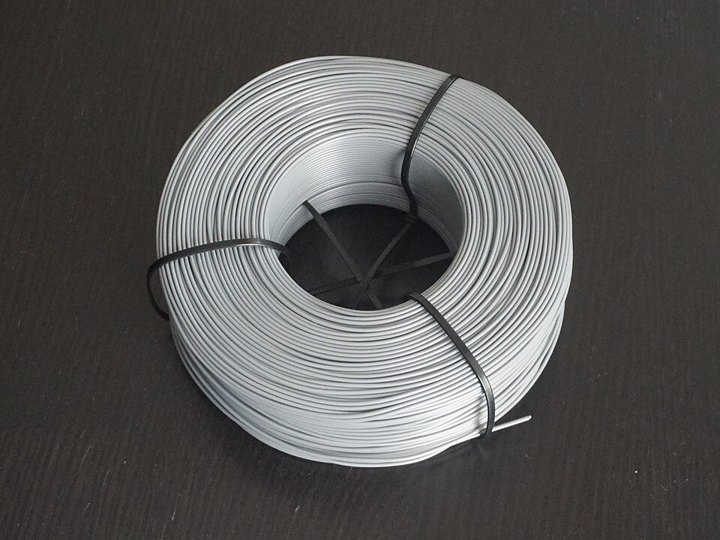
Filament is priced by the kilogram and a typical medium print uses around 100 grams. So one spool covers about ten prints. That makes the spool price the variable that actually decides your cost per part.
| Source (CAD, at time of writing) | Price per 1 kg | Cost per 100 g print |
|---|---|---|
| Filaments.ca standard PLA, from | $12.49 | $1.25 |
| 3D Printing Canada budget PLA, list | $19.99 | $2.00 |
| Bambu Lab CA PLA Basic refill, MSRP | $18.99 | $1.90 |
| 3D Printing Canada Canadian-made PLA+, list | $29.99 | $3.00 |
Bambu Lab discounts its refill rolls to $12.34 each at ten or more, and 3D Printing Canada runs frequent sale prices well under list, so the real range is narrower than the table looks. Even so, the spread from $12.49 to $29.99 a kilogram is 2.4 times the material cost for the identical print.
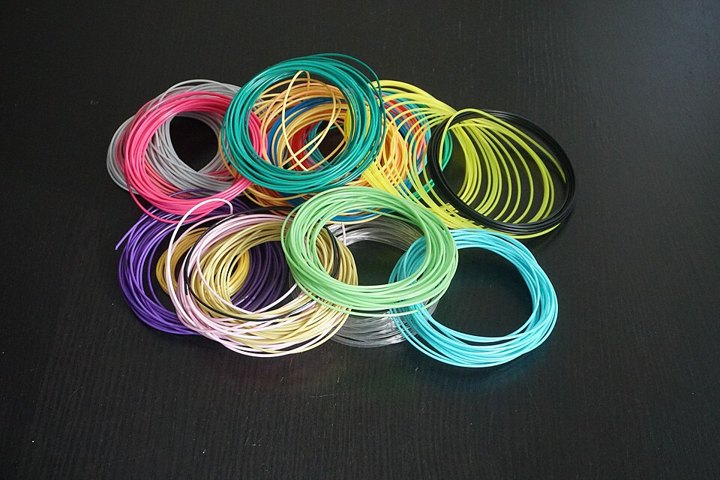
One 100 g print, added up
Now put the two halves together. A 100 g part, five hours on an A1 at 95 W, PLA at the $18.99 Bambu refill price.
Filament: 0.1 kg at $18.99 is $1.90. Electricity: 0.48 kWh at 15.84 cents is 7.5 cents. Total: $1.97, and the power is under 4 percent of it.
Switch to ABS and the same part costs about 15.8 cents in electricity, because the printer averages 200 W instead of 95 W. Still under $2.10 in total if the ABS spool is priced like the PLA one. What makes ABS expensive isn't the meter, it's the enclosure and the ventilation, not the meter.
What a Year of Printing Costs
Multiply by your hours per year to see the annual picture, at 100 W average and 15.84 cents per kWh.
| Printing hours per year | Energy | Annual electricity cost |
|---|---|---|
| 500 (about 1.4 hours a day) | 50 kWh | $7.92 |
| 1,000 (about 2.7 hours a day) | 100 kWh | $15.84 |
| 2,000 (about 5.5 hours a day) | 200 kWh | $31.68 |
Even a printer running more than five hours a day, every day of the year, costs under $32 in electricity. Those same 2,000 hours at 100 g per five-hour print eat 40 kg of filament. At $18.99 a kilogram that's $759.60. Material outruns power by roughly 24 times. That's the whole story of 3D printing costs in one line.
Where the Bill Actually Moves
Idle draw is small but it isn't zero. An A1 sitting on Wi-Fi pulls about 5 W, which over a year is 43.8 kWh and $6.94. Worth killing at the breaker strip if it sits for months. Irrelevant if you print every week.
The two things that actually change your bill are material choice and print hours. ABS and PC roughly double the wattage, and long prints multiply whatever the average is. Batching small parts onto one plate saves the heat-up cycle, not the print time, so the saving is modest unless you're printing a lot of tiny pieces.
One cost that never shows up on a utility bill is the failed print. A jam at hour nine of a twelve-hour print wastes the filament already laid down plus whatever is still on the bed. That loss is usually bigger than a week of electricity. Drying your filament and watching the first layer protects the budget better than any power-saving habit. That's where I'd put the effort.
Frequently Asked Questions
Does a 3D printer use a lot of electricity?
No. Common printers average 80 to 105 W on PLA, which is less than a desktop PC under load. Higher-temperature materials push that to 140 to 200 W on the same machines.
How much does it cost to run a 3D printer for one hour?
At 95 W and the New Brunswick residential rate of 15.84 cents per kWh, an hour costs about 1.5 cents. A five-hour print is 7.5 cents.
Is it cheaper to print at night?
Not on the NB Power residential rate. It's the same 15.84 cents per kWh for every kilowatt hour, whatever the time of day.
Does ABS cost more to print than PLA?
On electricity, yes. Bambu Lab measures an A1 at 200 W average on ABS against 95 W on PLA, so the same print uses roughly twice the power. Filament cost depends on the spool, not the material type.
How much filament does a typical print use?
A medium part, the kind most people print, lands around 100 g, so a 1 kg spool gets you about ten. Large organizers and helmets can use several hundred grams each.
Do I need a dedicated circuit for a 3D printer?
No for most machines. An A1, P1S or X1C peaks at 350 W at 110 V, and even the 1,250 W peak of an H2 series fits a standard 15 A household circuit. Just not alongside a kettle on the same one.
Sources
- Bambu Lab Wiki: printer and AMS power parameters. Manufacturer-measured average and maximum power for the A, P, X and H series, including the PLA, PETG, ABS and PC figures used in the table.
- Prusa Knowledge Base: frequently asked questions. Prusa states 80 W average consumption for generic PLA on an MK-series printer at 26 C.
- NB Power: residential rates. Residential energy charge of 15.39 cents plus a 0.45 cent variance charge, 15.84 cents per kWh total, effective April 14, 2026, before HST.
- Bambu Lab CA Store: PLA Basic filament. Refill price of $18.99 CAD MSRP per kilogram, discounted to $12.34 at ten or more rolls.
- 3D Printing Canada: PLA filament. Budget PLA listed at $19.99 and Canadian-made PLA+ at $29.99 per kilogram.
- Filaments.ca. Standard PLA listed from $12.49 per kilogram.