Zero Project Ventura Under $8,000: Is It a Real Bike for Canada?
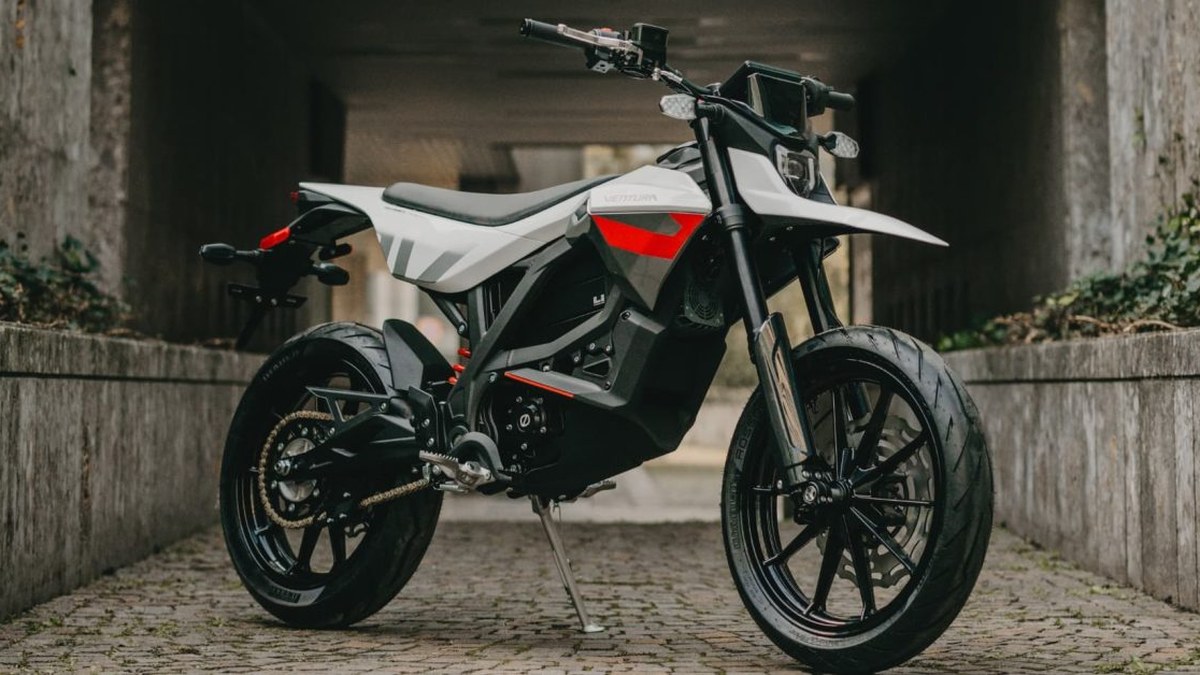
Photo: Property of Zero Motorcycles
In This Article
An electric motorcycle under eight thousand dollars is the number that makes people look up. Every electric bike of the last decade has been priced like a second vehicle, which is why almost nobody owns one, and Zero has now put a figure on the table that undercuts a mid-size adventure bike. Project Ventura was unveiled at EICMA 2026, and the question worth asking is not whether the price is impressive. It is whether the bike behind the price can do a Canadian commute, or whether it is a city machine wearing a motorcycle's clothes.
The Numbers Zero Actually Published
Strip out the show lighting and here is what is confirmed. Project Ventura is a lightweight electric street motorcycle with a targeted price under USD 8,000. It makes over 20 kW, which is about 27 horsepower, at peak. Its sustained top speed is 105 km/h, with a momentary maximum of 130 km/h. Zero quotes an estimated real-world range of 150 km, and has deliberately not published battery capacity. Onboard Level 2 charging is standard, as is ABS and Bluetooth, and the chassis is designed to take a passenger.
| Spec | Zero's published figure |
|---|---|
| Target price | Under USD 8,000 |
| Peak power | Over 20 kW (about 27 hp) |
| Sustained top speed | 105 km/h |
| Momentary maximum | 130 km/h |
| Estimated real-world range | 150 km |
| Charging | Onboard Level 2 |
| Battery capacity | Not published |
| Availability | Expected summer 2027 |
That table is honest and it is also incomplete in one important way: no battery capacity figure means no way to sanity-check the range claim, and no way to work out charge time from a given circuit. Zero is asking buyers to trust the 150 km number. Treat it the way you would treat any manufacturer range figure, which is as a best case measured gently.
What 105 km/h Sustained Really Means
The distinction between 105 km/h sustained and 130 km/h momentary is the most useful line in the spec sheet, because it tells you exactly what kind of machine this is. A momentary peak is what a small electric motor can deliver for a short burst, usually while a thermal limit is being tracked. Sustained means the motor and controller can hold that speed without derating.
For Canada, 105 km/h sustained puts the bike just under the typical 110 km/h limit on divided highways in Ontario and the Maritimes. That is not a technicality. It means a rider can hold 105 all day without cooking anything, and cannot legally sit at 120 on Highway 2 through New Brunswick without leaning on the momentary figure. In practice, this is a bike that owns everything from a city street to a two-lane secondary highway, and is borderline on a 400-series or Trans-Canada cruise where traffic is moving at 120.
Twenty-odd horsepower in something lightweight is not slow. A 27 hp bike with a motor's instant torque off the line will feel quicker than its number to about 70 km/h and then flatten out. That is the honest shape of the performance: strong where a commuter needs it, thin where a touring rider does.
150 km of Range in a Canadian November
Range claims and cold weather have a well-known relationship in every electric vehicle, and the number 150 km needs a caveat attached to it before anyone in this region plans around it. Lithium cells lose usable capacity as they cool, and the effect is worse when the pack is small, because there is less heat generated internally to keep itself warm. A 150 km estimate gathered in mild conditions is not a 150 km estimate in a Nova Scotia January.
Zero has been careful to call it an estimated real-world figure rather than a test-cycle number, which is more honest than most. But a rider should plan a winter practical range closer to something in the low hundreds of kilometres, at temperatures well below freezing. That is still enough for the use case that matters, which is not a full day out. It is a commute.
Is It a Commuter, or a Toy?
Look at the features Zero chose to confirm, because they say what the bike is for. Onboard Level 2 charging means it can take a proper AC charge rather than only a household socket, which matters if you want to top up at a destination. ABS is mandatory equipment on new motorcycles in Canada anyway, so its presence is not a selling point, it is compliance. Bluetooth points at app-based settings and diagnostics. A passenger-capable chassis points at two-up city riding.
None of those features point at touring. There is no mention of luggage, of a windscreen, of fast DC charging, or of the kind of weather protection that makes a November ride in this region tolerable. What they describe is a light, cheap, low-maintenance machine for short trips, which is exactly the job an electric bike is genuinely good at: no oil changes, no chain lube, no warm-up, no exhaust noise in a residential driveway at seven in the morning.
Where it will struggle here is everything else. Atlantic Canada riding is not mostly city riding. It is long, scenic, thin on charging infrastructure once you leave the highway corridor, and frequently cold. A 150 km claimed range limits day trips in a way that a 250 km tank of petrol does not, and that limitation is what separates a commuter that saves money from a toy that sits in the garage from December to April.
The Price in Canadian Dollars
Under USD 8,000 is the target, and the exchange rate plus freight, PDI and dealer fees will decide what actually appears on a Canadian showroom floor. Do not plan around the US number. Currency conversion alone moves that figure substantially, and Canadian motorcycle pricing has historically landed above the straight conversion once the importer's costs are added.
For context on how much of a shift this is, Zero's own street-legal XE launches in spring 2027 from USD 6,295, and the LS3 scooter reaches Europe in spring 2027. That trio, a cheap street bike, a street-legal dual sport and a scooter, is Zero moving down-market deliberately. It is the first time in years that an electric motorcycle has been aimed at someone who was considering a used bike rather than a new one.
Timing: Summer 2027, Not This Year
Ventura's availability is expected in summer 2027. That is roughly eight months of waiting from today, and the target price is exactly that, a target. Between now and then the spec sheet could change, the price could change, and Canadian availability and pricing have not been announced at all.
This matters for anyone shopping right now. If you need a bike for the 2027 season, an order placed on a projected summer delivery is a gamble on a date nobody has committed to. If you are buying for the 2028 season, this is the most interesting thing on the horizon at the price.
The Verdict for Atlantic Canada
Project Ventura is the first electric motorcycle in a decade that is priced like a motorcycle instead of a gadget. At under USD 8,000, with 20 kW, Level 2 charging and a passenger seat, it is a serious proposition for someone whose riding is short, regular and local, with a place to plug in at both ends.
It is not a replacement for a touring bike, and it should not be sold as one to a rider in this region. The 105 km/h sustained figure rules out relaxed highway cruising, the estimated 150 km range gets shorter in the cold, and there is no announced charging network filling the gaps between here and anywhere far. Buy it as an electric commuter that looks like a motorcycle, and the numbers work. Buy it as a motorcycle, and the range will be the thing you resent.
FAQ
How much does the Zero Project Ventura cost?
Zero is targeting a price under USD 8,000. Canadian pricing has not been announced, and freight, PDI and dealer fees plus the exchange rate will push the actual showroom figure above a straight conversion.
How fast is the Zero Project Ventura?
It makes over 20 kW (about 27 hp) at peak, with a sustained top speed of 105 km/h and a momentary maximum of 130 km/h.
What is the range of the Zero Project Ventura?
Zero quotes an estimated real-world range of 150 km and has not published battery capacity. Expect less in cold weather, as with any lithium battery vehicle.
When can I buy one in Canada?
Availability is expected in summer 2027. Zero has not announced Canadian pricing or a Canadian delivery date.
Can the Zero Project Ventura go on the highway?
Yes, but 105 km/h sustained sits below a 110 km/h limit, so it is comfortable on two-lane highways and marginal where traffic runs at 120.
Sources
- Electrek: Zero unveils the under-$8k electric motorcycle. Project Ventura target price, 20 kW peak, 105 km/h sustained and 130 km/h momentary top speeds, 150 km estimated range, Level 2 charging, ABS and Bluetooth, passenger-capable chassis, summer 2027 availability, XE at USD 6,295 and LS3 timing.
- EICMA 2026. Show where Project Ventura was unveiled.