Qatar MotoGP Standoff: Riders Want Written Safety Guarantees
MotoGP still plans to race at Lusail on November 8 as most of the grid demands written evacuation and insurance guarantees. Where the standoff stands.
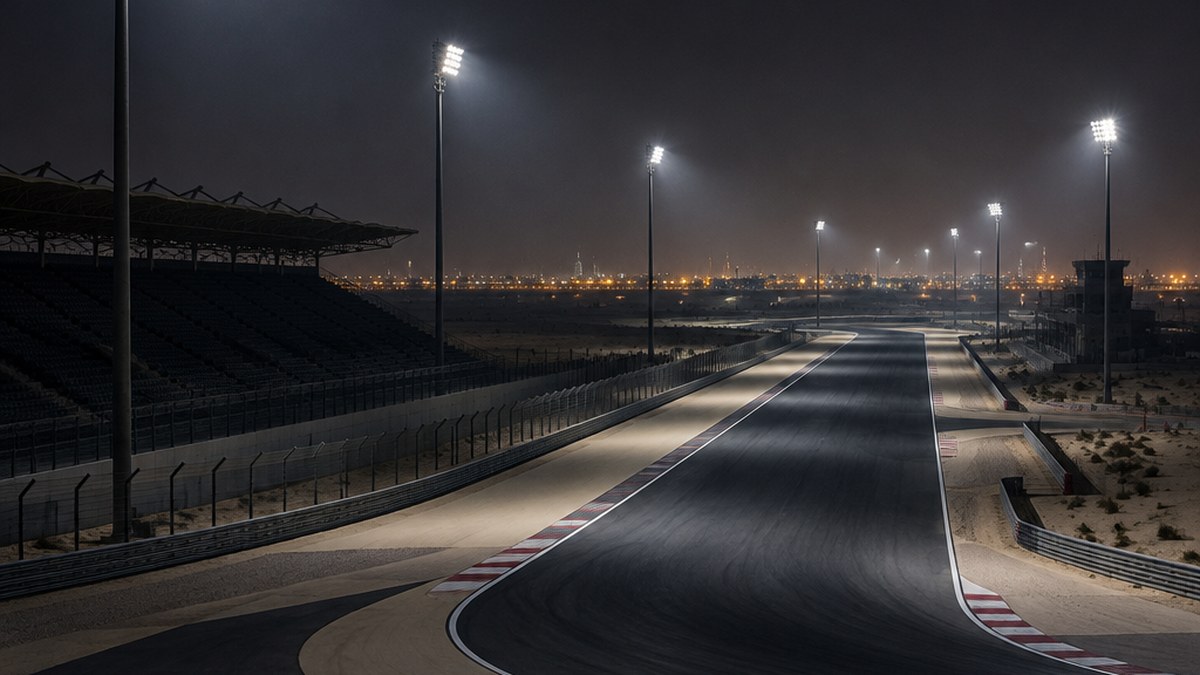
Illustration: Greg Toope
In this article
Where the Qatar standoff stands
The Qatar Grand Prix is scheduled for November 6 to 8 at Lusail International Circuit, with the race on Sunday November 8, and MotoGP is still planning to be there. That is despite the fact that more than three-quarters of the grid have expressed opposition to travelling, according to reporting from the Malaysian paddock. The race was originally set for April and was postponed because of the regional conflict, and it now sits four days after the United States midterm elections, in a week when the Wall Street Journal reported that Washington has warned Gulf states to prepare for a possible short, intensive military operation against Iran. President Trump has not made a final decision, but the reporting has hardened the paddock's concerns rather than eased them.
What the riders actually asked for
This is not a vague complaint about safety. At Phillip Island the riders collectively decided to demand written guarantees from MotoGP Sports Entertainment Group, the championship's commercial rights holder. The document under negotiation asks for a concrete evacuation plan, insurance covering costs if Qatari airspace closes, and guarantees that riders, mechanics, engineers and other personnel can leave the country in an emergency. Qatari authorities have reportedly provided written assurances on event security and a dedicated evacuation plan, which is progress, but the riders want clarity on how those arrangements would work in practice and, crucially, who is responsible for putting them into effect.
The sticking point is responsibility
That question of responsibility is where the talks have stalled. The riders want MotoGP to own the guarantee. The promoter's position is that security inside Qatar is primarily the responsibility of local authorities. Those two positions are not the same thing, and no amount of diplomatic language closes the gap between them. On Thursday, CEO Carmelo Ezpeleta addressed the riders at Sepang and reaffirmed that preparations for the event remain in place despite the absence of agreement on all the requested guarantees. He also reminded riders that their contractual obligations run to their teams, which raises an obvious question about consequences for anyone who declines to travel. No specific sanction has been announced, and a contractual obligation does not by itself establish that a penalty would automatically apply.
Teams are already voting with their feet
The clearest signal this week did not come from a rider. VR46 Racing manager Alessio Salucci, known throughout the paddock as Uccio, told GPOne that one member of his team will not be travelling to Qatar. His reasoning was blunt: there are things that go beyond sport, beyond work, beyond everything, and he will not force his riders or team members to go. He added that pretending nothing is happening does not make the situation safe. Separately, Yamaha has been considering travelling with the smallest practical number of personnel and Honda has evaluated similar precautions, while Alex Rins indicated Yamaha had not reached a final decision as of Wednesday. No manufacturer has officially announced a boycott, and that distinction matters, but staffing decisions are how teams hedge without saying anything on the record.
The riders are mostly not talking
Almost nobody on the grid wants to be the face of this. Marc Marquez, asked about racing in Qatar, gave a four-word answer: we cannot say nothing. Ducati team manager Davide Tardozzi has publicly backed him, arguing that other riders criticise in private and then stay quiet when it counts. That silence is itself a strategic choice. A public refusal is a contractual event with financial exposure. A collective demand for written guarantees, negotiated through the riders' association, spreads the risk across the whole grid. The two-thirds vote reported after Phillip Island and the three-quarters figure reported this week are the same mechanism in different snapshots.
Why MotoGP cannot simply cancel
Cancelling is not a neutral act. Multiple national governments represented in the paddock advise against travel to Qatar unless strictly necessary, but a negative travel advisory is advice, not a prohibition, and that means MotoGP cannot invoke force majeure to walk away from the weekend without financial consequences. There is also a promoter relationship to protect and a championship to finish. Deputy CEO Carlos Ezpeleta travelled to Doha to meet local officials and assess conditions firsthand, and his findings are expected to inform the next round of talks at Sepang. The most likely outcome described in the reporting is a race that goes ahead with a depleted grid rather than a cancellation, which would raise its own sporting questions about a world championship round where a meaningful share of the field is absent.
What it does to the title fight
The championship adds another layer of awkwardness. Marc Marquez leads Jorge Martin by 10 points going into Sepang, the 19th round, with Martin carrying a wrist injury from a high-speed crash at Phillip Island and cleared to ride. If Qatar becomes a race some riders skip, points scored there could decide a title in a way nobody wants to explain afterwards. That is an uncomfortable possibility for a series that has spent the year building a genuine rivalry, and it gives both riders a reason to want clarity early rather than late.
What Atlantic Canadian riders should take from it
There is no direct consequence for a rider in Moncton, but there is a useful lesson about how risk gets handled at the top of the sport. The riders did not ask for a cancellation. They asked for a written evacuation plan, insurance against airspace closure, and a named party responsible for getting people home. Those are the same questions any rider should ask before a trip into a region with unstable access: how do I get out, who pays if the route closes, and who is accountable. The paddock is doing publicly what most of us do badly in private.
Frequently Asked Questions
Is the Qatar MotoGP still happening?
As of October 30, 2026, MotoGP says the Qatar Grand Prix at Lusail will go ahead on November 6 to 8, with the race on November 8. Riders and several teams are still seeking written safety guarantees.
Why are MotoGP riders concerned about Qatar?
They want guarantees on emergency evacuation, insurance if Qatari airspace closes, and repatriation. Reporting says Washington warned Gulf states to prepare for possible military action against Iran after the November 3 US midterms.
What are the riders demanding in writing?
A concrete evacuation plan, insurance covering costs from a possible airspace closure, and guarantees that riders and team personnel can leave the country in an emergency, with a clear party responsible for implementing them.
Has any team withdrawn from the Qatar GP?
No manufacturer has officially announced a boycott. VR46's Alessio Salucci said one team member will not travel, and Yamaha and Honda have considered limiting personnel.
When is the Qatar Grand Prix?
November 6 to 8, 2026 at Lusail International Circuit, with the race on Sunday November 8. It was originally scheduled for April and postponed because of the regional conflict.