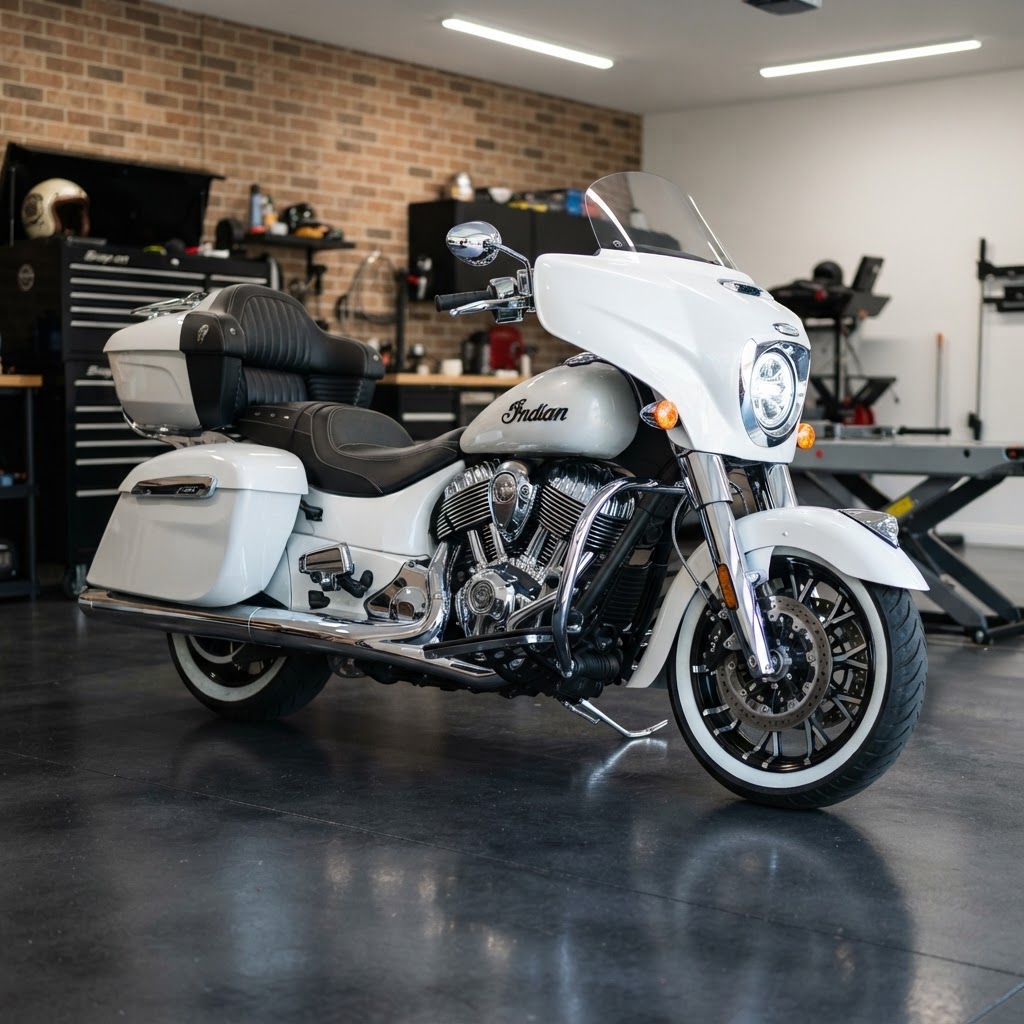
Indian Pursuit Deep Clean & Storage Guide
In This Article
Summer is peak riding season in Atlantic Canada, but before you hit the road for long tours, your Indian Pursuit needs a deep clean. Not just a car wash — this is detailing your chrome, protecting your drivetrain, and prepping every surface for the salt air and Atlantic weather.
Why Deep Cleaning Matters for Cruisers
The Pursuit is chrome and stainless steel, which look amazing but need protection. Summer salt air corrodes fast if you're not vigilant. A deep clean removes grime buildup, lets you inspect for issues, and gives you a chance to apply protective coatings before they're needed.
In New Brunswick, humidity and salt from the coast accelerate oxidation. A bike that looks clean can have corrosion starting beneath the surface. Deep cleaning exposes problems early and protects your investment.
The Deep Clean Process for the Pursuit
1. Start With the Engine Bay
The PowerPlus 108 engine sits exposed. Use a degreaser spray and soft brush to remove buildup from the rocker boxes, cylinders, and around the heads. Avoid high-pressure water directly on electrical connectors.
Work a quality engine cleaner like Goof Off or Meguiar's into problem areas. Wipe with a microfiber cloth. Don't rush — let degreaser sit for 5 minutes before scrubbing. Once clean, apply a light coat of UV-protective engine enamel to keep the finish fresh.
2. Chrome and Polished Aluminum — The Real Work
The Pursuit has a lot of exposed chrome: fenders, engine guards, footpegs, handlebar trim. Use a dedicated chrome cleaner — Bar's Leaks or Turtle Wax work well. Spray on a cloth, not directly on the metal, then buff in circular motions. Don't leave it wet.
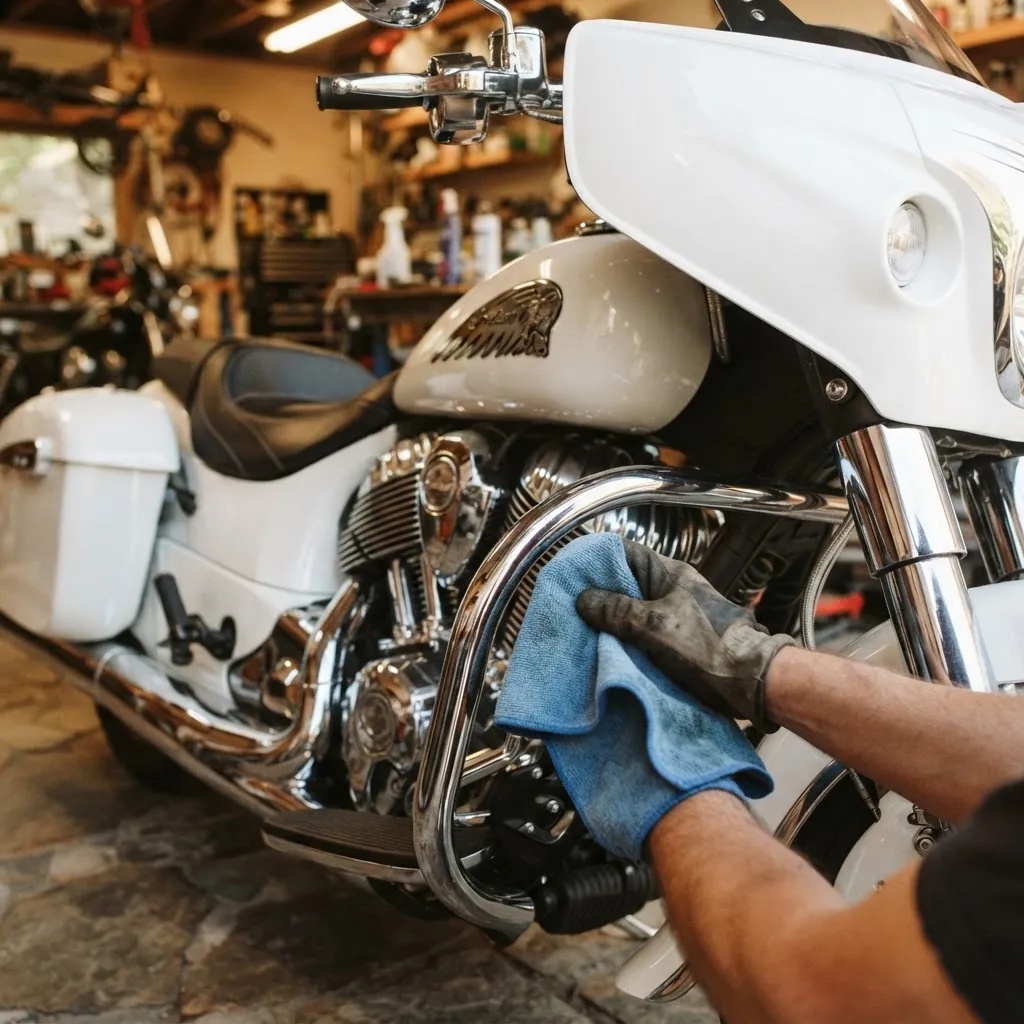
For light corrosion or water spots, use a chrome polish with mild abrasives. Avoid steel wool — it scratches. After polishing, apply a chrome sealant spray to lock in shine and repel moisture. This buys you weeks of protection in Atlantic humidity.
Aluminum parts (like certain covers and trim) tarnish differently. Use aluminum polish or a general metal polish. Same process — clean, polish, seal.
3. Paint and Bodywork
Start with a wash using a two-bucket method: one for soapy water, one for rinsing the mitt. This prevents scratching the paint with grit trapped in your cloth.
After washing, use a clay bar on the paint. This removes contamination — salt residue, bird droppings, tree sap — that won't come off with regular washing. Knead the clay, use it on a small section with a clay bar lubricant, then move to the next area.
Once clay-barred, your paint is ready for a good wax or ceramic coating. A two-part paste wax (like Turtle Wax premium) lasts 6–8 weeks. Ceramic coatings last longer but cost more upfront. Either way, this protects the paint from salt air.
4. Drivetrain and Chain
Cruisers don't have exposed chains like sportbikes, but the rear drive still needs attention. Use a degreaser on the belt or chain, then a stiff brush to scrub away old lubricant and buildup.
Once clean and dry, apply a quality motorcycle chain/belt lube. For the Pursuit's belt drive, use a belt-safe lubricant that won't compromise grip. Spray it on while rotating the wheel slowly.
Check your owner's manual for belt tension while you're at it. Summer heat expands rubber; belts can get loose. Tension should let you deflect the belt about half an inch (about 1.3 cm) at the midpoint.
5. Tires and Wheels
Clean tires remove grime and let you inspect for cuts or damage. Use an all-purpose cleaner and a soft brush — tire dressing makes them look newer but can be slippery on the road if over-applied.
Inspect the tread depth. Use the penny test: place a penny upside down into the tread. If you can see the top of Lincoln's head, tread is too low. Atlantic roads are rough; replace tires sooner rather than later.
Check tire pressure cold in the morning before riding. Proper pressure is in your owner's manual and on the swingarm placard — don't trust the valve stem marking. Underinflated tires wear faster and overheat.
6. Electrical and Sensors
Use a soft, dry brush around electrical connectors. If you spot corrosion (green or white buildup), gently clean it away with a dry cotton swab. Avoid spraying water directly into these areas.
Check all lights — headlight, taillights, signals. If any are dim or broken, replace them before tours. Salt air speeds up corrosion on light assemblies.
Summer Storage Tips
If you're taking a break from riding (though who does in summer Atlantic Canada?), proper storage protects your Pursuit:
Storage Checklist
- Fuel stabilizer: Add fuel stabilizer to a full tank. Run the bike for 10 minutes to circulate it. This prevents fuel gumming in the carbs and injectors.
- Battery tender: If storing for more than a month, use a battery tender. The Pursuit's battery will drain slowly even when off. A smart charger maintains voltage without overcharging.
- Tire pressure: Slightly over-inflate by 2–3 PSI (about 14–21 kPa). This prevents flat spotting from long storage.
- Cover: Use a breathable motorcycle cover. Avoid trapping moisture with plastic tarps.
- Oil change before storage: Oil accumulates moisture and acids. A fresh change before extended storage protects your engine.
Tools and Products You'll Need
Keep these on hand for summer prep:
- Microfiber cloths (several — don't reuse dirty ones)
- Degreaser spray (Goof Off, Purple Power)
- Chrome and metal polish
- Clay bar kit
- Wax or ceramic coating
- Chain/belt lubricant (belt-safe for the Pursuit)
- All-purpose motorcycle cleaner
- Tire shine (optional, use sparingly)
- Battery tender with float charger
- Fuel stabilizer
The Bottom Line
A deep clean isn't just about looks — it's maintenance. You'll catch corrosion early, extend component life, and keep your Pursuit ready for whatever Atlantic Canada's roads throw at you. Two hours now saves you weeks of rust repair later.
Ready for the Road?
Get your Pursuit dialed in this summer. Clean it deep, protect it with wax and sealants, check your fluids and tire pressure, and ride with confidence across New Brunswick's best roads. The PowerPlus 108 deserves the care.
Frequently Asked Questions
How often should you deep clean a motorcycle?
Deep clean your motorcycle every 2-3 months or after long trips, especially if exposed to rain, road salt, or bugs. A quick wash after every ride in adverse conditions prevents buildup. Regular cleaning also gives you a chance to inspect for loose bolts, leaks, and wear.
What is the best way to clean an Indian Pursuit?
Use a pH-neutral motorcycle cleaner, microfiber cloths, and avoid high-pressure washers near bearings and electronics. Clean the fairing, wheels, and engine cases with dedicated motorcycle-safe products. Dry thoroughly with microfiber to prevent water spots.
Can I use a pressure washer on my motorcycle?
Avoid high-pressure washers on motorcycles. The pressure can force water into bearings, electronics, and seals causing long-term damage. Use a garden hose with low pressure or a bucket-and-mitt method instead.
Buy on Amazon
Affiliate Disclosure: As an Amazon Associate I earn from qualifying purchases. If you buy through these links, I may earn a small commission at no extra cost to you.