Canada's 50% Tariff on U.S. Motorcycles: What It Means for Riders
Canada's 50% tariff on U.S.-origin motorcycles over 800cc took effect September 8, 2026. What it means for Harley, Indian, dealers, and Canadian buyers.
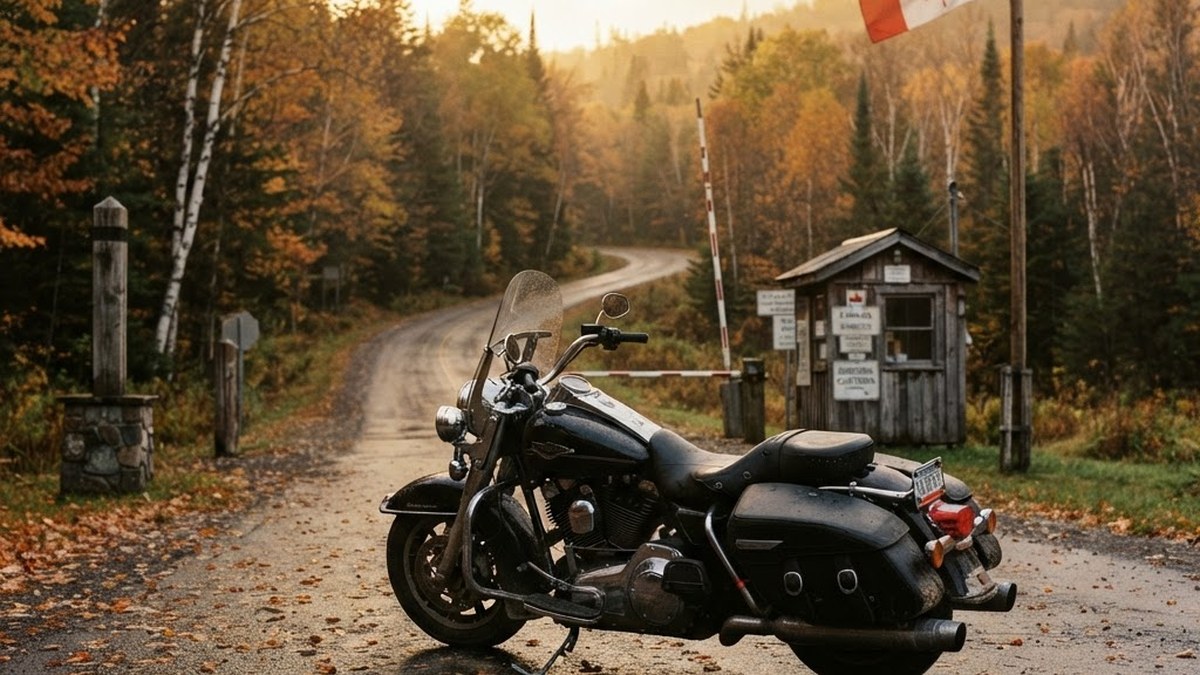
AI-generated illustration
In this article
What changed
Beginning September 8, 2026, Canada imposed a 50% tariff on U.S.-origin motorcycles with internal-combustion engines larger than 800cc. It replaced the 25% counter-tariff that had been in place since March 2025, and it is part of a broader Canadian response covering 27.6 billion USD worth of American imports, with rates ranging from 15% to 50%.
The timing matters for Atlantic Canada. This landed right at the end of the riding season, when dealers would normally be clearing current-year inventory and riders would be shopping for next spring.
What it actually covers
The rule is about origin and engine size: U.S.-assembled, combustion engines over 800cc. That puts most of Harley-Davidson's Canadian lineup directly in the path of the levy. Indian Motorcycle is exposed as well. The company assembles every new Indian motorcycle at its Spirit Lake, Iowa factory, and its heavyweight cruisers and touring machines sit above the 800cc cutoff. That includes the Pursuit I ride.
Motorcycles already sitting in Canadian dealer inventory had already crossed the border, and goods that were in transit when the tariff took effect are exempt. Replacement stock imported after September 8 faces the new duty.
The numbers
Canada imported about 170.4 million USD worth of U.S. motorcycles with engines over 800cc in 2024, according to World Bank trade data, more than half of all Canadian imports in the category. Harley-Davidson sold 6,434 motorcycles in Canada in 2025, nearly 5% of its worldwide retail sales. Canadian Harley sales were already soft before the tariff: 3,735 retail sales in the first half of 2026, down from 3,912 a year earlier.
What dealers are saying
Robb Hertzog, owner of Prairie Harley-Davidson in Regina, told Canadian news outlet 650 CKOM that the added tax will effectively cost him business, predicting a bike that was 20,000 CAD could become 40,000 CAD once the duty lands on replacement stock. "We don't have an alternative in Canada to switch over to," he said, noting that nearly everything he brings in comes from the U.S.
Who ultimately eats the cost, the factory, the distributor, the dealer, or the buyer, is still playing out. A duty that size creates an enormous new cost somewhere in that chain.
The other side of the border
The U.S. escalated in the other direction: as of September 29, 2026, it prohibits imports of Canadian-origin motorcycles with engines over 800cc outright, replacing a 50% tariff imposed in August with a full ban, per Auto Finance News reporting.
What it means if you are shopping
Three practical takeaways for Canadian riders:
- Existing inventory is the deal. Bikes already on Canadian showroom floors crossed the border before the tariff. Until that stock sells through, prices will not reflect the 50% duty yet.
- The used market is about to get busy. Late-model American bikes already in Canada sidestep the import duty entirely. Expect used Harley and Indian pricing to firm up.
- If you have been waiting on a new American touring bike, the wait just got expensive. Replacement inventory imported after September 8 carries the duty, and how much of it reaches the sticker price depends on decisions none of us control.
Frequently asked questions
Does the 50% tariff apply to used motorcycles?
The duty applies to imports of U.S.-origin motorcycles over 800cc. Bikes already in Canada, including on dealer lots before September 8, crossed the border before it took effect.
Which brands are affected?
Primarily Harley-Davidson and Indian Motorcycle, since both assemble their large-displacement bikes in the United States.
Is the U.S. doing the same thing?
As of September 29, 2026, the U.S. bans imports of Canadian-origin motorcycles over 800cc outright.