BMW Motorrad Invests in Venna, an Electric Off-Road Startup
BMW Motorrad has taken a stake in Venna, the Slovenian electric off-road startup formerly called Flux. What both companies confirmed and what is still unknown.
In this article
What BMW Motorrad announced
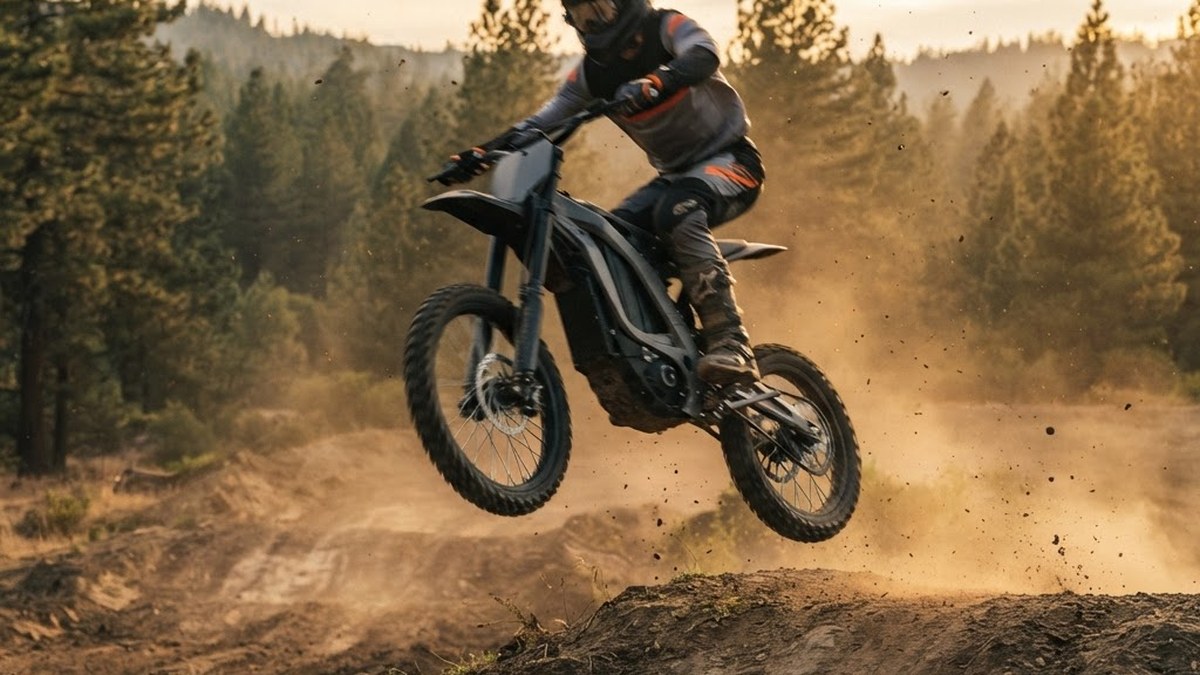
BMW Motorrad announced on October 29 that it has taken an investment stake in Venna, a startup building high-performance electric motorcycles with a focus on off-road. Venna was previously known as Flux, the Slovenian company behind the Primo electric enduro prototype, and it has rebranded as it moves toward production. The partnership, in BMW's framing, pairs a young company's speed and innovation with BMW Motorrad's development and industrialisation experience. Venna will remain independent and keep its own pace of development rather than being absorbed into BMW's model programme, which is the detail that matters most here.
What BMW gets out of it
BMW Motorrad has an electric scooter line and a long-running electric push in cars, but no serious electric off-road motorcycle. The company is explicit that this investment gives it access to new target groups and technologies in the electric off-road segment. CEO Markus Flasch framed it around riders rather than technology: "BMW Motorrad stands for innovation, performance and the courage to explore new paths. With Venna, we have found a partner who shares our passion for technical excellence and exceptional riding experiences. This partnership opens opportunities for us in a new segment and helps us inspire new target groups with the fascination of motorcycling." BMW also noted that younger riders increasingly see motorcycling as a sporty, performance-driven leisure activity, which is exactly the buyer an electric dirt bike appeals to.
What Venna gets out of it
For a small company, the value is not only money. Venna CEO Marko Ukota was direct about it: "At Venna, our ambition is to build high-performance electric motorcycles across all riding categories that will unlock new levels and possibilities to our riders. BMW Motorrad's investment is a huge seal of approval to our passion and our technological approach. This partnership supercharges our ability to deliver advanced technology, reliable industrialisation, and to do it fast." Industrialisation is the honest word in that quote. Plenty of electric motorcycle startups have built impressive prototypes and then failed at the unglamorous work of building them consistently, at cost, at scale, with a supply chain and a warranty.
Why this matters more than another concept bike
Electric off-road is the one segment where electric motorcycles have already proved they work commercially. Instant torque, no clutch, no noise complaints, minimal maintenance and the ability to ride in places petrol bikes are being shut out of all line up with what motocross and enduro riders actually want. The barrier has never been desire, it has been price and durability. A major manufacturer putting money and engineering process behind a credible small player is a different kind of signal than another concept reveal at a trade show, because it addresses the manufacturing problem rather than the design problem.
What is still unconfirmed
Several things are worth stating plainly. BMW did not disclose the size of the investment or the valuation, and neither company announced a timeline for a production Venna motorcycle or its price. There is no confirmed plan to sell a BMW-branded version, and Venna remaining independent suggests there will not be one soon. Anything beyond what the two companies said on the record is speculation. Anyone reading this as BMW confirming an electric GS, or as a Venna production date, is reading past the announcement rather than into it.
What it means for Canadian riders
Nothing changes on a Canadian showroom floor this year or next, and there is no Canadian availability or pricing to report. The realistic read is directional. If BMW is investing in electric off-road, the segment has a stronger commercial case than it did a week ago, which matters for anyone weighing an electric dirt bike against a petrol one. The practical test for Atlantic Canada remains what it has always been: range in cold weather, charging where you actually ride, and whether a dealer network will service what it sells. Those questions are not answered by this announcement, and they are the ones that will decide whether electric off-road arrives here properly.
The pattern this fits into
This is the second significant electric off-road signal in a month. LiveWire has confirmed three models for EICMA in Milan, running November 3 to 8, and BMW's move lands a week before the show opens. That timing is not accidental. Manufacturers use the days before EICMA to place news that might otherwise get buried under show-floor launches, and an investment announcement is exactly the kind of story a brand wants in circulation before the halls open. Expect the electric off-road conversation to be louder in Milan than it was last year, and expect BMW to be asked about this stake repeatedly on the stand.
How to judge whether this is real progress
There is a simple test for announcements like this one, and it is worth applying to every electric motorcycle partnership you read about. Ask three questions: is there money, is there a named product, and is there a date. This announcement clearly answers the first, since an equity stake is a real commitment rather than a memorandum of understanding. It answers the second only loosely, because Venna has a prototype and a stated ambition rather than a production motorcycle. It does not answer the third at all. That puts this ahead of a press release and behind a launch, which is the honest place to file it.
What Venna's background tells you
Venna's history matters for judging the odds. The company, as Flux, built the Primo, an electric enduro prototype with claimed output figures in the range of 85 peak horsepower and very high torque, aimed squarely at the high-performance dirt bike market rather than commuter electrics. It was founded and led by Marko Ukota with a small team of Slovenian engineers and racers, and it has been talked about in the electric off-road press for a couple of years without reaching volume production. Small teams with good prototypes and no factory are the exact profile that needs a partner with manufacturing experience, which is why BMW's framing of the deal is more credible than most.
Frequently Asked Questions
Which company did BMW Motorrad invest in?
BMW Motorrad took an investment stake in Venna, a startup building high-performance electric off-road motorcycles. Venna was previously known as Flux, the Slovenian company behind the Primo electric enduro prototype.
How much did BMW invest in Venna?
The size of the investment and the valuation were not disclosed in BMW Motorrad's October 29, 2026 announcement.
Will BMW build its own electric off-road motorcycle?
Not confirmed. Venna will remain independent, and neither company announced a BMW-branded model, a production timeline or pricing.
When will a Venna electric motorcycle be available?
No production date or price has been announced. BMW stated only that the partnership gives it access to the electric off-road segment.