
Photo: Property of GoPro
Three numbers on a spec sheet decide whether a camera survives a ride: water, dust and operating temperature. Most riders check one. Here is the five-minute check to run before anything goes on the bike.
What the Ratings Actually Say
Before a camera goes on a motorcycle, three numbers decide whether it survives the trip: the water rating, the dust rating and the operating temperature. Most riders check the first one and ignore the other two.
Take the Luna Ultra. Insta360's manual states it is not waterproof or splashproof, that water and liquids should be avoided during use, and that it is not dustproof, with sand and dust exposure called out as a risk. Operating temperature is 0 to 40 degrees C (32 to 104 degrees F).
None of that is unusual for a gimbal camera with a moving arm. It is unusual for a camera people mount on a motorcycle, and that gap between marketing photographs and the manual is where gear gets ruined.
A Five-Minute Check Before You Mount Anything
Read the manual's specification page, not the product page. The manual is where the manufacturer states limits it is not advertising.
Write down the three numbers. Then compare them to the worst day you actually ride, not the best one. A 0 degree C floor means the September morning you left at 4 AM for a ferry was already outside the rating, because wind chill on a moving bike is colder than the air.
Check where the camera will sit. A bar mount takes direct road spray and gravel; a chest mount takes less; a bag takes almost none. The same camera is safe in one position and at risk in another.
Check what it cost to find out. A camera that fails on day one of a ten-day trip costs you the trip's footage, not the camera. If the ride matters, the camera needs to be the one rated for it.
Which Camera for Which Job
For footage with the bike moving, the camera needs to be sealed and rated. That is an action camera designed to be rained on, not a gimbal camera designed for smooth handheld work.
For footage at a stop, a gimbal camera is the better tool: smoother motion, better optics, and no reason to expose it to weather. The mistake is not owning one, it is using it in the other role.
The practical arrangement most riders end up with is two cameras doing two jobs: a sealed action cam for anything the bike is moving through, and the nicer camera for everything that happens when the bike is parked. That is not redundancy, it is using each tool inside its rating.
What to Do If You Already Took It Out in the Rain
Power it off first, before anything else. Water and electronics do damage while current is flowing.
Do not put it in rice, and do not use heat. Both push moisture further in. Wipe the outside dry, open any port covers, and let it sit in dry moving air at room temperature for a day before you charge it.
Then check the gimbal by hand, gently, for grit before you power it on. A gimbal that has ingested sand will try to correct against it, and that is how an arm gets damaged rather than just dirty.
The Same Check on a Sealed Action Camera
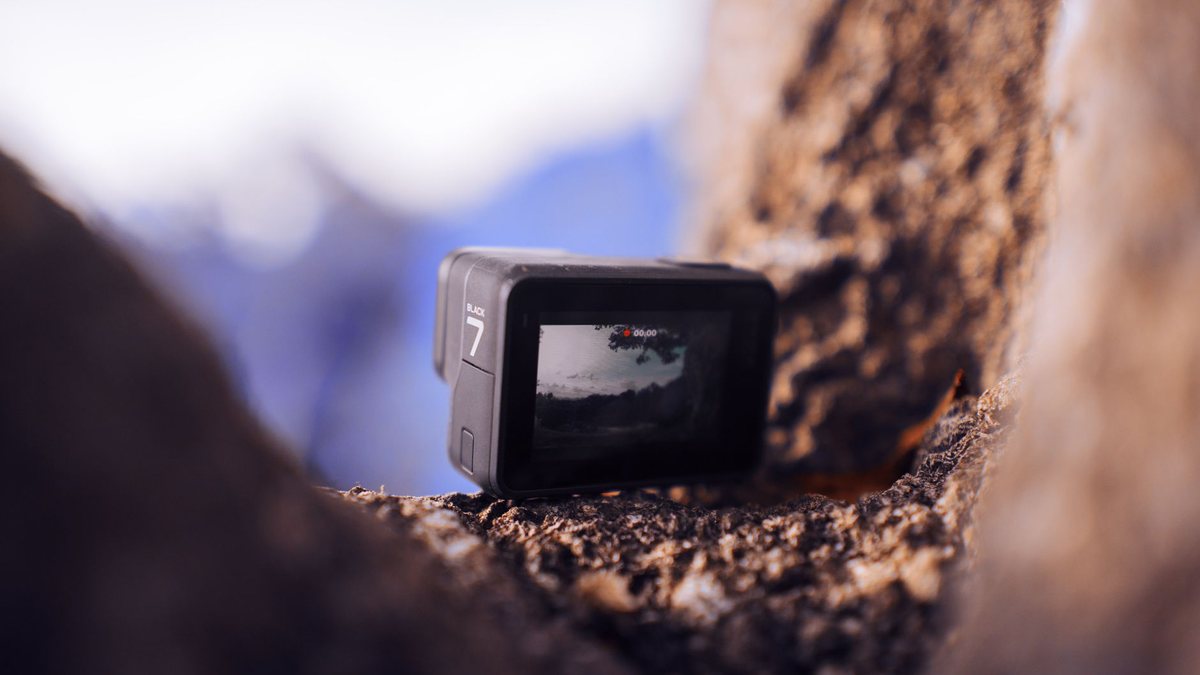
Run the checklist on a camera that is built for the job and the contrast is obvious. A GoPro HERO13 is designed to be submerged and to survive being strapped to something moving fast, which is why it is the camera most riders put on the bars and forget about.
That does not make it the right camera for every shot. A sealed action camera trades optical flexibility for durability: wide lens, deep depth of field, no long focal length to speak of. The footage that needs a 60mm equivalent or a fast prime is the footage a gimbal camera does better, indoors, with the bike parked.
The point of the checklist is not to rank cameras. It is to stop you putting the wrong one into a situation it was never rated for, because the failure is silent until the footage is gone and the trip is still going.
Packing for a Ride So the Right Camera Survives
Carry the two cameras in two different places. The sealed one lives on the mount or in a bar bag where a shower does not matter. The other lives in a padded case inside a pannier, and only comes out when the bike is stopped and you have somewhere dry to use it.
That arrangement also solves a quieter problem: the camera you use at a stop is the one you have to remember to put away. Having a fixed home for it inside the case means the habit forms in a day instead of after the first loss.
Frequently Asked Questions
Should I check a camera's IP rating before mounting it on a motorcycle?
Yes. A camera with no water or dust rating is not built for road spray, rain or gravel dust, and the manual for many gimbal cameras states exactly that.
What operating temperature range do most gimbal cameras have?
The Insta360 Luna Ultra, for example, is rated 0 to 40 degrees C (32 to 104 degrees F), which a cold morning ride can fall outside of once wind chill is counted.
Is a gimbal camera a bad choice for a motorcycle?
No, it is a bad choice for moving footage in weather. It is a good choice for stationary footage where smoothness matters and nothing is being thrown at it.
What should I do if my camera gets wet?
Power it off immediately, wipe the outside dry, open the port covers, and let it dry in moving air at room temperature for a day before charging. Do not use rice or heat.
Sources
- Insta360 Luna Ultra specifications. Water, dust and operating temperature ratings used as the worked example.