In This Article
Loud Pipes Save Lives — Science, Myth, or Just an Excuse?
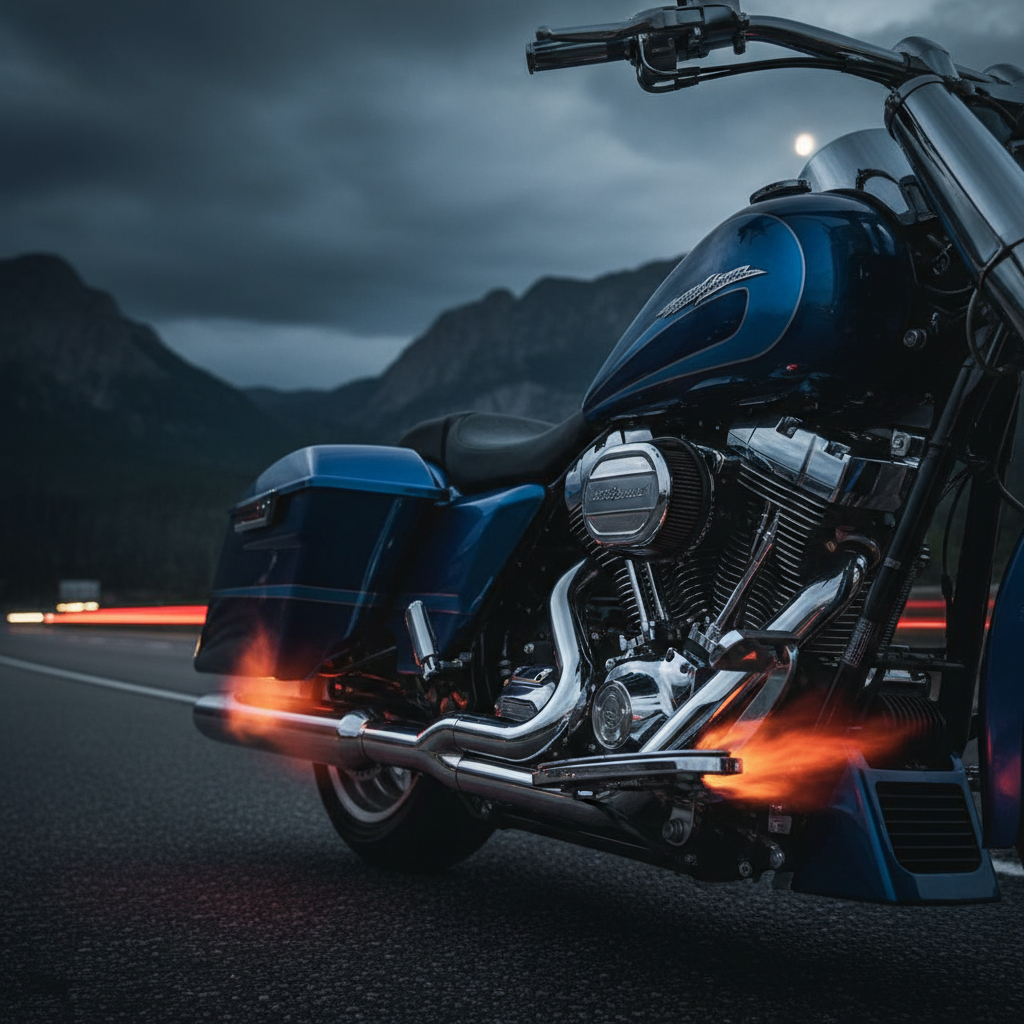
Ask any group of motorcycle riders whether loud pipes save lives and you'll get a room full of confident opinions — usually from people who really, really want it to be true. I get it. I put Stage 1 pipes on my Indian Pursuit, and they sound incredible. But I didn't do it because I thought it was a safety device. I did it because the stock exhaust on the Pursuit sounds like a library.
So what does the science actually say? Is there any real evidence that louder exhaust reduces your risk of being hit by a car, or is "loud pipes save lives" just the motorcycle world's best-loved rationalization for buying the thing you wanted anyway?
Let's get into it.
Where the Claim Comes From
The saying has been around since at least the 1970s, popularized largely by Harley-Davidson culture and the custom chopper scene. The logic on the surface is intuitive: if cars can hear you coming, they're less likely to pull out in front of you. Loud = noticed. Noticed = safer. Simple enough.
The problem is that intuition and physics don't always agree — and in this case, they really don't.
The Physics of Sound — The Doppler Problem
Here's where the "loud pipes save lives" argument runs into serious trouble. Motorcycle exhaust exits from the rear of the bike. That's just how exhaust systems work — combustion byproducts exit toward the back. Which means the loudest part of your bike is pointed directly away from the cars you're most worried about: the ones in front of you and beside you.
The Doppler effect makes this worse. When you're moving toward someone, the sound waves compress and the pitch rises — you sound louder and higher. When you're moving away, sound waves spread out, pitch drops, and you sound quieter and more distant. A driver sitting at an intersection you're approaching doesn't hear your pipes getting louder — they hear a sound that seems to be coming from somewhere else, at an ambiguous distance, and it's lower in pitch than what's actually behind you.
There's also the cabin noise issue. Modern cars are exceptionally well sound-insulated. A driver with their windows up, air conditioning running, and music on — which describes most people on the road — is effectively operating in a sound-dampened pod. Even a 100+ dB exhaust can be nearly inaudible through a closed car window at intersection distances.
What the Research Actually Says
Academic research on this is sparse but consistent in its conclusions. The most comprehensive analysis of motorcycle accident causation remains the Hurt Report (University of Southern California, 1981) and the more recent MAIDS study (Motorcycle Accidents In-Depth Study, European Commission). Neither found strong evidence that exhaust noise level correlates with reduced accident frequency.
The Hurt Report found that the most common accident scenario was a car turning left across a motorcycle's path — the classic SMIDSY (Sorry Mate, I Didn't See You). The word there is see. Visibility, not audibility, was the dominant factor. Drivers weren't failing to hear motorcycles — they were failing to visually process them.
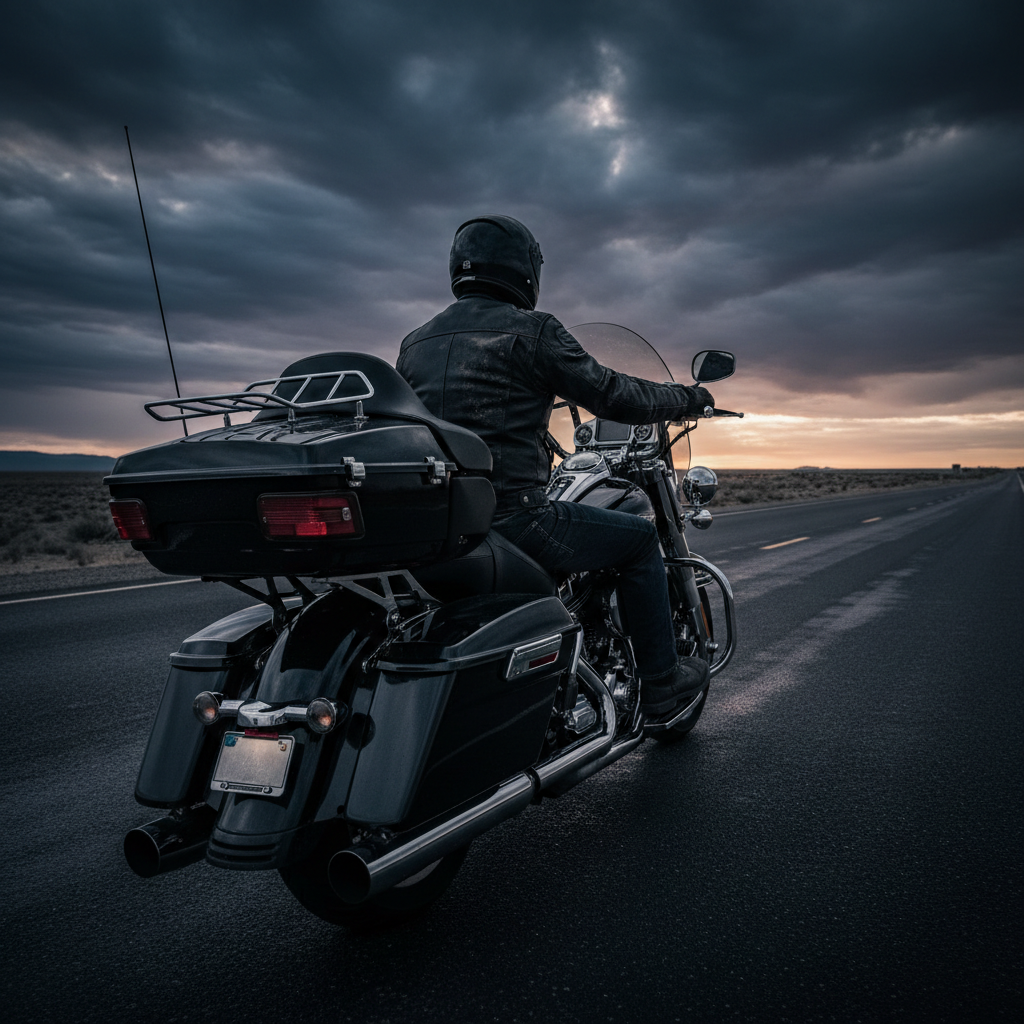
The MAIDS study (covering ~900 accidents across five European countries) reached similar conclusions — conspicuity was the core issue, and it was overwhelmingly visual. Sound was essentially a non-factor in the accident data.
A 2011 study by the Transport Research Laboratory in the UK specifically looked at whether motorcycle noise influenced driver awareness. Their findings: sound contributed minimally to driver hazard perception compared to visual cues, and the directional limitations of rear-facing exhausts further reduced whatever marginal benefit existed.
What Actually Saves Lives
The research points consistently toward a different set of interventions:
- High-visibility gear and bike colour — High-viz jackets, helmets, and bike colour are measurably associated with reduced accident rates. My Pursuit is white, and I ride with a white helmet — both are among the most visible colour choices you can make. Studies show white motorcycles are significantly more conspicuous to drivers than dark-coloured bikes, especially in low-contrast or dusk conditions.
- Auxiliary lighting — front and rear — Daytime running lights and modulating headlights significantly increase the distance at which oncoming drivers perceive a motorcycle. I've taken this further by adding auxiliary lights to both the front and rear of the Pursuit. More light sources mean more visual angles covered — particularly useful for side-approach visibility that a single headlight misses entirely. This is one of the most practical and underrated safety upgrades you can make.
- Lane positioning — Riding in the part of the lane where you're most visible to cross-traffic — typically the left third when approaching intersections — reduces your exposure to the most common accident type.
- Speed and following distance — Most fatal motorcycle accidents involve speed as a contributing factor. Maintaining distance and appropriate speed for conditions buys reaction time that no exhaust system can provide.
- Advanced rider training — Courses like the MSF advanced curriculum or Canada's equivalent have demonstrated real safety benefits by improving hazard awareness and emergency braking capability.
What About Horns and Communication Devices?
Interestingly, if you actually want to use sound as a safety tool, an aftermarket air horn is far more effective than loud pipes. An air horn projects sound forward, is directionally aimed at the hazard, and produces a sound that drivers are conditioned to respond to. It's not as romantically satisfying as Stage 1 pipes, but the physics actually work in your favour.
My Take After 18,000 km
I've put about 15,000 km on a 2020 Indian Roadmaster with stock pipes and another 3,000 km on my 2024 Pursuit — 2,000 stock and about 1,000 on Stage 1. I ride New Brunswick backroads, Trans-Canada highway, through Moncton traffic, and I've done longer trips through Nova Scotia and Quebec.
I've also put my money where my mouth is when it comes to actual visibility. My Pursuit is white — one of the most conspicuous colours a motorcycle can be. My helmet is white. And I've added auxiliary lighting to both the front and rear of the bike, which means I'm lit from more angles than a stock setup provides. None of that is flashy in a parking lot conversation. But it's what the research actually supports.
Honest answer? I've never once thought the Stage 1 exhaust made me meaningfully safer. What actually keeps me out of trouble is riding where I'm visible, covering the brake through intersections, watching for the front wheels of cars at side streets, and never assuming I've been seen. That's it. That's the safety toolkit.
The Stage 1 exhaust sounds phenomenal. It makes the bike feel more alive, it suits the character of the PowerPlus 108, and I genuinely enjoy it every time I ride. Those are real reasons. They're just not safety reasons.
Verdict
The Honest Answer
Loud pipes might provide a small, marginal benefit in very specific scenarios — like a slow-speed parking lot situation where a distracted pedestrian could hear you before seeing you. That's about it. The physics of rear-facing exhaust, the Doppler effect, and the sound-dampening of modern car interiors all work against the theory in real-world traffic.
The research doesn't support loud pipes as a meaningful safety intervention. Visibility gear, headlights, lane positioning, and skill training do.
Buy the loud pipes if you love the sound. I did. Just don't convince yourself it's primarily a safety upgrade — because the science says otherwise, and you deserve to know the actual risks.